
Odisha's Bold Move: Aiming for 1 GW Agrivoltaic Capacity by 2030

Odisha's Agrivoltaic Vision Unveiled
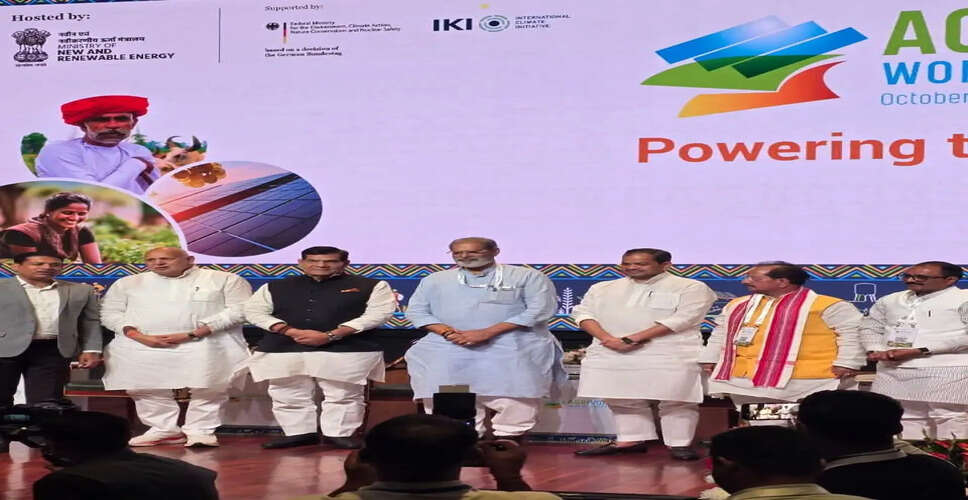
New Delhi, Bhubaneswar: Odisha is on the verge of finalizing its groundbreaking Agri-PV Policy 2026, aiming to establish 1 GW of agrivoltaic capacity by 2030. This announcement was made by Deputy Chief Minister and Minister for Agriculture, Farmers’ Empowerment, and Energy, Kanak Vardhan Singh Deo, during the 7th Agrivoltaics World Conference 2026 held at Bharat Mandapam in New Delhi.
In his address to a diverse audience of international delegates, scientists, policymakers, and investors, Singh Deo presented the state's innovative vision of 'One Field, Two Harvests.' This initiative aims to integrate agricultural productivity with renewable energy generation, prioritizing farmers' needs while incorporating solar technology. Odisha will be the first state in India to implement a dedicated agrivoltaics policy, which includes stringent legislative measures ensuring that at least 90% of each project site remains actively farmed, preserving its agricultural status and eligibility for crop insurance.
The policy framework is designed to provide both flexibility and economic stability for farmers, allowing them to either directly own the systems for dual income from crop sales and energy production or collaborate with solar developers through long-term lease agreements.
To ensure long-term viability for developers and institutional investors, the state is offering 25-year Power Purchase Agreements with GRID CO, along with guaranteed energy off-take, grid connectivity, and open-access rights. Additionally, the onboarding process for farmers is streamlined, integrating Agri-PV incentives with support for drip irrigation, cold storage, solar pumps, and agro-processing.
Singh Deo underscored the pressing need for climate resilience in light of anticipated increases in temperature and unpredictable rainfall patterns by 2070. He noted that elevated solar arrays can provide essential protection for smallholder farmers by creating cooler microclimates, conserving soil moisture, and safeguarding both crops and laborers. He stated, “We aspire to empower our farmers from Annadata to Urjadata.” This initiative builds on the momentum generated by the state’s Renewable Energy Policy 2022 and the recent RE Investor Conclave in February 2026, which attracted Rs 67,000 crore in clean energy investments across 6.8 GW.
Implementation is already in progress with a 1 MW Agri-PV project, along with a strategic pilot partnership with Nanyang Technological University, Singapore, aimed at testing advanced agrivoltaic solutions across 40.7 lakh acres of suitable farmland and 47.7 lakh acres of unused land.