
Nvidia's CEO Jensen Huang Faces Controversy Amid South Korea AI Partnerships

Nvidia's CEO Engages with South Korean Tech Leaders
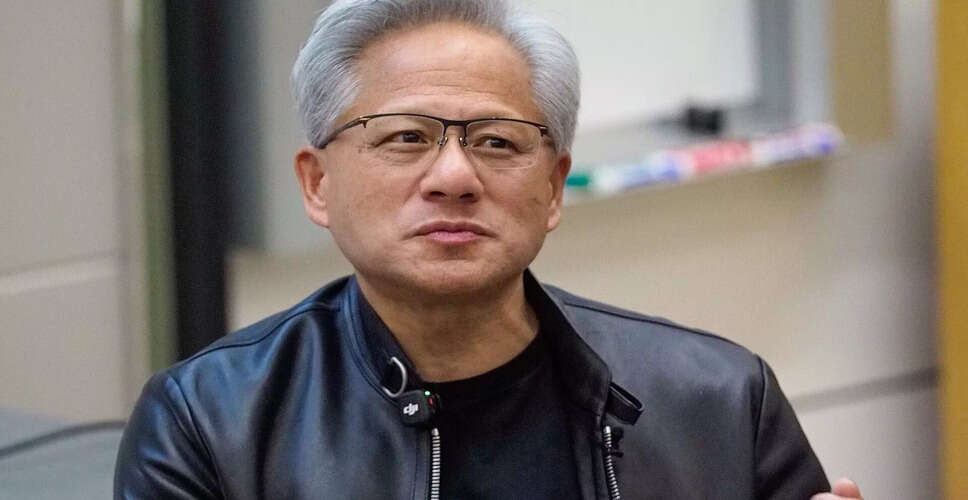
File image of Nvidia CEO Jensen Huang(Photo: @Alovington123/X)
Seoul, Nov 11: In June, Nvidia's CEO Jensen Huang visited South Korea, where he shared traditional soju and grilled pork belly with leaders from major tech firms, marking a significant step in their collaboration on artificial intelligence (AI), which includes sectors like semiconductors, robotics, and autonomous vehicles.
Throughout this year, Huang has engaged with prominent figures such as Samsung Electronics Chairman Lee Jae-yong, SK Group Chairman Chey Tae-won, and Hyundai Motor Group Executive Chair Euisun Chung, establishing partnerships in vital technological areas, as reported by a local news agency.
In July, Huang also met with President Lee Jae Myung during the San Francisco AI Summit, alongside the heads of the three conglomerates and other industry leaders, to explore avenues for enhancing AI collaboration.
However, a recent scandal involving Huang, who is pivotal in the global AI landscape, and a woman allegedly linked to Chinese intelligence has sparked concerns regarding regulatory oversight, uncertainty about Nvidia's leadership, and potential impacts on South Korea's AI supply chain.
This controversy has coincided with the cancellation of a significant event in Seoul.
Madison Huang, Jensen Huang's daughter and an executive at Nvidia, unexpectedly withdrew from attending Nvidia AI Day on Monday, citing personal reasons. She was set to meet with South Korean tech executives and government representatives.
When questioned about the implications of the U.S. congressional investigation into Huang on the delivery of 260,000 graphic processing units (GPUs) promised to South Korea or collaborations with local chip manufacturers, Nvidia representatives refrained from commenting.
Currently, there are no signs that the ongoing controversy has disrupted Nvidia's chip supplies or major AI initiatives in South Korea.
Ryu Je-myung, South Korea's second vice minister of Science and ICT, stated on Monday that Nvidia's GPU shipments to the country are anticipated to continue as planned.
"We will have to wait and see how the controversy affects Nvidia, but we expect the contracted shipments to proceed without disruption," Ryu mentioned during a parliamentary budget committee meeting.
This uncertainty arises as Nvidia is broadening its footprint in South Korea. The American chipmaker has become a crucial ally in Seoul's efforts to bolster AI capabilities and develop advanced computing infrastructure.
For major suppliers like Samsung Electronics Co. and SK hynix Inc., which provide high bandwidth memory (HBM) chips essential for Nvidia's AI accelerators, there is concern that the controversy might lead to increased U.S. regulatory scrutiny, especially regarding semiconductor supply chains associated with China.
While existing supply agreements seem unaffected, any regulatory shifts or disruptions to Nvidia's product strategy could complicate the production and investment plans of Korean chipmakers.
The potential consequences extend beyond semiconductors. During Nvidia AI Day, mobile carrier SK Telecom Co. and AI chip startup Rebellions announced their intention to integrate Nvidia's GPUs with Rebellions' neural processing units (NPUs) in SK Telecom's AI data centers.
Additionally, ride-hailing service Kakao Mobility revealed plans to collaborate with Nvidia on Level 4 autonomous driving technology, initially focusing on vehicles designed by Kia Corp.
Last week, Nvidia finalized a billion-dollar investment in Naver Corp., acquiring a 4.13 percent stake in the South Korean portal operator to accelerate a joint AI venture announced in June.
These agreements underscore Nvidia's expanding influence within South Korea's AI ecosystem, spanning telecommunications, mobility, and software.
However, these growing ties also highlight potential risks tied to South Korea's increasing reliance on Nvidia for advanced computing technology, AI chip supplies, and strategic partnerships.
Industry analysts suggest that the fallout from the U.S. investigation will hinge on whether it results in regulatory actions, leadership changes at Nvidia, or alterations in its business strategy.
Despite the prevailing uncertainty, officials in Seoul have emphasized the importance of maintaining relationships with Nvidia, viewing the partnership as a means to assist domestic companies in entering global markets and advancing the nation's AI objectives.
"The competitiveness of the AI industry can be further enhanced when diverse capabilities are interconnected and integrated, beyond advances in individual technologies," stated Lee Do-kyu, a senior official at the Ministry of Science and ICT, during the Nvidia event.
"We hope South Korean companies will identify opportunities for technological and business cooperation with Nvidia and ultimately expand into global markets together."