
New Zealand's Trade Deal with India Promises Economic Growth

Economic Opportunities from the India Trade Agreement
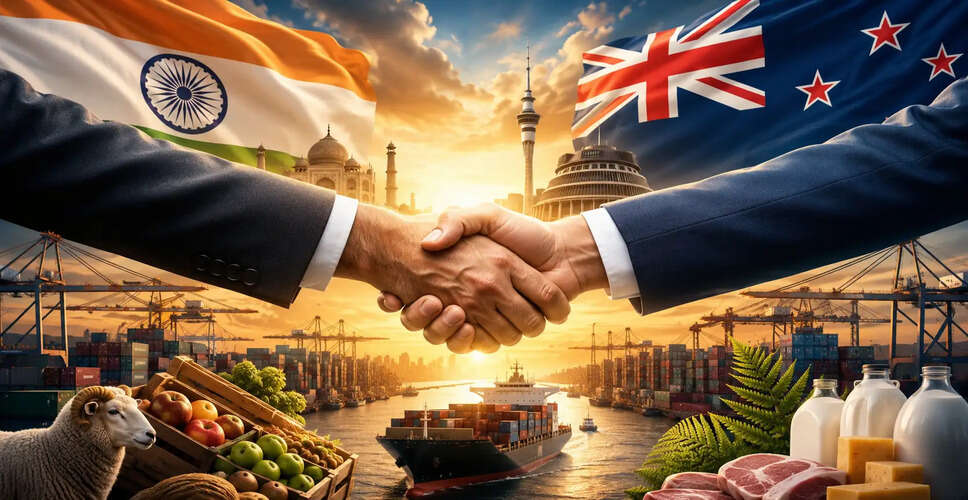
Christopher Luxon, the Prime Minister of New Zealand, announced that the newly established trade agreement with India is poised to significantly benefit New Zealand's businesses. He emphasized that starting from day one, 57% of New Zealand's exports to India will be exempt from tariffs. This statement was shared in a post on X, highlighting the positive economic implications of the deal.
This announcement precedes Prime Minister Narendra Modi’s upcoming two-day visit to New Zealand, scheduled for July 10-11, marking the first visit by an Indian Prime Minister to the country in nearly 40 years. As per a government statement, Modi's trip aims to enhance collaboration in vital areas such as trade, commerce, and defense.
Mitali Nikore, a Senior Economist and Founder of Nikore Associates, noted that merchandise trade between India and New Zealand reached USD 1.3 billion in 2024-25, a significant increase from USD 873 million the previous year. When including services, the total trade relationship is valued at approximately USD 2.4 billion. This figure represents a modest base, with India enjoying a trade surplus. Over the past decade, India's exports to New Zealand surged by 130%, while imports saw a growth of 7.21%. The sectors where India stands to gain the most are labor-intensive industries.
New Zealand previously imposed tariffs of around 10% on approximately 450 tariff lines, which included textiles, apparel, leather goods, carpets, ceramics, and automotive components. With the new agreement, these tariffs will be eliminated immediately. These sectors are crucial for job creation in India, particularly for women in the workforce.
However, certain products were deliberately excluded from the agreement, including dairy, sugar, edible oils, spices, coffee, rubber, and onions. Agriculture is a significant sector in India, accounting for 43% of employment in 2025 and employing a large number of rural women. Overall, the agreement provides necessary protections while also offering a substantial boost to bilateral trade.