
New Solar Panel Policy to Boost Domestic Manufacturing but Increase Costs

Overview of the New Solar Panel Policy
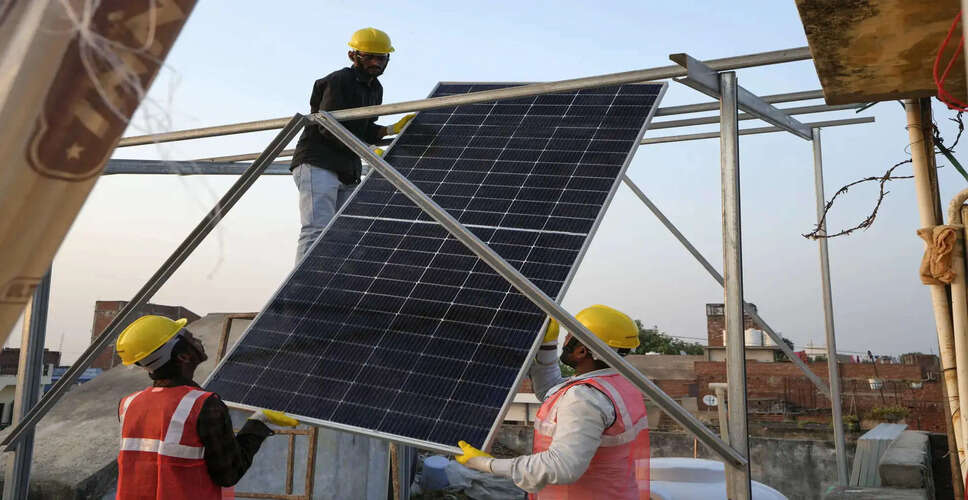
The Indian government has introduced a fresh policy aimed at enhancing domestic solar panel manufacturing. However, this initiative will lead to higher costs for consumers starting June 1. According to the new guidelines, solar projects utilizing net-metering and open-access systems must exclusively use solar cells produced within the country. This strategy is designed to bolster India's solar manufacturing sector and lessen reliance on imports, especially from China.
To understand the process better, solar panel production begins with polysilicon, which is transformed into ingots and wafers. These wafers are then utilized to create solar cells. Subsequently, multiple cells are assembled into the solar panels that are commonly seen on rooftops. Under the new regulations, the cells incorporated in these panels must be sourced from Indian manufacturers listed in the Approved List of Models and Manufacturers (ALMM) List-II.
Estimates suggest that rooftop solar installations could see an increase of approximately ₹3,000 per kilowatt due to the higher costs of domestically produced cells compared to imported ones. Hanish Gupta, the Founder and Managing Director of Sunkind India Limited, noted that the new requirement for locally manufactured solar cells will likely raise solar panel prices in the short term. He explained that solar cell production is capital-intensive, necessitating investments of around ₹500 crore per gigawatt and taking 18 to 24 months to set up. With technology advancing rapidly, manufacturers need to recoup their investments quickly, which keeps costs high. Currently, imported cells are priced at about ₹5/Wp, while Indian cells range from ₹12 to ₹14/Wp due to limited domestic production capacity and supply issues.
Pawan Kumar Garg, founder and joint MD of Fujiyama Power Systems, expressed that while there may be initial challenges regarding cell availability and pricing, the long-term advantages significantly outweigh these transitional issues. He believes this policy will enhance demand for domestically produced solar cells and align with the government's goal of establishing a self-sufficient and competitive solar industry while ensuring quality and energy security.
Vinay Rustagi, Chief Business Officer at Premier Energies, clarified that these changes will only affect corporate projects, leaving residential projects unaffected. He mentioned that residential and solar pump installations have always been required to utilize domestic cells. For corporate projects, the anticipated increase in project costs and power tariffs is estimated to be around 10% or less.