
New OSH Code Revolutionizes Leave Policies for Employees in India
Overview of the New OSH Code
The Indian government's Occupational Safety, Health and Working Conditions Code, 2020 (OSH Code), which was introduced on November 21, 2025, is set to transform the leave policies for salaried workers nationwide. This new framework aims to create a more organized and employee-centric system regarding earned leave, carry forward, and encashment, which were previously managed by inconsistent state regulations.
A significant enhancement is the establishment of a uniform earned leave system that will be applicable throughout the country. Employees will now have clear guidelines regarding their entitlements for leave accumulation, carry forward, and encashment, although specific state provisions may still apply where necessary.
One of the key changes allows employees to encash any excess earned leaves on an annual basis, even while still employed. Previously, this option was mostly restricted to certain states and was typically available only upon resignation, retirement, or termination. The new code eliminates this limitation, making leave encashment more flexible and accessible.
Additionally, a crucial safeguard has been introduced: if an employer denies a properly submitted leave request, those leaves cannot be forfeited. Instead, they must be carried forward indefinitely, addressing a long-standing issue for employees in high-demand roles.
Understanding Annual Encashment and Carry Forward
The updated provisions also address the problem of unused leave expiring without compensation. Previously, many state laws permitted earned leave to lapse beyond a certain limit without any payout. Under the new code, employees can convert unused leave into monetary compensation each year.
Tarun Garg, Director at Deloitte India, elaborated on how the new system will operate. He stated, "According to the new labour code (OSH Code), employees can accumulate and carry forward up to 30 days of leave to the next year. If accumulated leave exceeds 30 days, employees can encash the excess. They can also request encashment of all their accumulated leave at the end of the calendar year."
He further noted, "While the previous framework allowed for leave encashment upon employee separation, the new OSH Code introduces a provision for encashment of leave for workers at the end of each calendar year or upon their request." Emphasizing employee rights, Garg added, "If an employee applies for leave and it is denied by the employer, those refused leaves will be carried forward without any limit."
Eligibility and Coverage Under the New Code
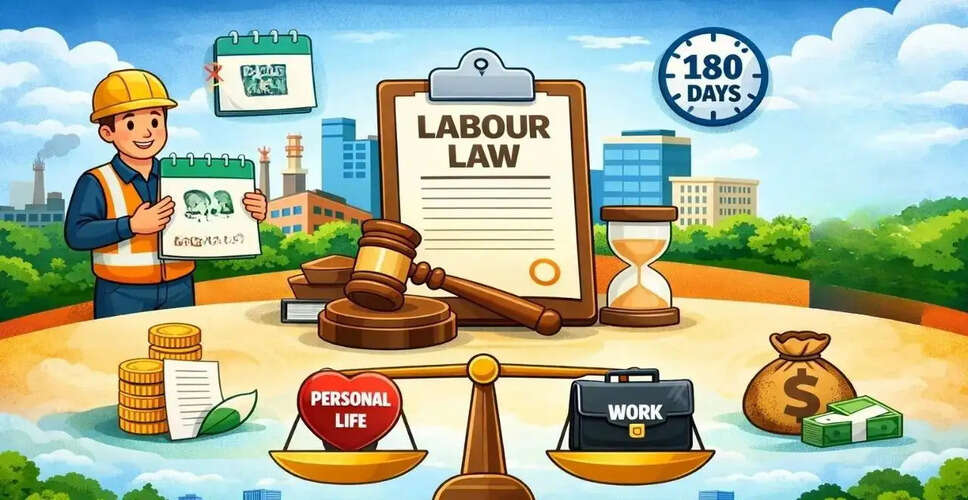
The OSH Code also updates the eligibility criteria for earned leave. Employees will now qualify after completing 180 days of continuous service within a calendar year, a reduction from the previous requirement of 240 days under older regulations.
Sonakshi Das, Partner at JSA Advocates & Solicitors, highlighted that existing state laws will continue to coexist with the new code. "Essentially, employees in managerial, administrative, or supervisory roles earning above Rs 18,000 per month will not be eligible for these benefits under the OSH Code," she explained. This indicates that the benefits will primarily apply to workers earning below the specified threshold and engaged in operational, technical, or clerical positions.