
N Chandrasekaran Announces Departure as Tata Sons Chairman: What’s Next for the Business Giant?
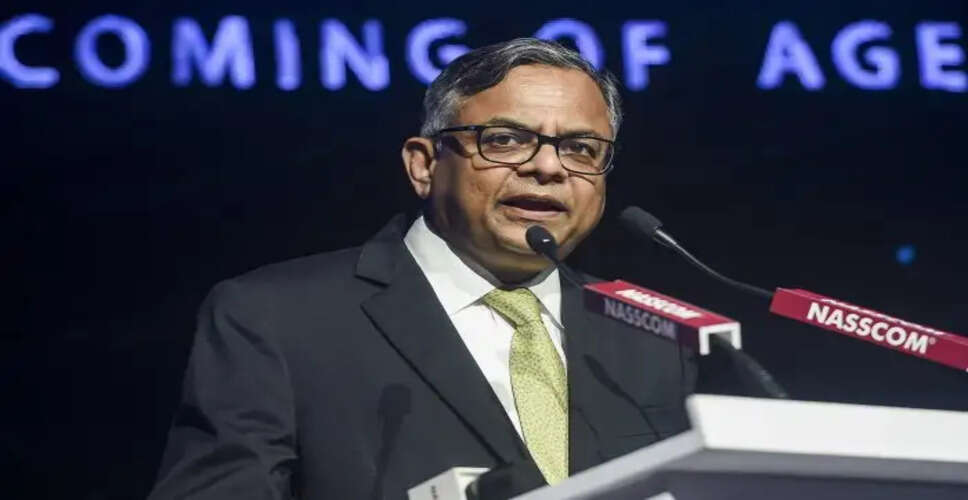

Chandrasekaran's Decision to Step Down
New Delhi: N Chandrasekaran has confirmed that he will resign as chairman of Tata Sons when his term concludes in February 2027, marking the end of a significant decade leading one of India's most powerful business conglomerates. This decision comes after a prolonged period of uncertainty regarding his reappointment, particularly in light of discussions with Tata Trusts Chairman Noel Tata.
At 63 years old, Chandrasekaran has dedicated 40 years to the Tata Group. He announced to the Tata Sons board that he would not seek reappointment when his current term expires on February 20, 2027, urging the board to identify a successor promptly to facilitate a seamless transition.
This announcement follows months of speculation about his future at Tata Sons, which serves as the main holding entity for Tata group companies. The Tata Trusts, which collectively own 66% of Tata Sons, wield considerable influence over the governance of the group.
Chandrasekaran, often referred to as Chandra, noted that the Sir Dorabji Tata Trust and Sir Ratan Tata Trust, which together control 51.54% of Tata Sons, had unanimously recommended extending his term by five years. This recommendation was subsequently documented and endorsed by the Tata Sons Nomination and Remuneration Committee and the board.
However, the proposal, presented during a board meeting on February 24, was not approved due to a lack of unanimous support from the directors.
Chandrasekaran did not specify who opposed the extension but indicated that he opted to postpone the decision without full backing.
After six months without resolution, he expressed that the ongoing leadership uncertainty was becoming untenable, especially as Tata Sons manages several strategic initiatives at critical junctures.
The deadlock was reportedly tied to disagreements between Chandrasekaran and Noel Tata, who assumed the chairmanship of Tata Trusts in 2024 following Ratan Tata's passing. Reports suggest that Tata sought assurances regarding the non-public listing of Tata Sons, a stance that Chandrasekaran did not support. The discussions also involved board representation issues.
Despite the tensions, board meetings continued, with a May session described as productive, where Noel Tata focused on various businesses, including Air India and BigBasket, while Chandrasekaran led evaluations of group companies.
"I have completed 40 years of professional life at the Tata Group. I am grateful for the immensely satisfying opportunity to contribute to this venerable institution," he stated in his announcement.
Tata Sons, the primary holding company of the Tata Group, is predominantly owned by Tata Trusts and oversees over 30 group companies, including Tata Consultancy Services, Tata Motors, and Air India.
Chandrasekaran reiterated that his current term concludes on February 20, 2027, and mentioned that the trusts had unanimously resolved to extend his term for another five years, a resolution that was recorded and recommended by the Tata Sons Nomination and Remuneration Committee and the Board. However, the proposal was not passed due to one board member's dissent.
"It has been six months since that board meeting, and no resolution has been reached to date," he remarked.
He emphasized the importance of having a leader in place to guide the group beyond February 2027, stating that clarity in leadership is crucial for employees, investors, partners, and other stakeholders. "In light of these circumstances, I have informed the Tata Sons Board of my decision not to seek reappointment when my term ends on February 20, 2027. I have requested the Board to expedite the succession process to ensure a smooth transition."
A Decade of Leadership
Chandrasekaran joined the Tata Group in 1987 and climbed the ranks within Tata Consultancy Services (TCS), eventually becoming its CEO in 2009. He took over as chairman of Tata Sons in 2017, succeeding Ratan Tata's interim leadership following Cyrus Mistry's removal.
During his tenure, the Tata Group expanded significantly across various sectors, including technology, automotive, aviation, electronics, and manufacturing, while also making substantial investments in semiconductors and other strategic areas. The group now operates 31 companies in over 100 countries, as per the Tata website.
However, his leadership has not been without challenges. The Tata Group faced a tragic Air India crash, pressures on its technology sector due to the global shift towards artificial intelligence, and a cyberattack impacting Jaguar Land Rover.
The question of succession now takes center stage in Tata Group governance. With Tata Trusts holding the controlling interest in Tata Sons and the board yet to finalize a successor, the choice of Chandrasekaran's replacement could significantly influence the conglomerate's strategic direction for years to come.
For Chandrasekaran, this decision signifies a departure from what would have been an unprecedented third consecutive five-year term at Tata Sons. He expressed that leading the group over the past decade has been "a great honor and a profound responsibility," thanking stakeholders for their unwavering support.