
Market Movements in Precious Metals Amid Economic Data and Geopolitical Tensions
Recent Trends in Precious Metals
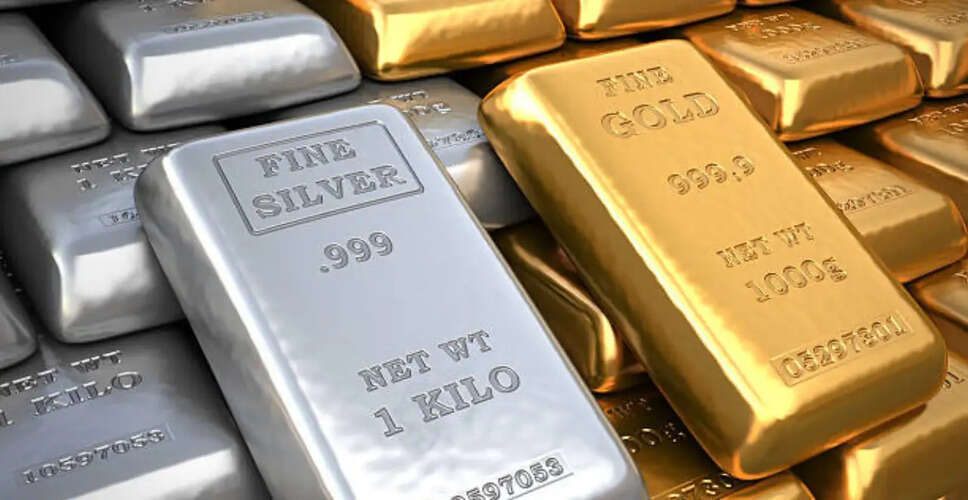
The markets for precious metals, including gold and silver, have experienced renewed activity following the release of new economic data from the United States, coupled with escalating geopolitical tensions that have affected investor behavior. Prices saw an uptick after disappointing employment figures heightened expectations that the Federal Reserve might contemplate interest rate cuts later this year. However, these gains were somewhat restrained as the US Dollar Index saw a significant increase throughout the week. A stronger dollar generally exerts downward pressure on gold prices, making it more costly for international purchasers. Additionally, rising tensions in the Middle East have driven investors towards safe-haven assets. Other precious metals such as platinum and palladium also exhibited price fluctuations. Despite a brief rise, most metals are still on track for weekly losses, underscoring the ongoing volatility in this sector.
Factors Influencing Gold and Silver Prices
Recent fluctuations in precious metal prices have been primarily influenced by disappointing labor market data from the United States and the anticipated direction of monetary policy. The latest employment statistics revealed a decline of 92,000 jobs in nonfarm payrolls, contrary to economists' predictions of a 59,000 job increase. The unemployment rate also rose to 4.4 percent. These developments have intensified speculation that the Federal Reserve may eventually opt to lower interest rates. Gold and silver typically gain when borrowing costs decrease, as these assets do not yield income like bonds or savings accounts. Lower interest rates often prompt investors to seek alternative stores of value. Additionally, rising crude oil prices and geopolitical uncertainties have further fueled demand for precious metals.
Gold's Response to Employment Data
On Friday, gold prices increased following the weak employment report, which bolstered expectations for a potential rate cut by the Federal Reserve. Spot gold rose by 1.4 percent to $5,149.14 per ounce during early afternoon trading in the United States. Despite this daily increase, the metal recorded a weekly decline of 2.4 percent, marking its first weekly drop in five weeks. Meanwhile, US gold futures for April delivery concluded the session 1.6 percent higher at $5,158.70. Independent metals trader Tai Wong noted that the weak payroll report indicated job losses in the private sector alongside rising wages, suggesting potential stagflation, which could aid gold's recovery after a challenging week.
Geopolitical Factors and Dollar Strength
Geopolitical events have also significantly impacted the precious metals market. Israel's military actions in the suburbs of Beirut, controlled by Hezbollah, following evacuations in southern Beirut, have escalated the conflict involving Iran and the United States, creating uncertainty in global markets. Concurrently, the US dollar index approached its most substantial weekly increase in over a year. The rising geopolitical tensions have also heightened demand for the dollar as a safe asset. A stronger dollar typically diminishes global demand for gold, as it raises the cost of dollar-denominated commodities for international buyers. Precious metals trader Hugo Pascal mentioned that algorithmic trading often leads to automatic sales of precious metals when the US dollar strengthens, contributing to the sector's weak performance this week.
Interest Rate Projections and Inflation Concerns
Investors are now turning their attention to the upcoming Federal Reserve policy meeting scheduled for March 18. Analysts predict that the central bank will maintain current interest rates during this meeting, although markets are increasingly anticipating the first rate cut in July, as indicated by the CME FedWatch Tool. Gold typically performs well in low-interest-rate environments since holding the metal does not yield interest income. Lower borrowing costs can also enhance demand for alternative assets. Despite recent fluctuations, gold has appreciated over 18 percent this year, reflecting robust underlying demand. Meanwhile, crude oil prices are on track for their largest weekly increase since Russia's invasion of Ukraine in February 2022, raising inflation concerns. Higher inflation expectations can sometimes bolster gold prices as investors seek protection against rising costs.
Future Outlook: Stability or Continued Volatility?
The outlook for precious metals remains uncertain as various factors continue to simultaneously influence prices. While the prospect of lower interest rates could support gold and silver later this year, a stronger US dollar, automated trading strategies, and geopolitical tensions may keep markets volatile in the near term. Analysts suggest that investors are closely monitoring economic indicators, central bank decisions, and global conflicts to determine whether precious metals will embark on a sustained rally or continue to experience sharp price fluctuations.