
Jeff Bezos Advocates for No Federal Income Tax for Low-Income Americans
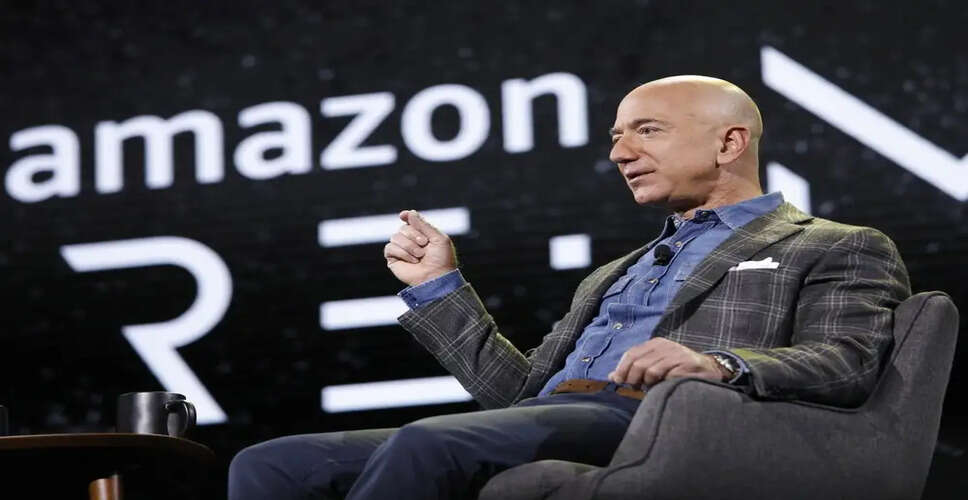

Bezos's Proposal for Tax Relief
Jeff Bezos, the founder of Amazon, has proposed that the lower half of the American population should be exempt from federal income tax. He argues that individuals with lower incomes are already facing significant financial challenges and should not be required to contribute to federal revenue. During an appearance on CNBC’s Squawk Box on May 20, 2026, Bezos highlighted tax statistics indicating that the poorest 50% of taxpayers account for only about 3% of total federal income tax income. He believes this minimal contribution should be completely eliminated. “When individuals are just starting out and struggling, we should stop taxing them. We don’t need it. We are in the wealthiest nation globally,” Bezos stated.
To illustrate his point, he referenced a nurse residing in Queens, saying, “We shouldn’t be asking this nurse in Queens to send money to Washington. They should be sending her an apology. It really makes no sense.”
Supporting Data
Data from various tax policy organizations largely corroborates Bezos's claims. Analyses based on IRS data reveal that higher-income households contribute the majority of federal income taxes, while the lower half contribute a relatively small amount. However, economists point out that lower-income Americans still pay considerable amounts through payroll taxes, state taxes, sales taxes, and other indirect taxes, which can significantly impact their household income. Advocates of Bezos's perspective argue that eliminating federal income taxes for lower earners could alleviate financial pressures amid rising living costs, increasing rents, and inflation.
Bezos Addresses Criticism
Bezos also responded to the common criticism aimed at billionaires and large corporations, asserting that even a substantial increase in taxes on the wealthy would not necessarily benefit ordinary workers. “You could double the taxes I pay, and it’s not gonna help that teacher in Queens. I promise you,” he remarked. His comments seemed directed at politicians advocating for higher taxes on billionaires and affluent property owners.
Response from NYC Mayor
Bezos's statements quickly elicited a reaction from New York City Mayor Zohran Mamdani, who responded on X, stating, “I know a few teachers in Queens who would beg to differ.” This exchange highlights the broader political divide in the United States regarding how to tackle economic inequality—whether through increased taxes on the wealthy or through more extensive economic reforms. Mamdani has backed initiatives such as a pied-à-terre tax on luxury second homes in New York City to generate funds for public services and affordability programs.
As the founder of Amazon, Bezos has consistently faced scrutiny over issues related to wealth inequality, corporate taxation, and labor conditions. His recent comments are notable as they emphasize reducing taxes for struggling workers rather than defending the wealth of billionaires. These remarks have reignited a national debate concerning fairness in the tax system, inflation, housing affordability, wages, and government expenditure.
India's Approach
In a similar effort to alleviate the financial burden on lower and middle-income earners, India, under the leadership of PM Modi, has implemented a tax regime that effectively exempts salaried individuals earning up to ₹12 lakh per year from taxes. After accounting for rebates and deductions, this tax bracket provides significant relief to millions of taxpayers, aimed at boosting consumption, supporting household finances, and stimulating economic growth amidst rising living costs.