
Is Nvidia's CEO Jensen Huang in Hot Water Over Alleged Espionage Links?
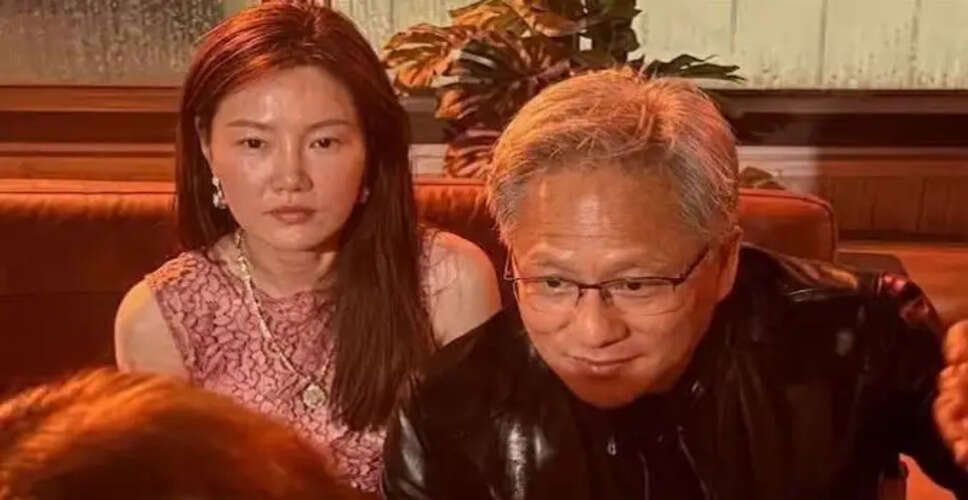

Investigation into Nvidia's CEO Sparks Controversy
Washington: President Donald Trump announced on Monday that the FBI is probing Nvidia's CEO, Jensen Huang, regarding his alleged relationship with a suspected Chinese government agent. However, he expressed confidence that Huang, a key figure in artificial intelligence development, has nothing to fear.
During a White House briefing, Trump stated, "I know the FBI is looking into it in terms of something else, and I think that he’ll be in good shape."
The revelation of Huang's affair has sent shockwaves through both the political arena and the tech industry, raising alarms about potential Chinese access to Nvidia's advanced chips that are crucial for AI advancements.
Trump's involvement in this counterintelligence inquiry highlights his close rapport with Huang and the geopolitical implications at play.
"I spoke to him today to check on how he’s doing," Trump remarked. "He claimed he had no idea that the individual in question was a spy."
Huang, a prominent figure in technology and one of the wealthiest individuals globally, has publicly acknowledged his infidelity, issuing an apology to his wife and Nvidia in an open letter on the company's website. Reports from The New York Times indicate that U.S. intelligence has concluded that the woman was gathering intelligence for Beijing.
"I support the investigation and will fully cooperate. I love our country and our company. I am dedicated to safeguarding NVIDIA and supporting America’s national security," Huang stated in his letter.
Nvidia announced on Sunday that it is conducting an independent investigation into claims that Huang was targeted by foreign intelligence.
This incident has also drawn the attention of Congress, with prominent Democrats like Senator Mark Warner and Representative Hakeem Jeffries expressing interest in further investigation. Jeffries mentioned that the Nvidia matter was discussed during a closed-door meeting with the CIA director and the Director of National Intelligence, primarily focused on Iran.
"We will need a comprehensive briefing regarding the Nvidia issue to understand what transpired and its implications for America’s national security," he added.
China Denies Involvement in Espionage
Trump is scheduled to meet with Chinese President Xi Jinping next week in Shenzhen during the Asia-Pacific Economic Cooperation summit, but he was uncertain about addressing this issue with Xi.
"No, I don’t think so. Maybe. I’m sure President Xi will inquire about it. I just know Jensen very well. I believe he’s a very honorable man," Trump commented.
FBI counterintelligence investigations typically focus on foreign efforts to spy on the U.S., including stealing technology from American firms or covertly influencing public opinion. These investigations can be lengthy and do not always lead to criminal charges. Both political parties have viewed China as a persistent counterintelligence threat.
On Monday, China denied any involvement in attempting to ensnare Huang. Guo Jiakun, a spokesperson for the Ministry of Foreign Affairs, stated, "The so-called Chinese spy allegation is unsubstantiated. It is merely a smear against China."
Earlier, Beijing dismissed The New York Times report that Huang had formed a close relationship with a Chinese national named Alice Huang, who previously faced allegations of illicitly shipping advanced Nvidia chips to China.
Huang's Influence on AI Regulation
Huang and Nvidia are pivotal in the AI sector, as many leading AI developers depend on the company’s specialized chips. Huang has also advocated for a more lenient regulatory approach to AI, arguing that existing laws could address security concerns and that companies should act responsibly with their products.
In recent years, Huang has lobbied Washington to ease restrictions on Nvidia chip sales to China, successfully gaining Trump’s approval for the sale of its H200 chips this year. However, it remains uncertain whether Chinese firms would be permitted to purchase these chips in significant quantities. Nvidia disclosed in an August regulatory filing that it has sold only a limited amount to China due to restrictions imposed by the Chinese government.
While the H200 chips are not Nvidia's most advanced models, they still represent significant technology. Huang had previously sought permission for Nvidia to sell its less advanced H20 chips, which were designed to comply with U.S. export restrictions on China.
In a June interview with The Associated Press, Huang remarked, "National security should always be the top concern of all technologies. However, it’s essential to be specific about the risks before establishing export control policies."
On Monday, Nvidia's stock fell by over 4 percent, marking an approximate 11 percent decline since the previous Wednesday.
Focus Shifts to Singapore Data Center Company
The New York Times reported that Alice Huang was a former executive at a Singapore-based data center firm named Megaspeed International, which prominently features its partnership with Nvidia on its website.
Many offices in Singapore were closed on Monday due to a holiday. Megaspeed and the Singapore Ministry of Home Affairs did not respond immediately to requests for comments.
Nvidia ranks among the world's most valuable publicly traded companies, alongside giants like Apple and Microsoft. Its chip sales to China have occasionally been scrutinized by U.S. regulators aiming to limit Beijing's access to advanced technology.
"The critical questions are whether he was aware of any espionage activities and if any sensitive information was compromised," stated George Chen, a partner and chair of digital practice at The Asia Group, a consultancy based in Washington.
"These questions require evidence rather than mere speculation," he added in a text message to reporters.
Chinese media have largely concentrated on Huang's admission of the affair, with state outlets echoing the official government stance. Some have suggested that The New York Times report aimed to destabilize U.S.-China relations.
"Whenever relations between China and the U.S. begin to improve, there are often those firing shots from the shadows," remarked the state-owned Global Times.