
Is Aligned Capitalism the Future of Sustainable Business Practices?
The Challenge of Corporate Sustainability
Companies have traditionally framed their sustainability efforts as a means to enhance their public image, adhere to regulations, or achieve modest profit increases. However, these initiatives often lack transformative impact because the market tends to overlook ecological constraints and social objectives, favoring firms that exploit resources while penalizing those that adopt regenerative practices. Despite compelling arguments for sustainable business, corporate strategies often clash with the prevailing economic framework. The issue is more profound than many realize; without a narrative framework to redefine economic principles, the advanced sustainability metrics we have developed remain inadequate.
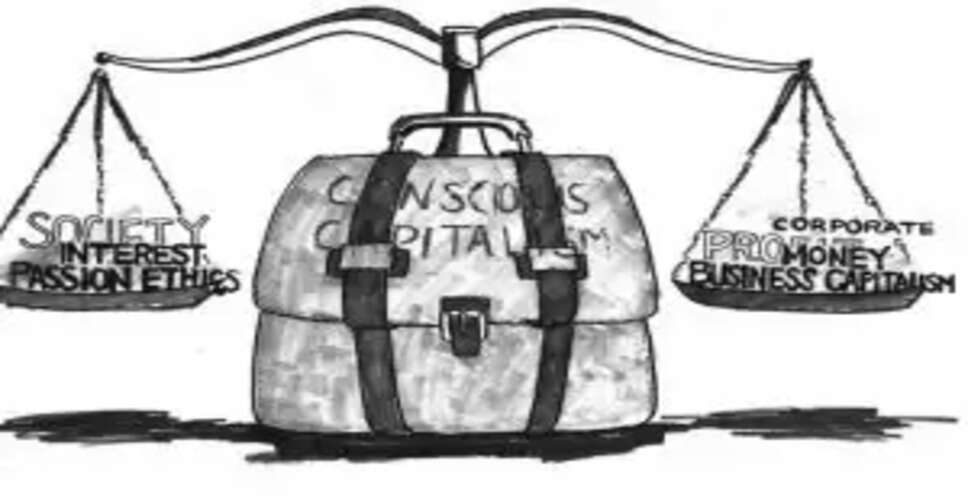
Our initiatives are often constrained by the relentless pursuit of quarterly profits, leading companies that should be at the forefront of sustainability to become cautionary examples. Take, for instance, a theoretical manufacturing firm that aims for complete circularity, ensuring that every material input retains its value through continuous reuse. This approach could significantly lower material costs and protect the company from fluctuating commodity prices. Yet, the current market, which is accustomed to linear extraction models, would primarily focus on the substantial initial investments required. With investors prioritizing immediate returns over long-term sustainability, and credit agencies failing to incorporate resilience into their evaluations, the circular manufacturer struggles to secure funding, while its resource-intensive rivals enjoy easier access to cheaper capital. This practice of rewarding companies for externalizing costs is a misguided form of financial prudence. Therefore, a transition to what I term 'aligned capitalism' is essential. In this model, ecological impacts would be integrated into market pricing, regulators would incentivize ecosystem restoration, and investors would prioritize resilience.
Financial reports would reflect natural and social capital, while credit ratings would consider equity and environmental readiness. Essentially, sustainability would shift from being a cost burden to a profit driver. In this new paradigm, our hypothetical circular manufacturer would thrive, as its resource efficiency and independence from supply chains would provide significant advantages. As materials become scarcer and trade relations grow more complex, these companies could establish competitive advantages that strengthen over time. However, to alter the economic logic, all participants in the political economy—from board members to regulatory bodies, labor unions, local communities, and civil society—must contribute. Yet, proactive corporate leaders need not wait for others to act; they can exemplify effective business practices that align with environmental and social realities. The recent backlash against environmental, social, and governance (ESG) commitments underscores the urgency of this shift.
The initial and most crucial step is to build the necessary narrative framework. Business leaders should engage in strategic storytelling that connects corporate actions to broader societal realities, fostering trust both within and outside their organizations through ongoing dialogues with stakeholders that transcend political cycles. They must also invest in research that highlights the superior outcomes of aligned practices. Some companies are already leading the way. For example, the Brazilian cosmetics company Natura has formed partnerships with indigenous communities that have yielded positive business and social results. Interface, a global flooring manufacturer, has inspired others with its Mission Zero initiative, achieving a 74% reduction in the carbon footprint of its carpets. Schneider Electric has embedded sustainability into its core business strategy, demonstrating how effective narratives can create an economic logic that rewards sustainable practices and pave the way for regulatory and market changes. However, corporate behavior is just one aspect of the broader picture.
To foster coordinated action, companies must implement governance structures aimed at advocacy rather than mere compliance, and actively push for regulatory reforms that incorporate environmental and social criteria into financial disclosures and decision-making processes. Regulators should require comprehensive ecological and social disclosures in financial statements and establish ambitious timelines for realignment. Investors also play a pivotal role, as market pressures often drive regulatory changes. They must integrate resilience criteria into their investment strategies, develop new valuation methods, and focus on long-term value creation instead of short-term profits. Forward-thinking asset managers are already enhancing these capabilities, recognizing that future leaders will be those companies that operate within ecological and social limits. Furthermore, business schools should incorporate ecological and social literacy into their core curricula, equipping future MBA graduates with the tools necessary to navigate an evolving economy. Under aligned capitalism, today's marginal business models could become profitable. Companies offering products as services could achieve consistent returns, while carbon-negative manufacturers could expand rapidly due to the cost advantages of environmental benefits. Firms dedicated to workforce development and community health could receive direct compensation for generating positive social outcomes. To establish a system where sustainability is inherently advantageous, business leaders must first acknowledge that the existing economic framework is fundamentally misaligned with ecological and social realities—the market seldom rewards transformative ESG initiatives, and this is unlikely to change.
A more effective form of capitalism, where the most regenerative and sustainable strategies also yield the highest profits, is achievable. However, it will necessitate executives to catalyze coordinated efforts among investors, regulators, and all stakeholders. Ultimately, those who dare to take the initiative will emerge as the new leaders in the market.