
Infosys CEO Salil Parekh's Compensation Rises to ₹82.6 Crore in FY26

Overview of Salil Parekh's Compensation
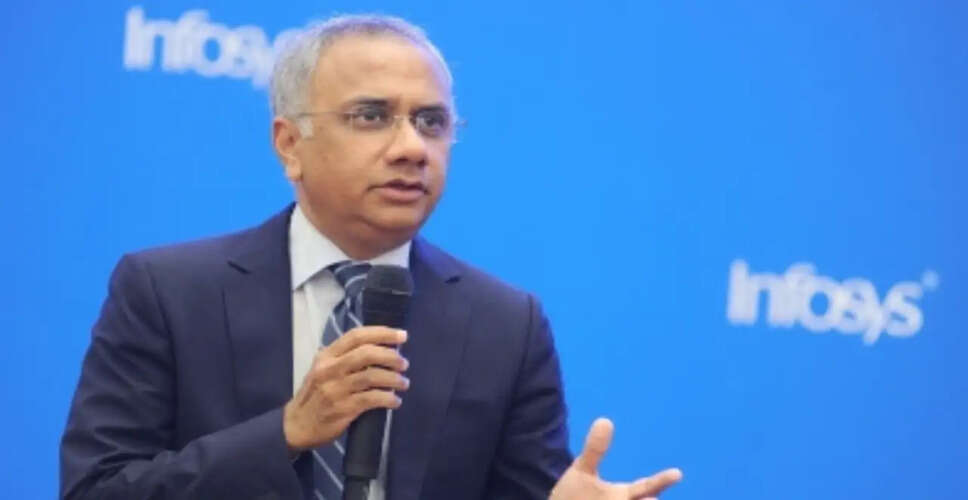
In the fiscal year 2026, Salil Parekh, the CEO of Infosys, experienced an increase in his total compensation, reaching ₹82.6 crore, as detailed in the company's recent annual report. This figure marks a slight rise from the ₹80.6 crore he earned in the previous year, primarily attributed to gains from stock-based incentives. A significant portion of Parekh's earnings stemmed from exercised restricted stock units (RSUs), highlighting the increasing importance of equity-linked compensation in the pay structures of major tech companies.
During FY26, Parekh's perquisites from exercised stock options amounted to ₹50.75 crore, compared to ₹49.5 crore in FY25. His fixed annual salary was ₹8.5 crore, while performance-linked incentives and variable compensation totaled ₹23.35 crore. The annual report indicated that he exercised 272,400 RSUs from Infosys' 2015 stock incentive plan and an additional 64,690 RSUs from the 2019 plan within the fiscal year.
Moreover, Infosys granted new stock-based incentives to Parekh, which included performance-linked RSUs associated with financial targets, environmental, social, and governance (ESG) objectives, as well as total shareholder return metrics. The company also provided annual time-based RSUs and extra performance-linked awards under its 2019 compensation framework.
Disparity in Pay Ratios
Pay Ratio Highlights Gap With Employee Median Salary
Infosys revealed that Parekh's total remuneration was 742 times greater than the median employee salary for FY26 when including exercised stock incentives. Excluding these stock-option gains, the ratio decreased to 289 times the median employee pay. This disclosure comes as Infosys has not yet announced salary increases for employees for FY27. Recently, the Chief Financial Officer mentioned that the company is evaluating the timing and extent of wage adjustments in light of ongoing macroeconomic challenges.
The rise in compensation coincided with significant financial achievements for Infosys, which surpassed $20 billion in annual revenue and achieved adjusted operating margins of 21% during FY26. In his letter to shareholders, Parekh noted that the company returned over $4 billion through dividends and share buyback initiatives during the year.
Parekh emphasized Infosys' commitment to artificial intelligence-driven business transformation, stating that AI initiatives have been integrated into 90% of the company's top 200 clients. He remarked, 'We are leveraging the capabilities of our industry-leading AI Suite, Infosys Topaz, to assist enterprises in accelerating growth and productivity through AI.'
Additionally, Infosys continued to grow its workforce, hiring over 20,000 college graduates during the year. By the end of FY26, the company had a global employee count exceeding 325,000, reflecting its ongoing investment in talent despite a challenging demand landscape in the tech sector.