
India's Oil Companies Face Heavy Losses Amid Stable Fuel Prices

The Financial Strain Behind Fuel Prices
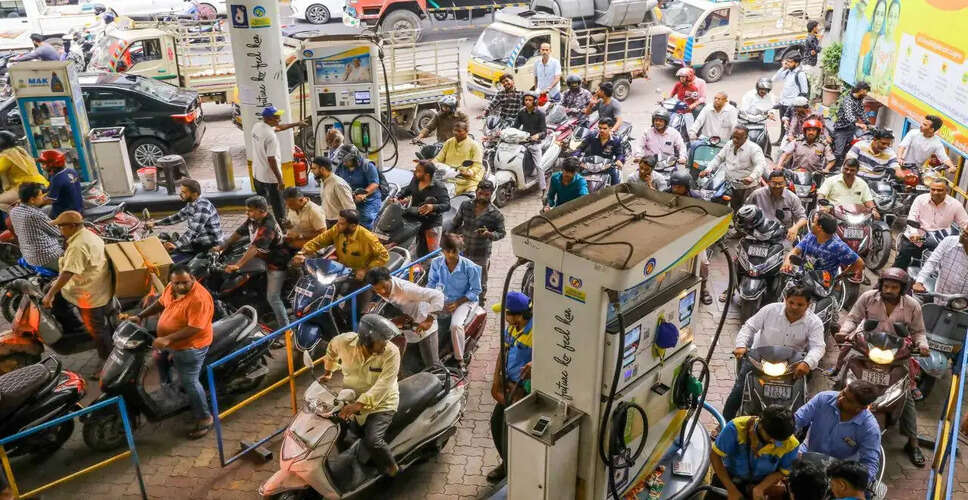
While fuel prices in India appear stable at the gas stations, oil companies are incurring significant losses to maintain this status. State-owned oil marketing firms, including Indian Oil Corporation, Bharat Petroleum Corporation Ltd, and Hindustan Petroleum Corporation Ltd, are reportedly losing around Rs 1,600 crore daily, as per industry experts. This situation arises amidst rising global crude oil prices, driven by geopolitical tensions since the onset of the Iran conflict on February 28, even as retail fuel prices in India have remained relatively unchanged.
The Hidden Cost of Stable Prices
If domestic fuel prices were to align with global crude oil trends, petrol would be priced at approximately Rs 113 per litre and diesel at Rs 123 per litre. Instead, oil marketing companies are absorbing the financial gap. Despite the deregulation of fuel prices, these firms have not adjusted retail prices since April 2022. Reports indicate that losses have escalated to about Rs 18 per litre for petrol and Rs 35 per litre for diesel. A report from Macquarie Group highlighted the extent of the financial pressure, estimating that at current spot prices of USD 135-165 per barrel, the losses for petrol and diesel sales are Rs 18 and Rs 35 per litre, respectively.
Furthermore, every $10 increase in crude prices adds roughly Rs 6 per litre to marketing losses. At one point, when crude prices surged, daily losses reportedly reached Rs 2,400 crore before settling at the current Rs 1,600 crore.
Government Intervention and Its Challenges
The government has intervened to alleviate some of the financial strain, notably through a Rs 10 per litre reduction in excise duty on petrol and diesel. However, instead of passing these savings to consumers, companies have retained them to mitigate their losses, which also impacts government revenue. Lower excise duties directly affect fiscal income, constraining fiscal flexibility. Even a complete excise duty removal would not fully offset the current losses, potentially leading to an annual revenue loss of around $36 billion and significantly increasing the fiscal deficit. India's reliance on imported crude, which constitutes nearly 88% of its total needs, further exposes it to global price fluctuations, with a significant portion of imports sourced from the Middle East, followed by Russia and the United States.
Future Outlook
The financial burden has already erased previous profits for oil marketing companies, and their upcoming quarterly results are anticipated to reflect this downturn. There are indications of potential changes ahead, with a Macquarie report suggesting a risk of increased pump prices following state elections in April. Currently, Indian consumers are shielded from global fuel price volatility, but this stability comes at a considerable and escalating cost, quietly borne by both the oil companies and the government.