
India's New Employment Act: A Game Changer for Rural Households
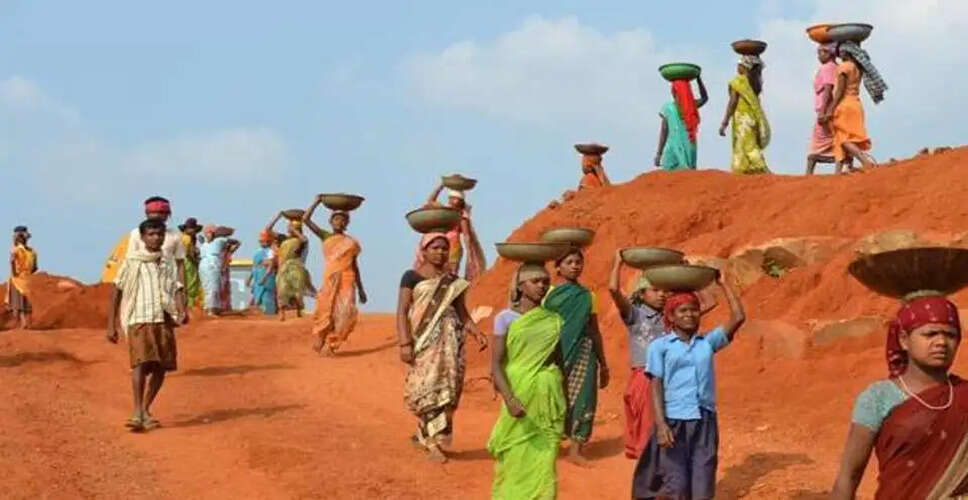

Introduction of the VB-G RAM G Act
New Delhi: On Monday, the Indian government declared that the Viksit Bharat - Guarantee for Rozgar and Ajeevika Mission (Gramin) Act will be implemented nationwide starting July 1, effectively replacing the long-standing Mahatma Gandhi National Rural Employment Guarantee Act (MGNREGA).
This new legislation introduces a revised framework that guarantees 125 days of wage employment for rural households.
The Ministry of Rural Development referred to this change as a "historic transition" in the rural development landscape of India, aligning with the vision of "Viksit Bharat @2047."
The Act aims to facilitate a "future-ready and productivity-oriented rural transformation," enhancing livelihood security, rural incomes, and infrastructure development at the village level.
As per the ministry's notifications, the VB-G RAM G Act will take effect in all states and Union Territories on July 1, with MGNREGA being repealed on the same date.
The ministry reassured that the shift from MGNREGA to the new framework would be smooth, ensuring no disruption for workers.
"Ongoing projects under MGNREGA as of June 30 will be preserved and transitioned seamlessly to the new framework," the notification stated.
Current e-KYC verified MGNREGA job cards will remain valid until the new "Gramin Rozgar Guarantee Cards" are issued, and workers without job cards can still register at the gram panchayat level.
The ministry confirmed that employment will not be denied to workers due to pending e-KYC.
Draft regulations concerning wage payments, grievance resolution, allocation standards, administrative costs, and transitional provisions are being developed in collaboration with states and Union Territories and will soon be available for public feedback.
Under the VB-G RAM G Act, every rural household with adult members willing to perform unskilled manual labor will be entitled to 125 days of guaranteed wage employment per financial year, an increase from the previous 100-day guarantee under MGNREGA.
Employment must be provided within the specified timeframe; otherwise, workers will qualify for unemployment benefits as outlined in the Act.
The government also highlighted the importance of timely and transparent wage payments, stating that wages will be directly deposited into workers' bank or post office accounts through Direct Benefit Transfer.
Payments will be processed weekly or within 15 days after the muster roll closes; if not, workers will be eligible for delay compensation.
The Centre announced a record allocation of Rs 95,692.31 crore for the 2026-27 fiscal year, marking the highest-ever budget estimate for a rural employment initiative. Including anticipated contributions from states, the total program budget is expected to surpass Rs 1.51 lakh crore.