
India's Manufacturing Ambitions Face Global Trade Challenges
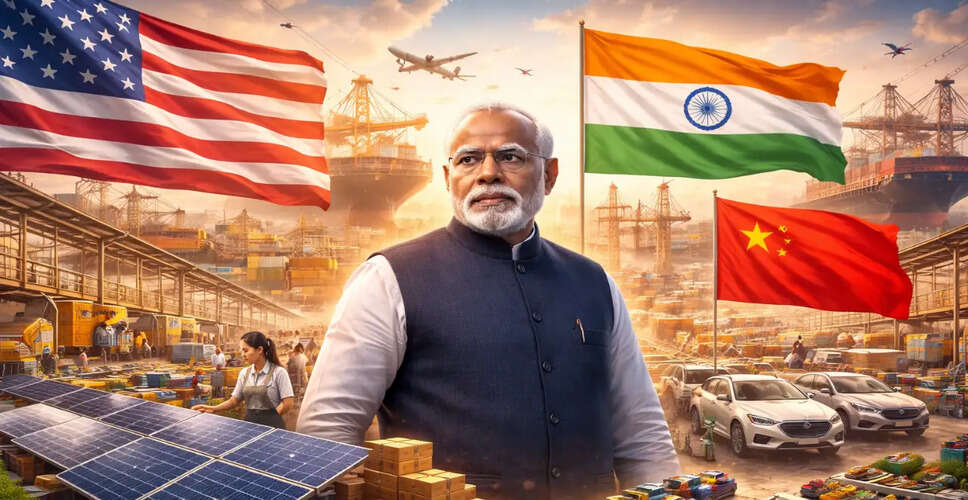
Global Trade Pressures on India's Manufacturing Sector
India's aspiration to emerge as a leading global manufacturing hub is encountering significant opposition from major economies. Recent trade measures from the United States and China are specifically targeting India's factory incentive initiatives. The US has enacted preliminary tariffs of 126% on solar imports from India, citing that government subsidies provide an unfair advantage to local manufacturers. Analysts warn that these high tariffs could effectively exclude Indian solar panel producers from the US market, according to a report by Bloomberg.
Simultaneously, China has intensified its challenge at the World Trade Organization (WTO). The WTO's dispute resolution body has agreed to form a panel to investigate China's claims that India's incentive programs in sectors like automotive and renewable energy preferentially benefit domestic products over foreign imports. This development follows unsuccessful consultations between the two nations, marking the initial formal step in the WTO dispute resolution process.
At the heart of this contention is India's production-linked incentive (PLI) scheme, launched in 2020 to enhance local manufacturing across 14 sectors, including electronics, pharmaceuticals, solar modules, and medical devices. The initiative has a total budget of approximately Rs 1.91 trillion (around $21 billion).
Trading partners contend that these subsidies create an uneven competitive landscape favoring Indian manufacturers. Companies in the solar sector, such as Waaree Energies, Adani Enterprises, and Reliance Industries, have expanded their production capabilities with the help of PLI incentives and other supportive policies.
This backlash arises as India seeks to mend its relations with both the US and China. Recently, New Delhi and Washington have taken steps to alleviate months of tariff disputes that had positioned India with some of the highest US tariffs in Asia. Concurrently, India is also striving to stabilize its relationship with China, which has soured following border clashes in 2020.
Despite facing criticism, Indian officials assert that the incentive programs adhere to WTO regulations and are crucial for revitalizing the manufacturing sector. The government's overarching goal is to elevate the manufacturing sector's contribution to GDP from approximately 17% to around 25%.
Economists emphasize that the PLI scheme is vital to achieving this target. However, increasing pressure from key trading partners may compel India to reconsider its approach to industrial support, potentially focusing more on investments in technology, innovation, and productivity rather than direct subsidies.
Experts argue that without policy frameworks like the PLI, a sustained recovery in manufacturing would be challenging. As global scrutiny intensifies, India's industrial strategy is becoming a central issue in the ongoing international trade disputes.