
India's LPG Consumption Plummets Amid West Asia Conflict: What You Need to Know

Significant Drop in LPG Usage
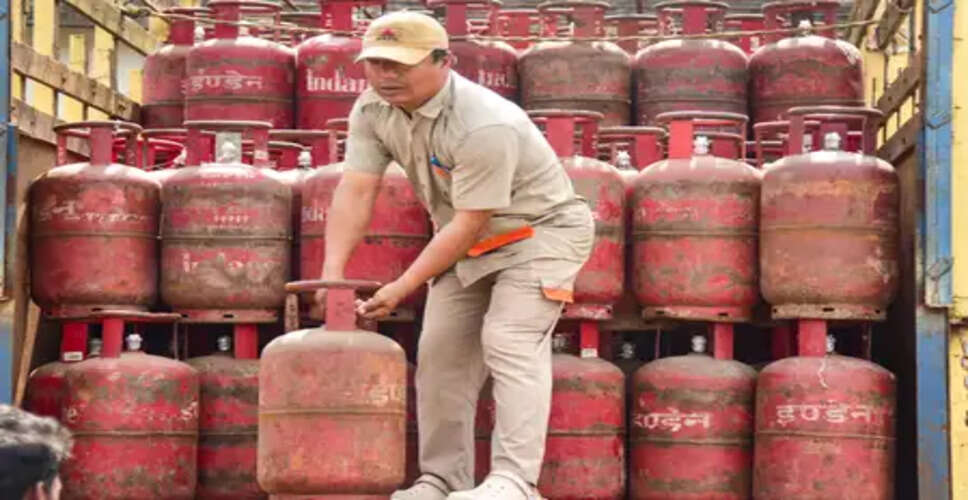
India has experienced a notable decline in cooking gas (LPG) consumption, which dropped by 13% in March due to supply issues stemming from the ongoing conflict in West Asia. This information comes from the latest official statistics.
In March, LPG usage was recorded at 2.379 million tonnes, marking a 12.8% decrease from the 2.729 million tonnes consumed during the same month last year.
Approximately 60% of India's LPG is imported, primarily through the Strait of Hormuz. Recent military actions involving the US and Israel against Iran, followed by Iran's counteractions, have severely impacted supply routes. Consequently, the government has restricted LPG deliveries to commercial entities such as hotels and industries to ensure that household cooking gas remains available.
Data from the Oil Ministry's Petroleum Planning and Analysis Cell (PPAC) indicates that LPG cylinders sold to households fell by 8.1% in March, totaling 2.219 million tonnes, while sales to non-domestic users plummeted nearly 48%. Bulk LPG sales saw an alarming drop of 75.5%.
This decline in consumption contrasts sharply with government assertions that LPG supplies are stable and that all domestic demand is being satisfied.
To mitigate the shortfall, the government has instructed refineries to redirect feedstock from petrochemical production to enhance LPG output. As a result, domestic LPG production increased to 1.4 million tonnes in March, up from 1.1 million tonnes a year earlier, according to PPAC data.
This initiative has led to an overall increase in LPG production for the fiscal year 2025-26, rising to 13.1 million tonnes compared to 12.8 million tonnes in the previous two fiscal years.
Despite the unusual drop in March, LPG consumption for the fiscal year ending March 2026 was up by 6%, reaching 33.212 million tonnes.
In recent years, LPG consumption has steadily increased, largely due to government initiatives aimed at replacing firewood and other polluting fuels with cleaner energy sources.
The ongoing conflict has also affected jet fuel consumption, which remained relatively stable at 807,000 tonnes in March, compared to 801,000 tonnes the previous year.
In contrast to the war-affected fuels, petrol and diesel sales saw significant growth. Petrol sales rose by 7.6% to 3.78 million tonnes, while diesel consumption increased by 8.1% to 8.727 million tonnes.
For the entire fiscal year, ATF sales grew by 2% to 9.161 million tonnes, petrol consumption increased by 6.5% to 42.586 million tonnes, and diesel consumption rose by 3.6% to 94.705 million tonnes.
Industrial fuels such as naphtha and fuel oil experienced declines of 9.9% and 1.4%, respectively, while bitumen, used in road construction, saw a 3% increase in consumption.