
India's Lab-Grown Diamond Market Set for Explosive Growth
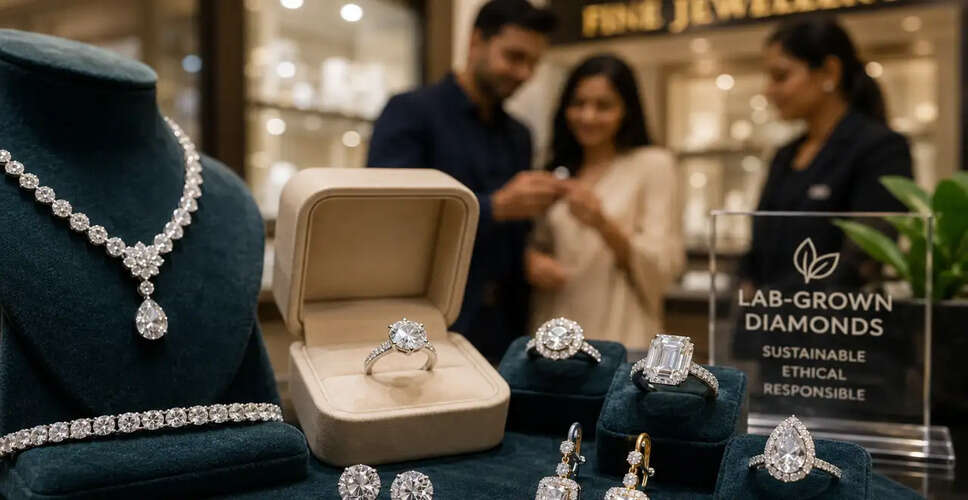

Rapid Growth of Lab-Grown Diamonds in India
The lab-grown diamond jewellery sector in India is poised for significant growth, with projections indicating an increase in market value from $453.7 million in 2026 to an impressive $1.79 billion by 2036. Future Market Insights (FMI) forecasts a compound annual growth rate (CAGR) of 14.8% during this period. This growth is attributed to heightened consumer acceptance, improved awareness of lab-grown diamonds, supportive regulations, and broader retail distribution. What was once a niche market focused on sustainability is now becoming a staple in high-end jewellery collections.
Ricky Vasandani, CEO and Co-founder of Solitario, highlighted the key drivers of this growth, stating, “The rise of lab-grown diamonds in India stems from affordability, innovation, and evolving consumer attitudes. Today's buyers are more knowledgeable and research-oriented, recognizing that lab-grown diamonds possess the same physical, chemical, and optical characteristics as their mined counterparts.” He noted a significant shift in consumer perception over recent years, moving from mere curiosity to growing acceptance and confidence. “Lab-grown diamonds are increasingly seen as a smart luxury choice that offers remarkable value without sacrificing quality or beauty,” he added.
Lisa Mukhedkar, Founder and CEO of Aukera, echoed these sentiments, emphasizing that modern consumers are well-informed and unwilling to compromise on size, cut, color, or quality. Lab-grown diamonds provide the same attributes as mined diamonds while offering better value. The perception has shifted from curiosity to acceptance, with consumers viewing lab-grown diamonds not merely as alternatives but as a more intelligent purchasing option.
Appeal to Younger Consumers
Another significant factor driving the industry's growth is the increasing preference for affordable luxury among younger consumers. Vasandani noted that while younger buyers were early adopters, the category is now appealing to a broader demographic. “We are witnessing traditional diamond buyers exploring lab-grown options for larger carat sizes and everyday luxury items. The dialogue has shifted from 'Why lab-grown?' to 'Why not?' Consumers of all ages are seizing the chance to own larger, high-quality diamonds at more accessible prices, thereby expanding the overall diamond jewellery market rather than merely replacing existing demand,” he explained.
According to Mukhedkar, the adoption of lab-grown diamonds spans various age groups. Today’s buyers are more aware and connected, with many who typically purchase mined diamonds now considering lab-grown options due to their superior value proposition. The decision-making process is increasingly focused on quality and design rather than age.
Future Prospects for Lab-Grown Diamonds
Vasandani believes that lab-grown diamonds will become a mainstream segment in the Indian jewellery market within the next five years. “Increased awareness, wider retail access, and enhanced consumer education will further drive adoption,” he stated. Mukhedkar added that the shift towards lab-grown diamonds is inevitable and will continue to gain momentum as consumers become more quality-conscious. “A growing number of informed buyers will opt for lab-grown diamonds due to their exceptional quality, larger sizes, and better value, while also being a more ethical choice,” she noted.
Vasandani also expressed that rather than viewing lab-grown diamonds as competitors to natural diamonds, both categories can coexist, catering to different consumer needs and occasions. Natural diamonds will retain their emotional and legacy significance, while lab-grown diamonds will attract those seeking innovation and contemporary luxury. Together, they will contribute to the overall growth and evolution of the diamond jewellery industry in India.
The FMI report highlights that government support has bolstered the sector's outlook. The classification of lab-grown diamonds as a sunrise industry has spurred domestic manufacturing through incentives and policy backing. Additionally, standardized terminology introduced by the Bureau of Indian Standards (BIS) is aiding retailers in clarifying product distinctions, reducing consumer confusion, and fostering trust.
Rings as the Leading Category
Among various jewellery types, rings are the largest revenue generators, accounting for 36.2% of total demand. Their popularity is linked to engagements, weddings, proposals, and gifting occasions, according to FMI data. Consumers increasingly view lab-grown diamond rings as an opportunity to acquire larger, more visually appealing stones without significantly increasing their expenditure. Industry players have also expanded customization options, allowing buyers to choose different stone sizes, settings, and designs tailored to their preferences. Higher average transaction values associated with ring purchases continue to reinforce this segment's market leadership.