
India's Economic Vulnerability Amid Rising Tensions in West Asia
Geopolitical Risks and India's Economic Exposure
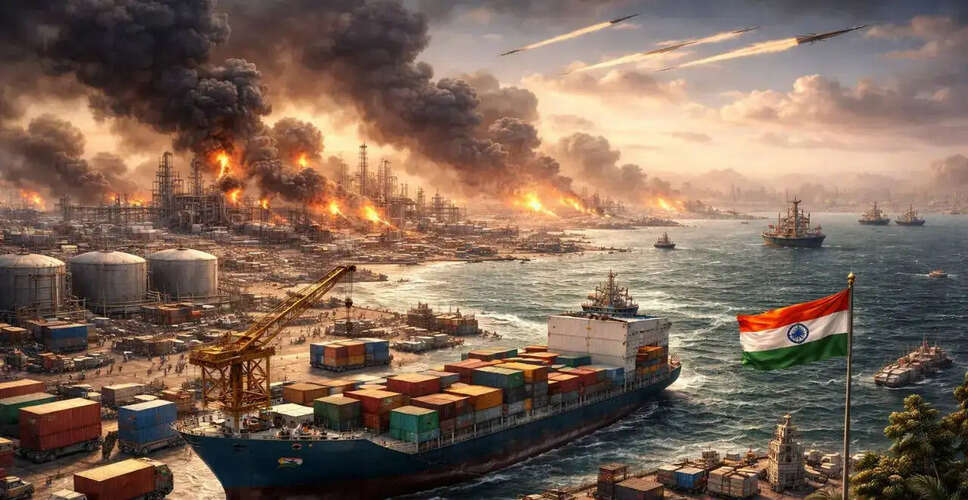
The ongoing US-Israeli military actions against Iran have escalated tensions in West Asia, drawing global scrutiny towards the associated geopolitical risks. For India, the implications are significant and tangible. With extensive involvement in energy, trade, investments, remittances, and a large diaspora, India stands as one of the most economically susceptible nations outside the conflict zone. Although New Delhi has maintained a cautious public stance, the underlying data reveals a more pressing narrative.
Structural Oil Dependency
Despite efforts to diversify its energy sources, India continues to rely heavily on crude oil imports from West Asia. In 2025, approximately $50.8 billion worth of crude oil, representing 48.7% of total supplies, was sourced from this region. Nearly half of India's crude oil imports, around 2.6 million barrels per day, passed through the Strait of Hormuz, primarily from Iraq, Saudi Arabia, the UAE, and Kuwait. Collectively, Gulf nations accounted for about 46% of India's crude imports during this period.
This dependency poses risks, as disruptions can arise from blocked shipping routes, increased insurance costs, or price hikes, all of which can directly affect India through fuel price fluctuations and the current account deficit (CAD). In FY26 (April to December), nearly half of India's oil imports originated from West Asia, underscoring the vulnerability of the nation, which imports over 85 to 88 percent of its crude oil.
Interconnected Trade Flows
West Asia not only serves as a crucial supplier but is also an expanding market for Indian goods. Recent estimates indicate that the region's share in India's global goods exports has steadily increased, reaching around 20%. The agri-food sector exemplifies this trend, with West Asia accounting for approximately 21.8% of India's $11.8 billion in agri-food exports in 2025. Basmati rice exports are particularly vulnerable, with Iran, Saudi Arabia, Iraq, the UAE, and Yemen collectively representing nearly half of India's basmati export market. Middle Eastern buyers constitute over half of total shipments, with around 400,000 tonnes currently stranded due to the conflict. These exports are vital for farmers in key states and small industries like jewelry and gems, which also rely on Gulf markets.
Potential Investment Freeze
Investment from Gulf nations has become a cornerstone of India's economic growth. The UAE, in particular, has been a significant source of foreign direct investment (FDI), with substantial equity flows directed towards infrastructure, technology, and real estate. Collectively, West Asia contributes about 10% of India's total FDI equity inflows, with the UAE holding a dominant position.
Impact of Remittances on Households
India remains the world's largest recipient of remittances, with these inflows reaching unprecedented levels. Remittances from West Asian countries, especially those within the Gulf Cooperation Council, account for approximately 38% of total remittance receipts, amounting to around $51 billion. These funds are crucial for families in states like Kerala, Uttar Pradesh, and Tamil Nadu. Any disruption in employment or financial remittances from this region could lead to significant economic and social upheaval for millions.
The Human Element: Indian Diaspora in West Asia
Approximately 9 to 10 million Indians reside and work in West Asia, with over 8.5 million in Gulf Cooperation Council countries alone. The UAE is home to more than 3 million Indians, while Saudi Arabia hosts around 2.7 million. The safety and livelihoods of these individuals could be jeopardized if the conflict escalates. Past crises have necessitated large-scale evacuations, and a broader regional war could stretch diplomatic and logistical resources thin.
External Affairs Minister S. Jaishankar, in a statement to the Rajya Sabha on March 9, 2026, highlighted that the safety of the Indian community is a top priority for the government. He noted that nearly one crore Indians live and work in Gulf countries, with a few thousand in Iran for educational and professional purposes. The government has been closely monitoring the situation since early signs of tension emerged, with Prime Minister Narendra Modi overseeing developments. As of March 8, 2026, around 67,000 Indian nationals had returned from the region through available commercial flights. Indian embassies are operating around the clock in high-alert mode, and a dedicated control room has been established to assist affected individuals and families. Multiple advisories have been issued, starting January 5, 2026, urging avoidance of non-essential travel to Iran, with stronger warnings following on January 14.
Jaishankar emphasized a threefold approach: advocating for peace and de-escalation, ensuring the safety of Indian citizens abroad, and safeguarding Indian interests, including energy security and trade, while maintaining constant communication with the Indian community in the Gulf. He reiterated the government's commitment to supporting the Indian community during these challenging times and facilitating safe repatriation for those in transit.
Policy Implications for India
India has historically balanced its foreign relations with Israel, Gulf nations, Iran, and other regional powers, a strategy that has served it well in stable times. However, the current conflict underscores the deep economic ties India has with West Asia. This situation highlights the necessity for enhanced contingency planning regarding diversified energy sourcing, financial readiness against oil price shocks, remittance inflows, and preparedness for evacuating citizens. While the conflict is geographically regional, the economic and human costs for India are immediate and significant.