
India's Economic Reforms: Achievements and Ongoing Challenges

Evaluating India's Reform Journey
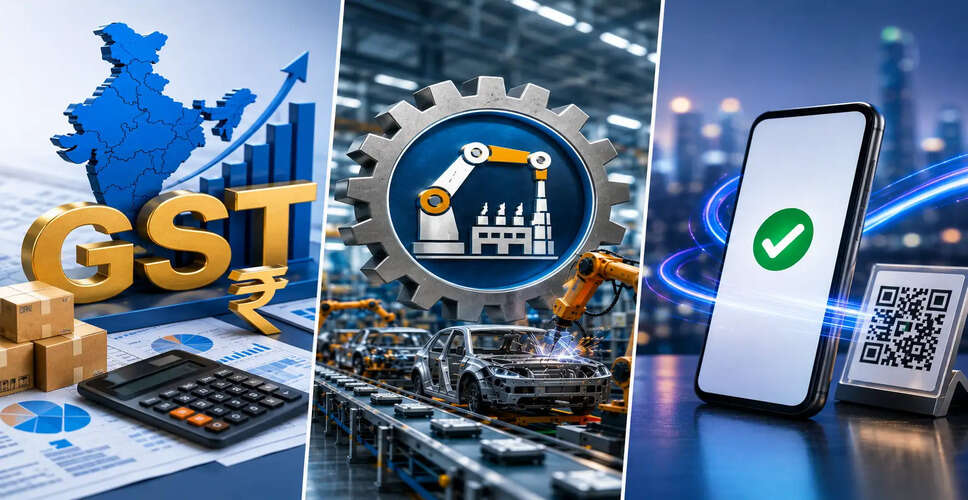
As the Modi administration marks its 12-year milestone, it's essential to assess India's reform progress. What notable successes have been achieved, and what hurdles remain? While some analysts applaud the implementation of GST and the digital transformation driven by UPI, along with the Production-Linked Incentive (PLI) scheme that has spurred manufacturing investments, others express concerns regarding the pace of private investment growth and job creation. The success of the Unified Payments Interface has garnered global attention, showcasing India's digital economy through the world's largest real-time payments platform.
| Reform Area | Reach / Impact | What Worked | What Stalled |
|---|---|---|---|
| GST | 1.5+ crore registered taxpayers; entire consumer market affected | Established a unified national market, enhanced tax compliance, increased government revenues | Compliance burden for small businesses, multiple tax slabs remain |
| UPI | 50+ crore users; 6.5+ crore merchants | Revolutionized digital payments, improved financial inclusion, enabled low-cost transactions | Digital divide persists, limited revenue model for payment providers |
| PLI | Manufacturing sectors including electronics, pharma, autos, and solar | Attracted investment, boosted exports, strengthened domestic manufacturing | Employment gains have lagged investment gains in several sectors |
| Private Investment | Critical driver of economic growth and jobs | Corporate balance sheets improved, selective capex revival visible | Broad-based private investment cycle remains uneven |
| Job Creation | Affects India's 500+ million workforce | Growth in formal payrolls, startups, and gig economy opportunities | Insufficient quality jobs, youth unemployment and manufacturing employment challenges persist |
Reform Overview: Successes and Setbacks
| What Worked | What Stalled |
|---|---|
| GST unified India's indirect tax system | GST compliance remains complex for many MSMEs |
| UPI transformed digital payments at massive scale | Monetization and profitability challenges remain |
| PLI boosted manufacturing investment and exports | Job creation has not matched policy ambitions |
| Stronger tax collections and formalization | Private sector investment recovery remains uneven |
| Improved digital public infrastructure | Employment growth continues to lag economic growth |
Economists emphasize the need for enhanced female labor force participation alongside empowerment. Senior Economist Mitali Nikore noted, "The past twelve years have seen a significant shift in women's economic agency. With nearly 90% of women now having bank accounts in their names and female labor force participation rising to 41.7%, along with the establishment of almost 90 lakh women-led self-help groups, women are entering the Indian economy in unprecedented numbers. Initiatives like Jan Dhan, Mudra credit, and PM Awas Yojana have not been exclusively aimed at women, yet they have helped millions transition from the margins to the mainstream. However, participation alone does not equate to empowerment, which is the next challenge. To achieve the goal of 70% female workforce participation by 2047, we must convert these advancements into decent, dignified, and well-compensated jobs, treating care infrastructure, safe mobility, and skill development as integral to economic policy rather than mere welfare measures. A developed India cannot thrive with half its talent sidelined."