
Indian Stock Markets Open Lower Amid Global Weakness

Market Overview
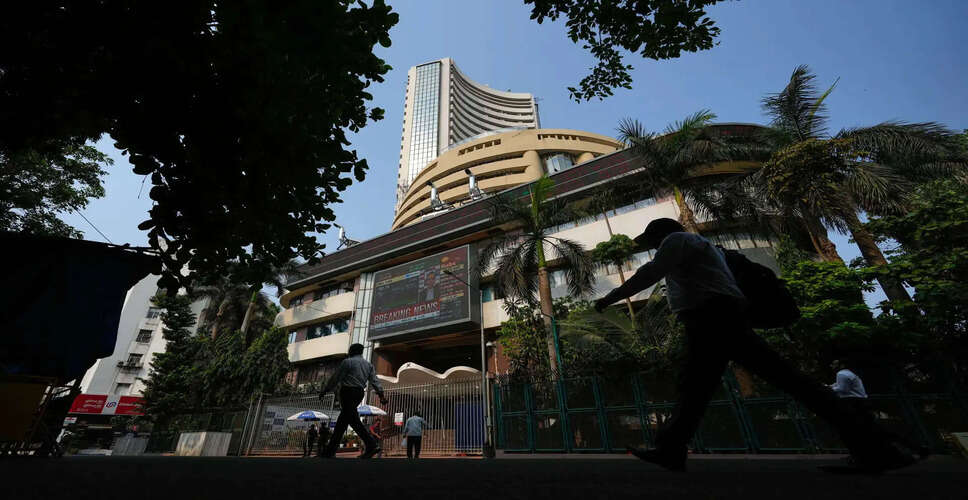
On Thursday, the Indian stock markets began the day on a negative note, influenced by trends from Asian markets. The Sensex opened down by 452.08 points, or 0.61%, settling at 73,894.09, while the Nifty fell by 123.15 points, or 0.53%, to reach 23,286.35. The Indian rupee remained stable at 95.71 against the dollar, matching its previous closing rate. Early trading indicated a muted opening for domestic equities, with GIFT Nifty showing a slight decline of 5 points, or 0.02 percent, at 23,327. Additionally, the Indian benchmark indices were already in the red during the pre-opening session. Global markets also faced declines, with MSCI's Asia-Pacific index outside Japan dropping by 0.8%, Japan's Nikkei falling by 1.3%, and South Korean stocks decreasing by approximately 2%.
Concerns Over Foreign Investment and Crude Prices
Foreign Investors, Volatile Crude Remain Concern:
Dr. VK Vijayakumar, Chief Investment Strategist at Geojit Investments Limited, expressed that the market is currently facing more challenges than opportunities. He pointed out that ongoing uncertainties in West Asia and significant foreign portfolio investor (FPI) selling are major factors impacting the market negatively. Without a resolution to the crisis in West Asia, a robust market rally seems unlikely. The positive trends in markets across the US, Japan, South Korea, and Taiwan suggest that FPI selling in India may continue.
He further noted that the aggressive short positions held by FPIs in the derivatives market indicate potential further declines unless an unexpected resolution to the West Asia crisis occurs, which could lower crude prices. The recent clashes in Lebanon and ongoing tensions between the US and Iran suggest that a quick resolution is not on the horizon.
Aakash Shah, a Technical Analyst at Choice Broking, added that equities in the Asia-Pacific region are anticipated to open lower due to the previous day's weakness on Wall Street, driven by rising crude oil prices and renewed geopolitical tensions involving Iran and the US. In the last session, the Nifty 50 managed to recover from its intraday lows on June 3, closing above its weakest levels. However, the overall market structure remains fragile, with bearish trends prevailing as the index trades below key moving averages and momentum indicators indicating negative conditions.