
Indian Stock Market Sees Gains Driven by Banking Sector

Market Overview
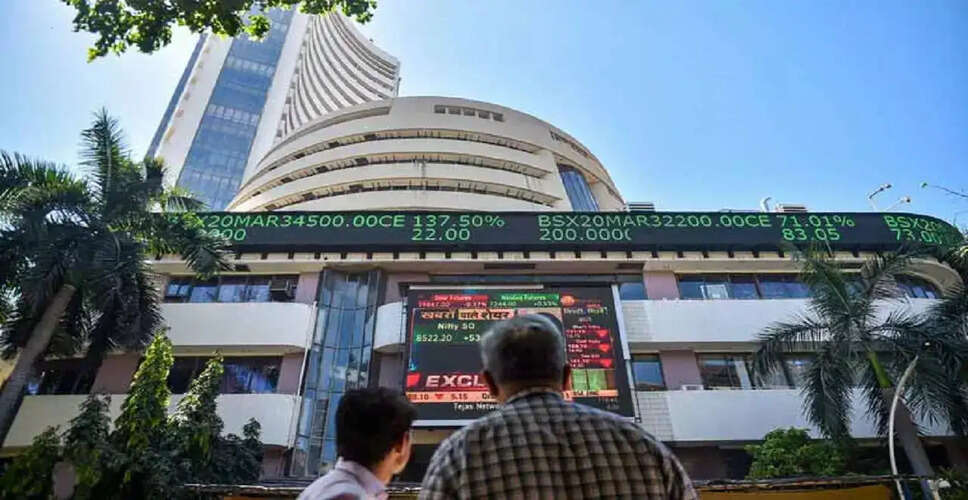
On Tuesday, the Indian stock market closed on a positive note, buoyed by strong performances from banking stocks and favorable signals from global markets. The Sensex rose by 394.50 points, or 0.54%, finishing at 73,918.76, while the Nifty increased by 119.10 points, or 0.52%, to settle at 23,242.10. The Bank Nifty index surged nearly 2%, with public sector banks leading the charge. This uptick followed the Reserve Bank of India's (RBI) announcement regarding its concessional forex swap facilities, designed to attract foreign capital inflows.
Among the notable performers, Bank of Baroda saw a 5% increase, Canara Bank rose by 3.7%, Punjab National Bank climbed 3.6%, Union Bank of India gained 2.1%, and State Bank of India increased by nearly 2%.
Vinod Nair, Head of Research at Geojit Investments Limited, commented, "The domestic markets are experiencing a slight recovery following a recent downturn, aided by reduced tensions between Iran and Israel and lower crude oil prices. However, the market sentiment remains delicate due to ongoing foreign institutional investor (FII) outflows and rising bond yields, which underscore ongoing worries about global economic conditions. Attention is now shifting to the upcoming US inflation data, which will significantly influence expectations regarding Federal Reserve policies and global liquidity, particularly in light of robust US economic indicators."
Nair added, "In the short term, the markets are expected to remain volatile and within a range, as investors exercise caution until clearer global signals are available, despite slightly better Q4FY26 earnings, while the outlook for Q1FY27 appears weak."