
Indian Stock Market Plummets Amid Iran-Israel Conflict
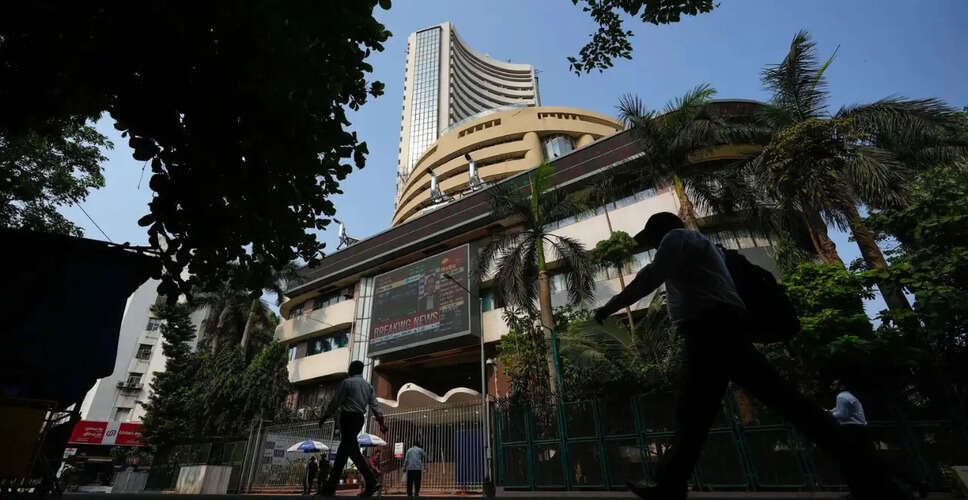

Market Reaction to Geopolitical Tensions
On Monday, the Indian stock market experienced a significant downturn in response to the escalating conflict between Iran and Israel, which involved missile exchanges. The Sensex dropped over 4%, opening at 73,431.49, reflecting a decrease of 811.85 points or 1.09%. Meanwhile, the Nifty index was at 23,120.75, down by 245.95 points or 1.05%. Prior to the market opening, the benchmark indices showed weakness, with the Gift Nifty indicating a gap-down of approximately 334 points from the previous close of Nifty futures, trading around the 23,118 level.
On the previous Friday, the markets closed lower despite the Reserve Bank of India's (RBI) Monetary Policy Committee deciding to maintain the repo rate at 5.25%. The Sensex fell by 116.67 points, or 0.16%, finishing at 74,243.34, while the Nifty closed down by 49.85 points, or 0.21%, at 23,366.70.
Asian Markets Face Major Declines
Asian Stock Markets Tumble
In Asia, stock markets faced severe declines, with South Korea's KOSPI plummeting by 9%. Japan's Nikkei index also fell by 4.2%, and MSCI's broad measure of Asian equities dropped by 3.4%. Notably, technology and semiconductor stocks in South Korea were hit hard, with Samsung Electronics experiencing an 11% decline and Taiwan Semiconductor Manufacturing Co (TSMC) dropping by 5.7%.
Dr. VK Vijayakumar, Chief Investment Strategist at Geojit Investments Limited, commented, "The market is facing significant challenges as the week begins. The Nasdaq's sharp decline of 4.18% last Friday has unsettled global markets, particularly affecting tech-heavy regions like South Korea and Taiwan. The ongoing conflict in West Asia, marked by Iran's missile strikes against Israel, has pushed crude oil prices higher, with Brent crude surpassing $96. The positive jobs data from the US suggests that the Federal Reserve is unlikely to lower interest rates, contrary to President Trump's expectations. Rates are expected to remain steady for the foreseeable future."
He added, "The Indian market may surprise today. If the Nifty opens down by 300 points as anticipated, we could see a robust recovery driven by domestic institutional investors and retail buying. It's crucial to recognize that the US sell-off on Friday was primarily tech-driven, which might lead to a shift from AI-focused investments to non-AI sectors, potentially benefiting India. The rupee's appreciation to 94.94 from a recent low of 96.96 could also discourage foreign institutional investors from continued selling in India. Furthermore, the projected GDP growth of 7.7% for FY26 and better-than-expected Q4 results could provide fundamental support to the market."
Aakash Shah, a Technical Research Analyst at Choice Equity Broking Private Limited, noted, "Indian equity markets are likely to open sharply lower, with Gift Nifty trading at 23,134, down by 306 points, as Asian equities opened weak amid rising geopolitical tensions and a downturn in US technology stocks, impacting overall risk sentiment."