
Indian Stock Market Faces Setback Amid Geopolitical Tensions and Earnings Uncertainty
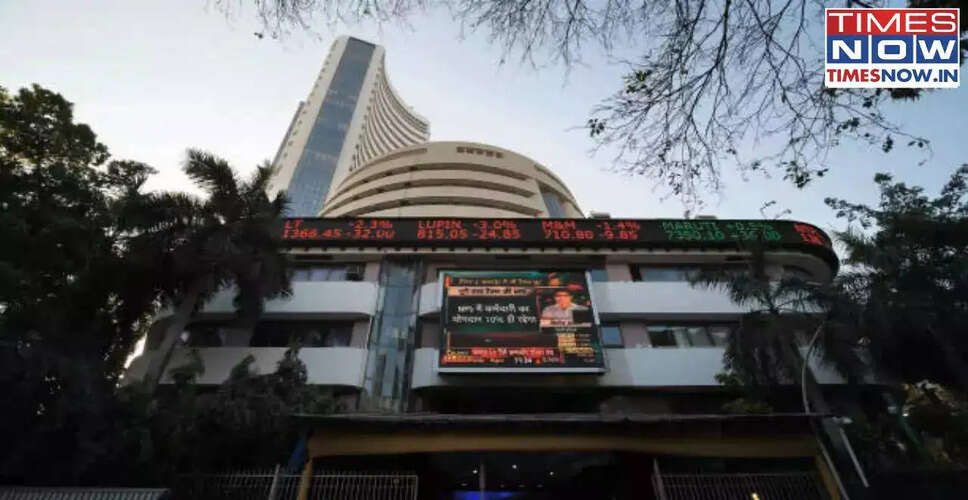

Market Overview
The Indian stock market concluded its two-week upward trend on a negative note, impacted by rising geopolitical tensions stemming from the US-Iran situation and cautious remarks from leading IT companies. Although the week began positively, ongoing selling pressure prevailed, leading to declines in both major indices. The Nifty 50 dropped by 1.87%, finishing at 23,897.95, while the Sensex decreased by 2.33%, closing at 76,664.21. This downturn indicates increasing investor anxiety as external risks and uncertainties regarding earnings cloud the market's near-term outlook.
Market participants are preparing for a potentially volatile period ahead, with sentiment likely to be influenced by global events. Ponmudi R, CEO of Enrich Money, stated that the market will remain highly responsive to news, particularly regarding US-Iran tensions, fluctuations in crude oil prices, and broader global indicators. He mentioned that a decline in oil prices could alleviate macroeconomic worries and enhance investor confidence. However, any escalation in the Strait of Hormuz could lead to renewed volatility and profit-taking.
Currency trends and the performance of global markets will also play crucial roles in shaping market momentum. Ponmudi emphasized that while there is a chance for recovery driven by positive developments, the sustainability of any upward movement will rely on geopolitical stability, moderation in crude oil prices, and consistent buying interest. Until clearer directional signals are available, the markets are expected to remain within a range, adopting a cautious stance that necessitates a disciplined and risk-managed approach.
Key Global and Domestic Influences
One significant event on the horizon is the Federal Open Market Committee (FOMC) meeting scheduled for April 28–29. Investors anticipate that the US Federal Reserve will maintain interest rates at their current levels for the third consecutive meeting, following a pause earlier this year after previous rate cuts.
Ajit Mishra, SVP of Research at Religare Broking, noted that the Federal Reserve's policy decision will be pivotal, offering insights into the future trajectory of interest rates and liquidity conditions. Concurrently, the Q4 earnings season is gaining momentum, with over 200 companies preparing to release their results for the March quarter. Major players such as Maruti Suzuki, Zomato, Ultratech Cement, Vedanta, Adani Enterprises, and Hindustan Unilever are among those expected to report.
Mishra added that the ongoing Q4 earnings season is likely to serve as a crucial catalyst for stock-specific price movements, with market participants closely monitoring reported figures, forward guidance, and sector outlooks to reassess earnings visibility and valuation comfort across various segments. The performance of heavyweight stocks and key sectors will be vital in determining the overall direction of the indices.
Geopolitical Concerns and Market Dynamics
Geopolitical issues continue to loom large, particularly the ongoing conflict between the US and Iran. Diplomatic efforts have made little progress, even after a ceasefire extension aimed at facilitating negotiations. Crude oil prices remain a significant concern, experiencing sharp fluctuations throughout the week but ultimately ending higher, reflecting a balance between supply anxieties and hopes for reduced tensions.
Investor behavior also indicates a cautious approach. Foreign institutional investors (FIIs) significantly sold off equities worth Rs 8,828 crore on April 24, marking the largest outflow in several weeks. Conversely, domestic institutional investors (DIIs) provided some support by remaining net buyers. So far in 2026, FIIs have sold equities totaling Rs 2.25 lakh crore, while DIIs have invested Rs 2.79 lakh crore, helping to cushion the market against more severe declines.