
Indian Stock Market Faces Major Decline Amid Global Tensions
Market Overview
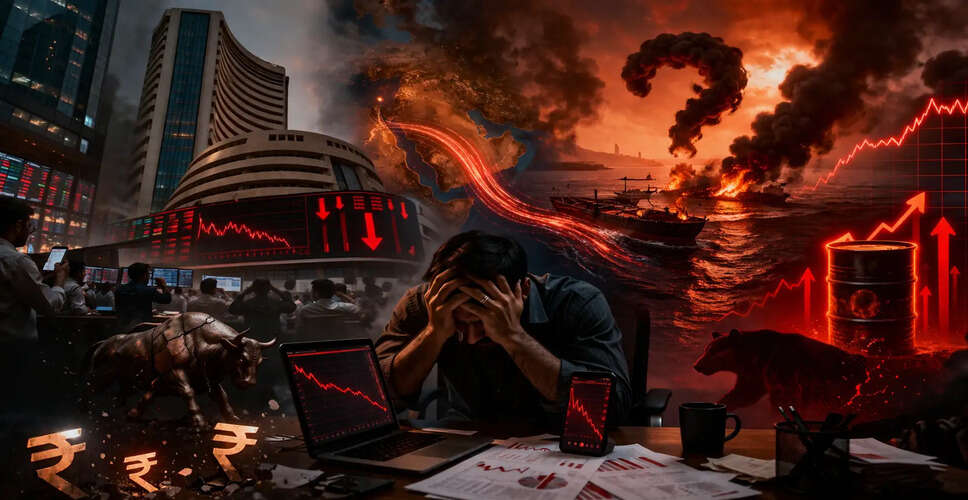
The Indian stock market has experienced a significant downturn following the outbreak of conflict in Iran, which has contributed to a worldwide economic slowdown. March has proven to be a pivotal month for the stock market, with a widespread sell-off in equities observed during the January to March quarter. The Nifty index plummeted by approximately 13% in this timeframe. Mid-cap and small-cap stocks were particularly affected, with declines exceeding 10% for the Nifty mid and small-cap indices this year. This market downturn has severely impacted the portfolios of major investors, many of whom saw a substantial portion of their holdings decline in value.
Mukul Agrawal, a notable Indian equity investor and founder of Param Capital Group, reported that out of his 65 stock holdings, only 5, or about 8%, remained profitable by the end of the quarter. The remaining 60 stocks, over 92%, suffered losses. Rekha Jhunjhunwala, the widow of the late Rakesh Jhunjhunwala, known as India's Warren Buffett, maintained a relatively stable portfolio. Out of her 27 stocks, only 2, or roughly 7.4%, yielded gains, while 25 stocks, over 92%, fell in value. Vijay Kedia, another prominent investor, had 17 stocks in his portfolio, with just 1 stock, or about 5.9%, showing positive performance, while 16 stocks, over 94%, declined.
Dolly Khanna, a well-known investor from Chennai, faced significant losses across her portfolio. Reports indicate that she held 10 stocks, with only 1 stock, or 10%, providing positive returns, while 9 stocks experienced declines. Ashish Kacholia, who had 34 stocks at the end of December, saw only 5 stocks, or about 14.7%, deliver positive returns, while 29 stocks, over 85%, fell into losses.
Market Volatility and Future Outlook
Is Your Portfolio Safe?
The fluctuations in the stock market are closely tied to the recent surge in crude oil prices, which have risen sharply due to the Iran conflict and the subsequent blockage of the Strait of Hormuz. Bernstein analysts have indicated that if crude oil prices remain above $90 per barrel, it could negatively impact Nifty earnings. They estimate that for every $10 increase above this threshold, Nifty earnings could decline by 2-3%. Their analysis suggests a gradual relationship between oil prices and Nifty earnings, predicting a potential 3-4% hit to long-term earnings per share growth, which has historically averaged between 10-11%.
Shankar Sharma, founder of GQuant Investech, expressed on social media that India may need to endure a prolonged bear market lasting five to ten years to foster genuine, sustainable growth. He stated, "India's real growth will commence when we experience a 5-10 year bear market, prompting a return to building real businesses rather than the speculative ventures that currently dominate the market."