
Indian Stock Market Faces Continued Decline Amid Rising Oil Prices

Market Overview
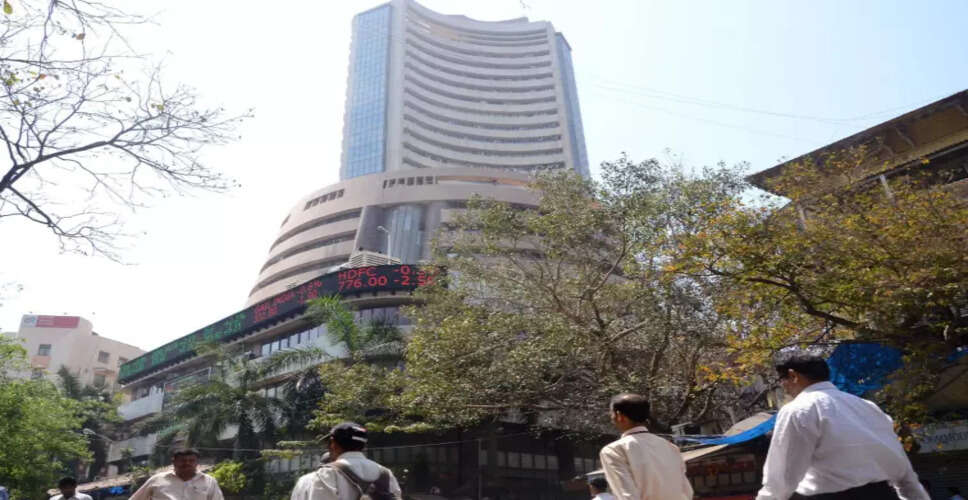
Representational Image
Mumbai, September 9: The Indian stock market continued its downward trend for the third day in a row on Wednesday, driven by escalating tensions between the US and Iran, which pushed Brent crude oil prices to a critical $100-per-barrel threshold. This surge has raised alarms regarding inflation and the overall economic landscape.
The Sensex, the benchmark index, dropped by 813.35 points, equivalent to a 1.08% decrease, closing at 74,764.23. Meanwhile, the Nifty index fell by 203.60 points, or 0.86%, finishing at 23,431.50.
Experts analyzing the Nifty's technical outlook indicated that the immediate resistance level is now between 23,550 and 23,600.
“For a recovery towards 23,700 to 23,800, a sustained move above 23,600 is essential,” market analysts noted.
“Conversely, the 23,400 level now serves as immediate support,” they added.
The decline was primarily driven by the information technology sector, with major players like Infosys, HCL Technologies, and Tech Mahindra being the largest losers among Nifty stocks. The significant drop in IT shares contributed heavily to the overall market downturn amid a general risk-averse sentiment.
The broader market also faced challenges, with the Nifty MidCap index decreasing by 0.51% and the Nifty SmallCap index falling by 0.48%.
Sector-wise, the Nifty IT index was the poorest performer, plummeting over 3% by the end of the trading day. The Nifty Realty index also struggled due to the prevailing weak market sentiment.
In contrast, the Nifty Metal index showed some resilience, helping to mitigate broader market losses.
Market experts expressed that the cautious sentiment stems from the sharp increase in crude oil prices, which raises concerns about rising input costs, inflation, and the potential effects on India's import expenses.
“Today’s market downturn reflects a mix of increasing geopolitical tensions, crude oil nearing $100 per barrel, a weakening rupee, and renewed selling by foreign institutional investors,” analysts stated.
“Looking ahead, we can expect heightened volatility until there is more clarity regarding the situation in the Middle East and crude oil prices,” market observers concluded.