
Indian Stock Market Experiences Significant Decline Amid Economic Concerns

Market Overview
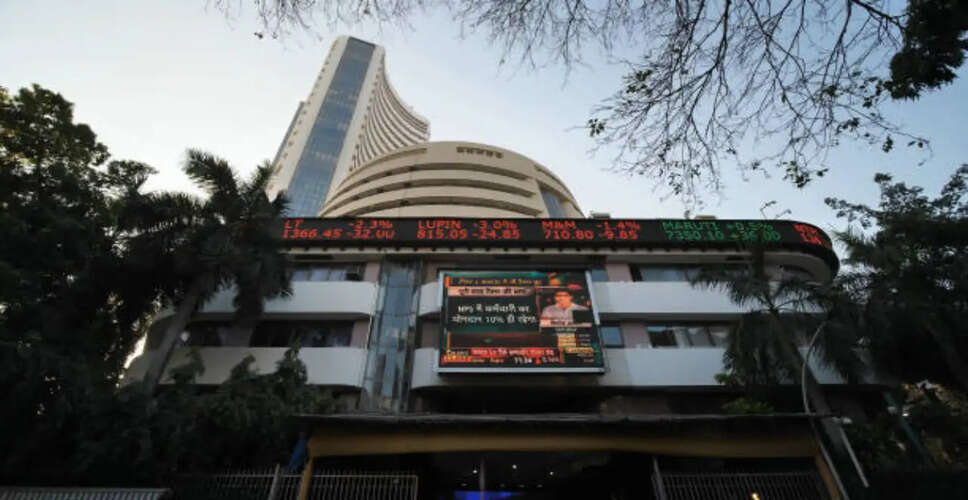
On Thursday, the Indian Stock Market reversed its initial upward trend, concluding the day with notable losses. The Sensex dropped by 135.03 points, or 0.18%, finishing at 75,183.36, while the Nifty settled at 23,654.70, down 4.30 points or 0.02%. Earlier in the day, the Sensex had surged by 627.4 points, reaching 75,945.79, and the Nifty had climbed 200.9 points to 23,859.90 during early trading.
The market opened positively, with the Sensex gaining over 500 points and the Nifty surpassing 23,700. At the start, the Sensex was up by 540.12 points, or 0.72%, at 75,858.51, while the Nifty rose by 126.55 points, or 0.53%, to 23,785.55. Airline stocks, including IndiGo and SpiceJet, saw an increase following a decline in crude oil prices overnight. Additionally, the Indian Rupee made a notable recovery, trading at 96.15, appreciating by approximately 65 paise or 0.68%.
Factors Behind Market Decline
What led to Markets fall?
The stock market's downturn was largely influenced by reports indicating that the Reserve Bank of India (RBI) is exploring various strategies to stabilize the Indian Rupee. These strategies may include raising interest rates and implementing currency swaps. The RBI has announced plans to conduct a USD 5 billion USD-INR buy and sell swap auction next week to enhance long-term liquidity in the banking sector.
Vinod Nair, Head of Research at Geojit Investments Limited, noted, "Domestic equities lost their early gains as worries about potential RBI rate hikes and disappointing manufacturing PMI data overshadowed the positive sentiment from lower crude prices. Ongoing uncertainties regarding US-Iran negotiations, indications of possible tightening in domestic monetary policy, and a weaker growth outlook have raised macroeconomic concerns. The HSBC flash Composite Purchasing Managers' Index (PMI), compiled by S&P Global, decreased to 58.1 this month from 58.2 in April, indicating a slowdown in India's private sector growth in May, particularly in manufacturing amid the West Asia conflict."
Nair added, "Despite the resilience shown by small caps and selective buying in the real estate and healthcare sectors, profit booking kept the markets relatively flat by the end of the day. Moving forward, the market's near-term direction will depend on the RBI's policy decision in June, developments in US-Iran discussions, and the stability of key growth indicators and the rupee."