
Indian Stock Market Experiences Decline Amid Volatility

Market Overview
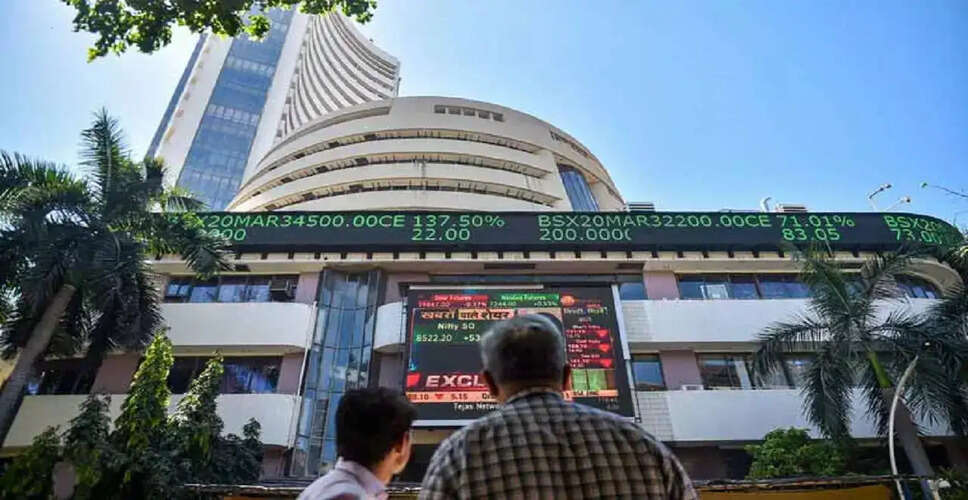
On Tuesday, the Indian stock market closed lower after a day of volatility, with the Nifty index dipping below 23,900. The decline was primarily driven by major IT companies such as Infosys, TCS, and HCL Tech. At the end of trading, the Sensex fell by 249.70 points, or 0.33%, settling at 76,478.67, while the Nifty dropped 80.50 points, or 0.34%, to close at 23,865.75.
Vinod Nair, the Head of Research at Geojit Investments Limited, commented on the market's performance, stating that it remains in a consolidation phase, fluctuating within a narrow range and showing mixed trends. Despite a reduction in geopolitical tensions, the delicate nature of the US-Iran peace agreement continues to impact market sentiment, hindering any significant directional movement.
Sector performance was varied, with IT stocks being the main contributors to the downturn. Investors are keenly awaiting upcoming US employment data and insights from the new Federal Reserve Chair regarding interest rate trends, especially as inflation persists above target levels while economic growth remains robust.
Domestically, the current monsoon pattern indicates a potential deficit not seen in a decade, raising alarms about agricultural productivity and related sectors, which could further dampen market sentiment amid predictions of weak earnings for Q1FY27. Nevertheless, stability in crude oil prices and the Indian rupee, along with a recent decrease in foreign institutional investor outflows, may offer short-term support to the market, with large-cap stocks expected to perform better.