
Indian Markets Close Weak Amid Global Tensions and Rising Oil Prices
Market Overview
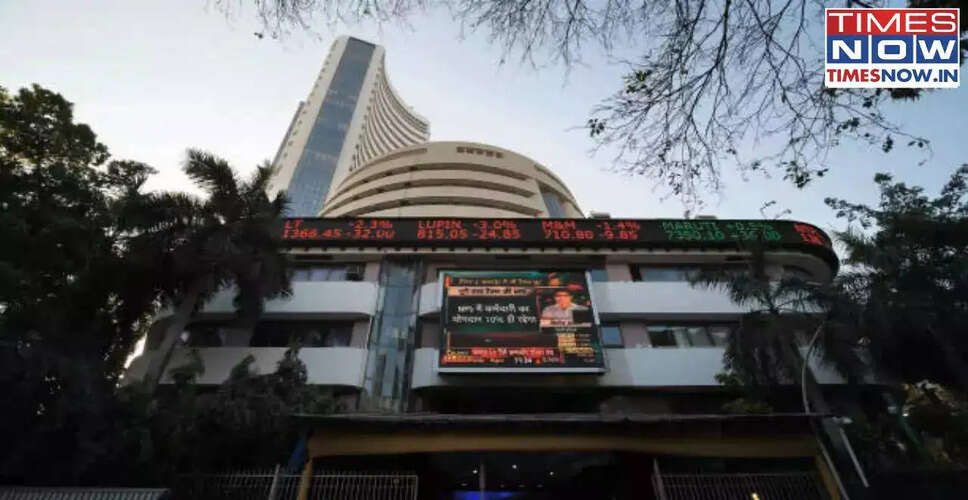
Indian stock indices concluded the week on a negative note, reversing the previous day's gains as investors sought to secure profits amidst increasing global uncertainties. On March 6, both the Sensex and Nifty 50 experienced significant declines, driven by escalating geopolitical tensions, rising crude oil prices, and ongoing foreign investor withdrawals, which negatively impacted market sentiment. The Sensex fell by 1,097 points, or 1.4%, finishing at 78,918.90, while the Nifty 50 dropped 315 points, or 1.3%, to close at 24,450.45.
According to Ajit Mishra, Senior Vice President of Research at Religare Broking, the markets ended the shortened trading week with substantial losses, primarily due to heightened geopolitical tensions in West Asia and a sharp increase in crude oil prices, which significantly affected investor sentiment. The Nifty closed at 24,450.45, and the Sensex settled at 78,918.90, both reflecting nearly 3% losses for the week. Market breadth was weak, with indices declining on three out of four trading days as investors adopted a risk-averse approach.
Anticipated Volatility Ahead
Market analysts predict that volatility may continue in the upcoming week, largely influenced by the evolving geopolitical landscape in the Middle East and its repercussions on global commodity markets. Ponmudi R, CEO of Enrich Money, noted that investors will be closely observing developments in the region, especially fluctuations in crude oil prices, which significantly affect global risk appetite.
The rising tensions in the area have started to impact economic activities and disrupt regular trade flows through the Strait of Hormuz, raising alarms about potential global supply chain interruptions. Consequently, global investors are becoming increasingly cautious about the possible effects on overall economic growth, while also contending with the risks of commodity-driven inflation, presenting a complex challenge for policymakers. Additionally, movements of foreign institutional investors (FIIs) and currency fluctuations will remain crucial indicators, as they signal trends in global capital allocation and investor confidence in emerging markets like India.
Key Market Influencers
Geopolitical Tensions: The ongoing US-Israel-Iran conflict poses a significant risk to global markets. Iran's President Masoud Pezeshkian recently expressed regret over military actions against neighboring countries, asserting that Tehran would only retaliate if attacked. Additionally, flights to and from Dubai have been suspended due to the escalating situation. US President Donald Trump remarked that the United States is performing well in its operations against Iran, rating the situation positively.
Crude Oil Surge: Crude oil prices have surged amid fears that the ongoing conflict could disrupt global supply routes. The Strait of Hormuz, a vital energy corridor, has already seen disruptions, with Brent crude rising to $92.69 per barrel, an increase of 8.5% in one day and nearly 30% over the week.
Precious Metals Movement: Precious metals have also seen upward movement following disappointing US payroll data, which has rekindled hopes for a potential interest rate cut by the Federal Reserve. However, a stronger US dollar has limited these gains. Spot gold increased by 1.4% to $5,149.14 per ounce, although it recorded a weekly decline of 2.4%. Silver rose by 2.6% to $84.30 per ounce.
Institutional Investment Trends: Foreign investors have continued to withdraw from Indian equities, adding further pressure to the markets. On March 6, FIIs sold shares worth Rs 6,030 crore, while domestic institutional investors purchased equities worth nearly Rs 6,972 crore. During Friday's trading, FIIs bought shares worth Rs 14,435 crore but sold equities worth Rs 20,465 crore. Year-to-date, FIIs have offloaded Rs 60,364 crore worth of Indian equities, while DIIs have invested a net Rs 1,28,348 crore.
VK Vijayakumar, Chief Investment Strategist at Geojit Investments Limited, stated that FIIs are unlikely to return as buyers until there is clarity regarding the conflict and a decrease in crude prices. With Brent crude trading above $90, the outlook for the Indian economy and markets appears grim. Currently, the market is being supported by DII purchases and consistent mutual fund SIP inflows. A further market correction could make valuations more attractive, but substantial buying will likely only occur once the conflict resolves and crude prices decline.
Inflation Monitoring: Investors are also expected to keep a close eye on India's Consumer Price Index (CPI) inflation data set to be released on March 12, which will shed light on inflationary pressures following the recent surge in crude oil prices. Analysts suggest that the market remains cautious in the near term from a technical standpoint.