
India-US Trade Talks: Are We at a Standstill?

Current Status of India-US Trade Negotiations
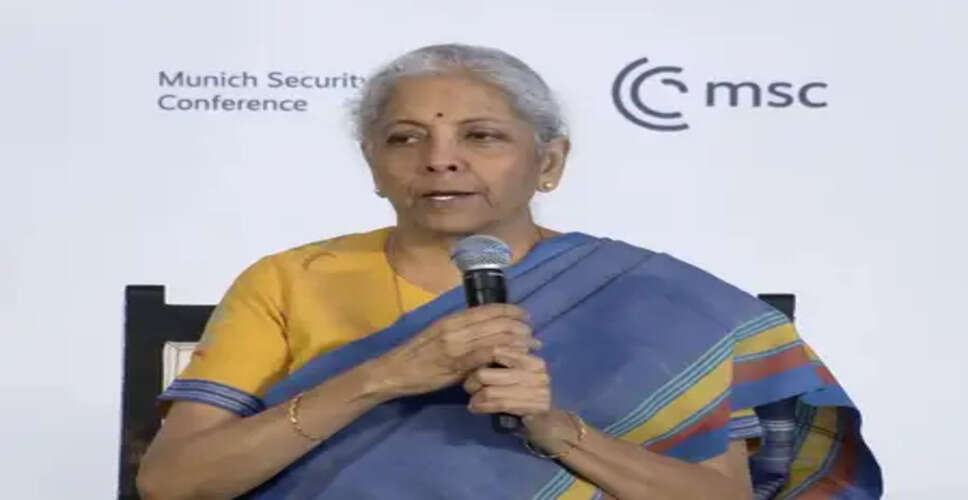
New Delhi: On Monday, Finance Minister Nirmala Sitharaman indicated that discussions regarding trade between India and the United States are ongoing but may have reached a plateau, with the current trade balance favoring India.
During her address at the Munich Leaders Meeting 2026, she noted that the proposed trade agreement has been intensely negotiated.
Sitharaman stated, “While negotiations are still in progress, it seems both parties might have hit a point where further concessions could be challenging.”
She emphasized that there might still be opportunities for additional discussions.
According to her, the trade balance is currently in India's favor, while the United States aims to address its trade deficit.
The Finance Minister highlighted that the US is concerned about perceived losses in its trade dealings with India over the years.
These negotiations are part of a framework for an interim trade agreement that was announced in February 2026.
Both nations have expressed their commitment to finalize this interim pact while also pursuing a more comprehensive trade agreement.
Furthermore, Sitharaman referenced the India-European Union trade agreement as a model for India's trade negotiation strategy.
She mentioned that this agreement would encompass economies representing approximately two billion people and account for about a quarter of the global GDP.
Describing it as 'the mother of all deals,' she echoed a sentiment previously expressed by European Commission President Ursula von der Leyen.
Sitharaman noted that India has liberalized 92.5% of its tariff lines and around 97% of trade value under this agreement, while the EU has opened about 99% of trade value and roughly 97% of tariff lines.
She concluded by stating that the selection of market access commitments was determined by the complementary nature of the two economies, ensuring that India's competitiveness remains intact.