
India-UK Trade Agreement: Key Benefits and Implications for Businesses
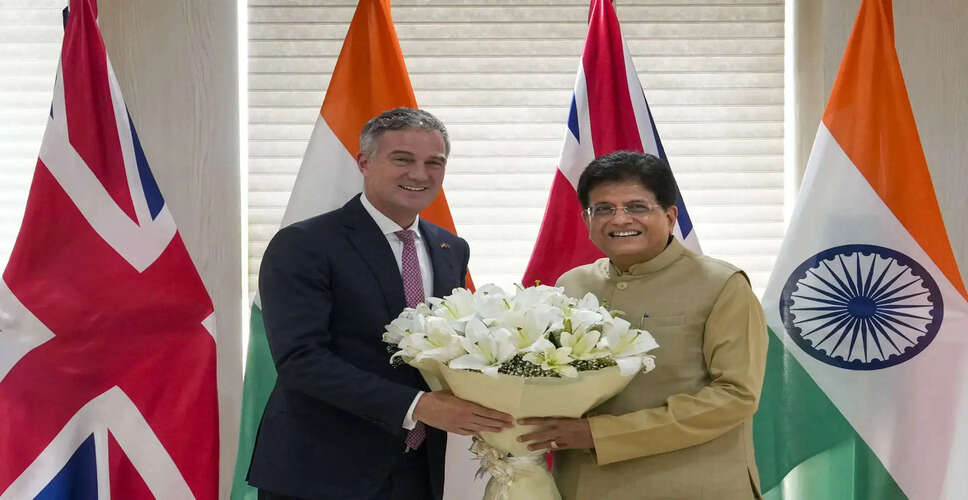

Overview of the India-UK Trade Agreement
The Comprehensive Economic and Trade Agreement (CETA) between India and the UK, finalized on July 25, 2025, is set to take effect on July 15, 2026. This marks the sixth free trade agreement initiated by the Narendra Modi administration, following similar agreements with countries such as Mauritius, UAE, Australia, EFTA, and Oman. This significant agreement is expected to provide duty-free access for approximately 99% of Indian exports.
Benefits for Indian Industries
Under CETA, various labor-intensive sectors, including garments, textiles, and processed foods, will gain zero-duty access to the UK market, where current duties range from 4% to 16%. Other sectors poised to benefit include automobiles, machinery, and ceramics.
Additionally, the agreement will reduce tariffs on British imports such as salmon and machinery, potentially lowering prices for Indian consumers. India plans to eliminate tariffs on silver, its largest import from the UK, over a decade.
Impact on the Automotive Sector
For the first time in a free trade agreement, India will significantly reduce import duties on fully-built vehicles from the UK, decreasing tariffs from 110% to 10% over time. Conventional petrol and diesel vehicles will benefit from immediate concessions, while electric and hybrid vehicles will receive preferential treatment starting in the sixth year.
India will permit the import of 378,000 conventional-engine passenger cars from the UK at reduced customs duties during the initial 15 years of the agreement. Tariffs on UK-made trucks will also see a reduction from 44% to 8.8% within five years.
Alcohol Tariff Reductions
The agreement will lower tariffs on various premium alcoholic beverages, including cider and whisky. For qualifying products, the standard 150% duty will decrease to 110% in the first year and further to 75% by the tenth year.
Specifically, tariffs on Scotch whisky will drop from 150% to 75% initially, then to 40% by year ten.
Exclusions and Government Procurement
India will not offer duty concessions on certain products, including fresh apples and smartphones. The UK has also excluded various meat products and specific sugars from concessions.
In a significant move, India will open approximately 40,000 high-value government contracts to UK suppliers, enhancing market access in sectors like transport and infrastructure.
Intellectual Property and Social Security Contributions
India has agreed to stronger intellectual property enforcement while maintaining its right to compulsory licensing for essential technologies. Additionally, Indian firms operating in the UK will be exempt from social security contributions for up to five years for employees relocated from India.
Trade Statistics and Future Outlook
In the fiscal year 2025-26, trade between India and the UK increased by 8.62% to USD 25.12 billion. However, India's exports saw a decline of 7.6%, while imports surged by 36.11%. Foreign Direct Investment (FDI) from the UK reached USD one billion in 2025-26, up from USD 795 million the previous year.