
India Secures Russian Oil Amid Ongoing Crisis
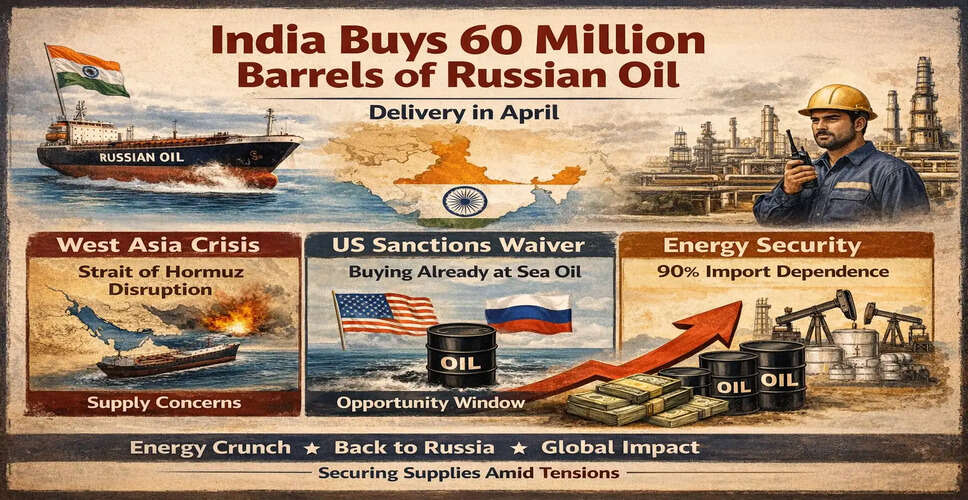
India Turns to Russian Oil Amid Supply Challenges
In light of the ongoing oil crisis stemming from the conflict in Iran, India has re-engaged with Russia to alleviate supply issues. Reports indicate that Indian refiners have procured approximately 60 million barrels of Russian oil scheduled for delivery next month. These shipments were secured at premiums ranging from $5 to $15 per barrel over Brent prices, according to unnamed sources familiar with the matter, as cited by a news outlet. This move follows a waiver from the United States, permitting India to import Russian oil that was loaded onto ships prior to March 5, aimed at mitigating shortages caused by the effective blockade of the Strait of Hormuz.
In addition to Russian oil, India is also set to receive other shipments. Data from Kpler suggests that India's imports of Venezuelan crude for April are expected to reach 8 million barrels, marking the highest volume since October 2020. India has remained significantly dependent on imported oil and was a prominent buyer of discounted Russian crude following the onset of the Ukraine conflict in early 2022. However, purchases were notably reduced late last year due to pressure from the US.
Reliance Industries Acquires Iranian Crude
Reliance Industries Acquires 5 Million Barrels of Iranian Crude
Mukesh Ambani's Reliance Industries has recently acquired 5 million barrels of Iranian crude oil following a temporary lifting of sanctions by the US government. The crude was purchased at a premium of approximately $7 per barrel compared to ICE Brent futures. The exact delivery timeline for this oil remains unclear, according to reports.
On Friday, the US government announced a 30-day sanctions waiver for Iranian oil already in transit, applicable to oil loaded on any vessel, including those under sanctions, before March 20 and discharged by April 19. However, state-run refiners have shown hesitance in procuring Iranian crude due to concerns regarding operational, financial, and regulatory challenges that may outweigh any immediate advantages. Despite the US sanctions waiver, uncertainties surrounding shipping, insurance, and payment processes have hindered the finalization of deals.