
India-New Zealand Free Trade Agreement: A Game Changer for Indian Exports
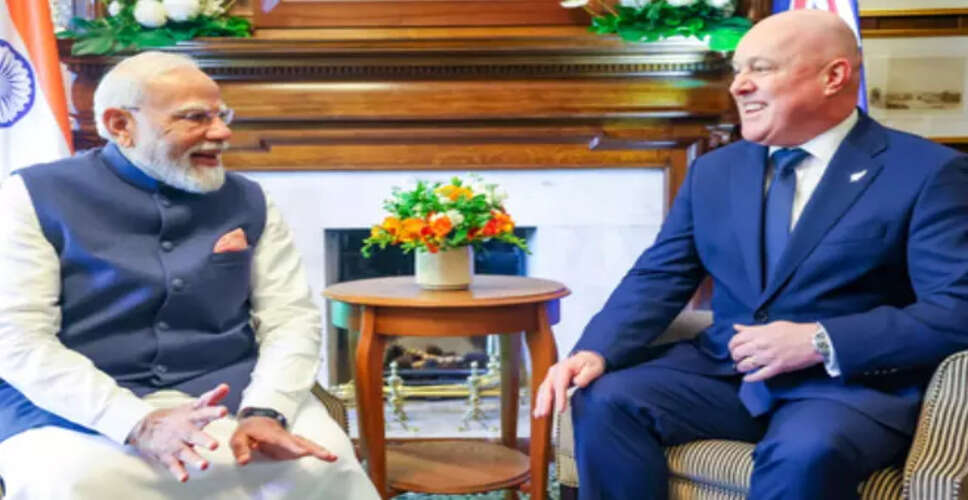

Transformative Trade Agreement
Photo: IANS
New Delhi, Sep 30: The Trade Promotion Council of India (TPCI) announced on Wednesday that the newly established free trade agreement (FTA) between India and New Zealand represents a significant advancement in India's trade strategy.
This agreement provides Indian exporters, especially in sectors like food processing, textiles, and light engineering, with immediate zero-duty access across all product categories, enhancing their competitive position in the Oceania market.
The India-New Zealand FTA is set to commence on October 20, linking two economies that complement each other well.
By offering 100% duty-free access for all 8,284 tariff lines related to Indian exports, this agreement aims to double the bilateral trade to $2 billion within five years and attract $1 billion in long-term foreign investments into India.
“The implementation on October 20 signifies a pivotal moment for Indian trade policy. TPCI is dedicated to supporting MSMEs and agri-food enterprises in capitalizing on these tariff benefits, adhering to technical standards, and fostering enduring buyer relationships in New Zealand,” stated Mohit Singla, Chairman of TPCI.
To optimize trade benefits from the outset, TPCI plans to organize specialized awareness sessions for exporters, trade delegations, and focused buyer-seller meetings targeting agri-food processing and MSME manufacturing sectors, while also facilitating partnerships with INZBC and QualityNZ, along with major retailers in New Zealand.
Tariffs on various processed foods, spices, seasonings, confectionery, bakery items, packaged cereals, sauces, fruit juices, and processed vegetables will drop from as high as 5% to zero from day one.
This duty-free access significantly enhances the potential for Indian value-added agricultural products to become part of Indo-Pacific supply chains, according to the industry body.
Joint initiatives concerning kiwifruit, apples, and honey will promote technology transfer, thereby increasing productivity and supporting farmers' incomes in India while ensuring that sensitive domestic sectors like dairy are protected through balanced safeguards.
The New Zealand government has also begun efforts to collaborate on enhancing productivity within the Indian dairy industry.
The removal of tariffs ranging from 2% to 10% will make Indian apparel, finished leather goods, and footwear more competitively priced compared to regional competitors. Additionally, machinery, auto parts, tools, and packaging materials will enter New Zealand without duties, fostering growth for MSME export hubs throughout India.
Furthermore, mutual recognition and acceptance of inspection reports from equivalent regulators (such as the US FDA, EMA, and Health Canada) will significantly reduce redundant trials and expedite market entry for Indian generic medicines, active pharmaceutical ingredients (APIs), medical devices, and AYUSH products.