
India Faces Tough Economic Choices Post-Elections Amid Rising Fuel Prices

Economic Challenges Ahead
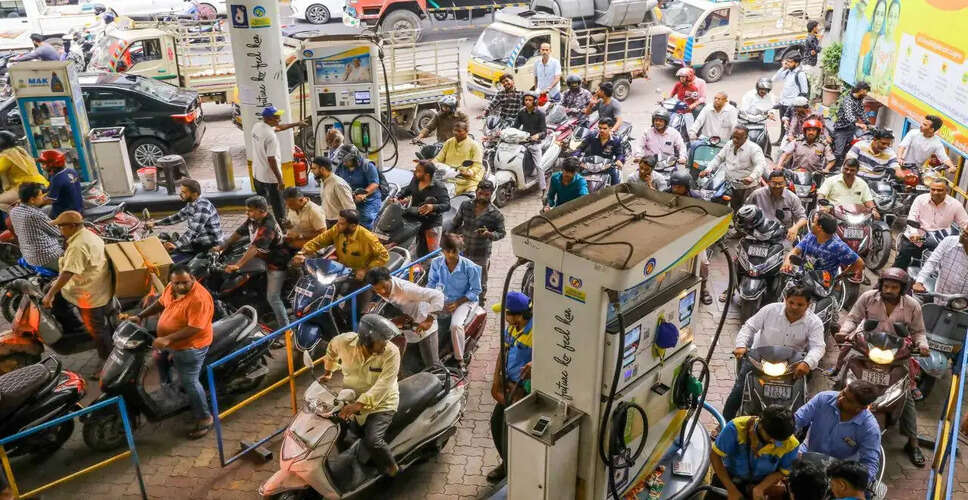
With the elections concluded, the government is confronted with significant economic challenges, particularly regarding fuel prices. For over two months, India has maintained its fuel pricing strategy despite the turmoil in global energy markets due to the West Asia crisis. Unlike many other oil-importing countries, India has refrained from transferring the increased costs to consumers. However, this approach is starting to appear economically unfeasible.
The initial government strategy was based on geopolitical expectations, anticipating that ceasefires would hold, diplomatic talks would resume, and crude prices would stabilize. Unfortunately, this scenario has not materialized.
Brent crude oil prices remain above the critical threshold of $100 per barrel. Given that India imports over 85% of its crude oil, the focus is shifting from optimistic geopolitical forecasts to the growing operational and fiscal pressures.
According to government estimates, India is incurring losses of nearly Rs 1,000 crore daily due to high crude and gas prices. At the peak of the crisis, when Brent crude reached $126 per barrel, the government absorbed significant costs—around Rs 24 per litre for petrol and Rs 30 per litre for diesel—to prevent a sudden price shock for consumers.
Currently, the burden remains largely unchanged as fuel prices have not seen substantial increases. The Centre has also faced a revenue loss of approximately Rs 1.7 lakh crore by reducing excise duties on petrol and diesel to support oil marketing companies and consumers. However, losses continue to mount.
By the end of April, oil companies reported losses nearing Rs 30,000 crore, with projections suggesting these could exceed Rs 50,000 crore by the end of the current quarter. Additionally, gas-related losses are estimated to surpass Rs 20,000 crore.
Congress leader Rahul Gandhi has cautioned that fuel prices may rise following the Assembly elections, highlighting the significant increase in commercial gas cylinder prices. He noted that the cost of a commercial gas cylinder has surged by ₹993, marking the largest single-day increase, and that inflation would become more pronounced post-elections.
India's strategic petroleum reserves currently hold 5.33 million tonnes, sufficient for about 15 days of national demand. Plans are also in motion to establish a 30-day strategic gas reserve system similar to those in Japan and South Korea.
On the LPG front, the subsidy burden has intensified, with the government absorbing nearly Rs 600 on each 14-kg domestic cylinder, plus an additional Rs 300 for beneficiaries under the Ujjwala scheme. To alleviate supply pressures, India has implemented gas control orders, albeit at the expense of gas-based industries.
India requires approximately 20,000 tonnes of imported gas daily and has contracted 800,000 tonnes of cargo at elevated global prices to meet demand for around 40 days. However, fertilizer plants are currently receiving only about 70% of their daily gas needs.
This crisis is historically unprecedented. The Straits of Hormuz, crucial for India's energy supply, has never faced such prolonged disruption, not even during the Arab oil embargo of the 1970s. The ripple effects extend beyond crude prices, as India now faces significantly higher marine insurance premiums and extended delivery schedules due to vessel diversions.
Compounding the situation is the extended shutdown of Qatar’s Ras Laffan LNG export terminal, with repairs expected to take over three years. The government is now tasked with a delicate balancing act: absorbing soaring import costs while securing long-term energy supplies, all while managing the political ramifications of passing these costs onto consumers.
Globally, many major importing nations have already raised fuel prices significantly. Countries like China, the Netherlands, Norway, Germany, and the UK have seen increases of 20-27%, while Japan, Italy, Spain, and South Korea have experienced hikes exceeding 30%. Some economies have even resorted to fuel rationing and work-from-home advisories to curb energy consumption—measures India has yet to adopt.
The pressing concern is strategic rather than temporary. A substantial fuel price increase of 20-30% may be politically risky, yet postponing difficult decisions could lead to escalating economic challenges as the options for managing the crisis diminish rapidly. For the government, this situation is evolving from a challenging political decision to an urgent economic necessity.