
India Emerges as a Global Hub for Capability Centres and AI Talent

India's Growing Role in Global Capability Centres
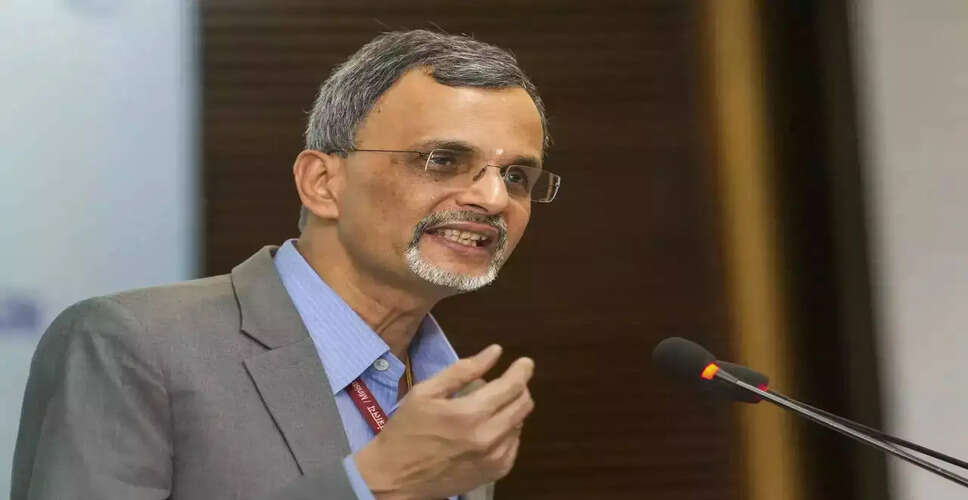
On Thursday, V Anantha Nageswaran, the Chief Economic Adviser (CEA), expressed strong confidence in India's potential as a leader in Global Capability Centres (GCCs), highlighting that the nation has become the second-largest hub for enterprise AI talent worldwide. He noted, "India is home to nearly half of the global GCCs and ranks second in terms of enterprise AI talent. Two decades ago, we had only a few back offices; now, there are over 2,000 centres employing more than 2 million professionals. This number is projected to rise to 2.3 million, with revenues surpassing $60 billion and heading towards $100 billion," Nageswaran stated.
He further elaborated that GCCs contribute nearly 2% to India's GDP and represent an increasing portion of new office space developed in urban areas each year. The CEA emphasized the expanding influence of Indian GCCs across various sectors, stating, "Global banks manage risk systems and trading platforms from Mumbai and Bengaluru, automotive manufacturers design vehicles and embedded systems in Chennai and Pune, semiconductor companies conduct chip design in India, pharmaceutical firms handle clinical analytics, and consumer brands develop digital products from here."
Nageswaran highlighted Merck's operations in India, mentioning that the German science and technology firm recently established an integrated campus in Bengaluru, which houses around 3,300 employees focused on data, artificial intelligence, and enterprise technology. He pointed out that this Bengaluru campus represents Merck's largest concentration of digital capabilities globally, making India its fourth-largest workforce hub after Germany, the US, and China.
Additionally, the CEA remarked that AI has revealed the shortcomings of traditional business models and is expected to replace routine, repetitive tasks. He cautioned against overlooking the challenges faced by business models that rely solely on low-cost execution. Nageswaran also referenced a new national initiative designed to promote the growth of GCCs beyond the major metropolitan areas into tier-II and tier-III cities, stating, "This is not just an economic objective; it is a matter of equity. Opportunities should not be confined to a few metropolitan areas."