
India and New Zealand Sign Landmark Free Trade Agreement

Historic Trade Pact Signed
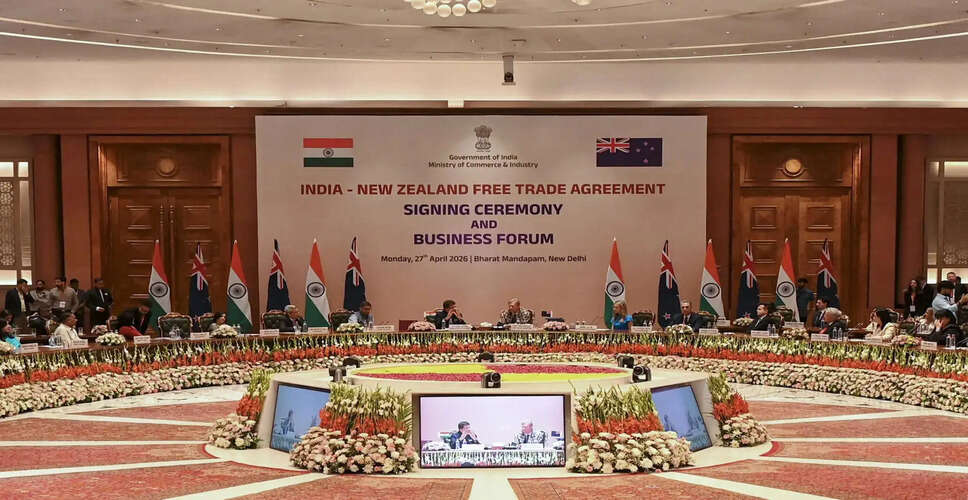
On Monday, India and New Zealand finalized a significant Free Trade Agreement (FTA), described as a 'once-in-a-generation' deal. This agreement is set to be enacted by the end of the year, pending approval from the New Zealand Parliament. The signing was conducted by Union Commerce Minister Piyush Goyal and New Zealand's Trade and Investment Minister Todd McClay. Prime Minister Narendra Modi praised the agreement, highlighting its potential benefits for farmers, youth, women, MSMEs, artisans, startups, students, and innovators. Goyal emphasized that the pact will enhance exports, agricultural productivity, student mobility, skills development, investment, and services.
Advantages for India from the Trade Agreement
How India Benefits from New Zealand Trade Deal
- Once implemented, the agreement will grant duty-free access to all of India's exports, including textiles, leather goods, and jewelry, into New Zealand.
- India is expected to receive a Foreign Direct Investment (FDI) commitment of USD 20 billion over the next 15 years. Earlier this year, a similar commitment of USD 100 billion was made when India signed a major trade deal with the European Union.
- The FTA aims to double the bilateral trade in goods and services to USD 5 billion within five years.
- Negotiations for this trade agreement concluded in December 2025, allowing duty-free access for all Indian exports to New Zealand across various product categories.
- This means that Indian exports, which previously faced tariffs of up to 10%, will now enter the New Zealand market without these additional costs.
New Zealand's Market Restrictions
New Zealand Products Restricted in India
- Products such as dairy (milk, cream, yogurt, cheese), certain animal products, and various agricultural goods (onions, peas, almonds) are currently not allowed in the Indian market.
- Other restricted items include sugar, artificial honey, and certain metals and their articles.
Service Sector Opportunities
On the services front, India will gain market access in approximately 118 sectors, including IT, education, and tourism, enhancing its service exports. Additionally, a 'Most-Favoured Nation' (MFN) status will be granted in 139 sub-sectors, ensuring that India receives equal treatment if New Zealand offers better terms to other countries in the future.
New Visa Pathways for Indian Professionals
Indians To Get Temporary Employment Entry Visa to New Zealand
The FTA introduces a new visa pathway for Indian professionals in skilled occupations, allowing for 5,000 temporary employment visas at any time, with a maximum stay of three years. This pathway includes professions such as AYUSH practitioners, yoga instructors, and IT specialists.
Dedicated Pathway for Indian Students
Dedicated Pathway For Indian Students
In a first-of-its-kind initiative, New Zealand has established a dedicated pathway for student mobility and post-study work visas for Indian students.
Benefits for New Zealand
What New Zealand Gets
India has agreed to liberalize tariffs on 70% of New Zealand's products, covering 95% of the trade value, while excluding 29.97% of product categories. New Zealand will gain duty-free access for various goods, including wooden logs and sheep meat, while India will gradually reduce tariffs on certain products over several years.
Statements from Leaders
What PM Modi and New Zealand Counterpart Said on Trade Deal
PM Modi stated that the $20 billion investment commitment from New Zealand will enhance cooperation in agriculture and technology, fostering a prosperous future for both nations. New Zealand's Prime Minister Christopher Luxon noted that this agreement would provide exporters with unprecedented access to a market of 1.4 billion people.
Potential Challenges Ahead
Does India-New Zealand Deal Face Any Hurdles?
Despite some opposition from New Zealand First, Prime Minister Luxon has secured support from the Labour Party, ensuring a majority in Parliament for the agreement's passage.