
India and Indonesia Strengthen Economic Partnership: Key Sectors to Watch

Exploring the Benefits of India-Indonesia Economic Ties
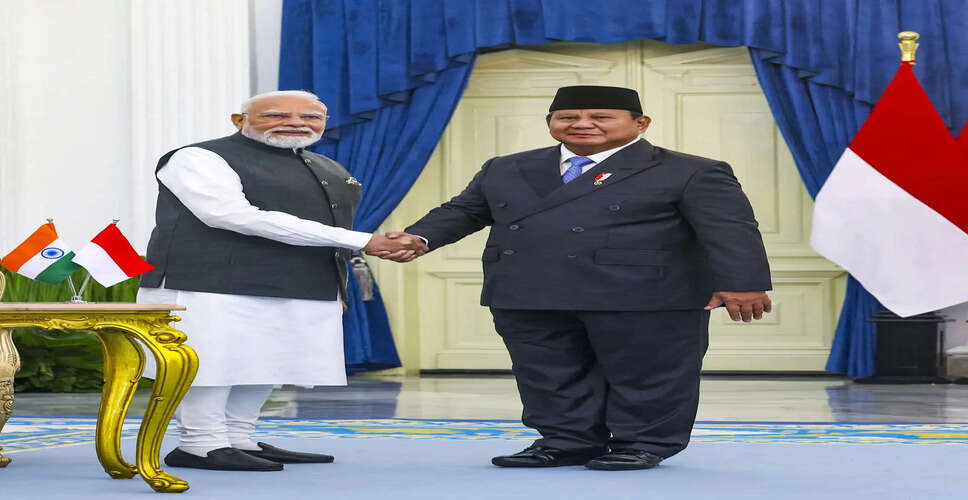
As India and Indonesia enhance their economic collaboration, several sectors are poised to gain significantly from this strategic alliance. The recent announcement of an expanded Comprehensive Strategic Partnership highlights the importance of trade, energy, security, critical minerals, electric vehicles, pharmaceuticals, digitalization, and infrastructure. The partnership is expected to particularly benefit the defense and aerospace sectors, with agreements for joint industrial cooperation, including the supply of BrahMos supersonic cruise missiles and ASTRA air-to-air missiles.
Other sectors anticipated to thrive include critical minerals and steel, Digital Public Infrastructure (DPI) and fintech, pharmaceuticals, education, space technology research, agriculture, food security, and maritime initiatives. Experts suggest that India's greatest opportunity lies in Indonesia's critical minerals sector, especially nickel, which could significantly enhance India's burgeoning electric vehicle manufacturing industry.
Sanchita Mukherji, a Business Economist and Managing Partner at Talk The Walk, emphasized that the evolving India-Indonesia partnership is transitioning from basic commodity trading to a high-value economic corridor worth $50 billion. This shift unlocks substantial business opportunities across seven strategic areas. By merging India's technological and manufacturing capabilities with Indonesia's resources, the partnership paves the way for corporate joint ventures in defense co-production, critical minerals for EV batteries, UPI-QRIS fintech integration, and the development of the strategic Sabang Port. This transformation is further supported by streamlined trade agreements, IIM Bangalore’s new campus, green energy initiatives, and cross-border healthcare expansions, which collectively provide a strong buffer against global supply chain disruptions.
Mitali Nikore, Founder and Chief Economist at Nikore Associates, shared her insights from her experiences in Indonesia, noting the cultural similarities and shared aspirations for growth between the two nations. She highlighted that both India and Indonesia are among the fastest-growing emerging economies, with aligned visions for the future—India's Viksit Bharat 2047 and Indonesia's Emas 2045, aiming for a prosperous Indonesia by 2045. The sectors identified during Prime Minister Modi's visit include pharmaceuticals, electronics, and defense, which are crucial for India's exports to Indonesia. With Indonesia's large and rapidly growing market, these sectors are expected to flourish, alongside the promising critical minerals sector. Overall, there are significant synergies anticipated for both economies moving forward.
As India seeks to strengthen supply chains and economic relations with ASEAN, deeper collaboration with Indonesia is likely to open up new investment avenues and foster long-term business growth strategies.