
Impact of West Asia Crisis on India's Economic Growth and Inflation
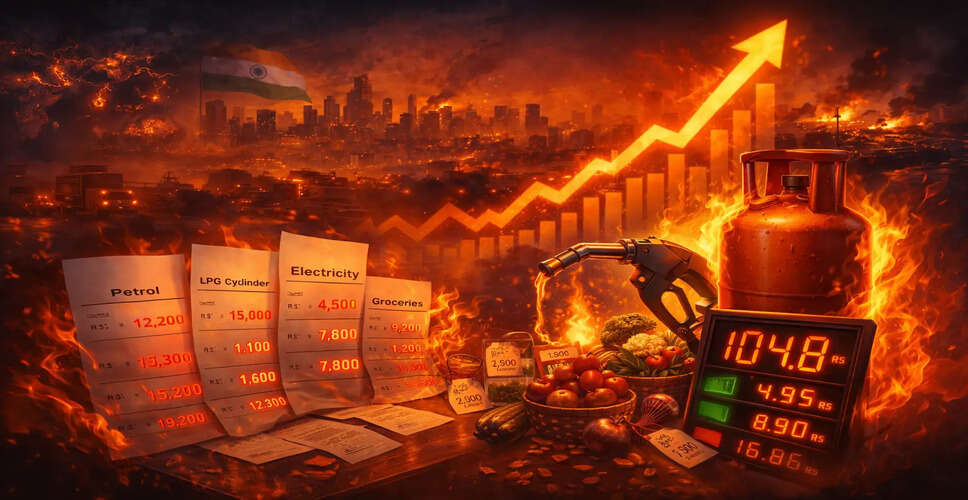
Rising Energy Prices and Inflation Forecast
As energy costs surge due to the ongoing crisis in West Asia, India's economic growth is expected to be adversely affected, with retail inflation projected to rise to 4.5% by the fiscal year 2027. ICICI Bank has updated its forecast for the Consumer Price Index (CPI), increasing it from a previous estimate of 3.9%. The report indicates that escalating petrol and diesel prices will place additional strain on consumer spending compared to prior years.
Notably, the analysis from ICICI Bank highlights that a $10 per barrel increase in oil prices could lead to a direct impact of approximately 40-45 basis points and an overall effect of 50-60 basis points on CPI inflation. This heightened sensitivity is critical, especially as various product categories have already seen price hikes.
Moody’s Analytics has warned that if the conflict in the Middle East continues, India could experience one of the most significant economic downturns in the Asia-Pacific region, with potential output reductions nearing 4% from its expected growth trajectory. Goldman Sachs has also cautioned that India may face slower growth, increased inflation, and a depreciating currency in the coming year, influenced by rising energy costs, declining exports to the UAE and neighboring countries, and possibly reduced remittances.
Challenges for Indian Farmers
New Crisis Situation for Indian Farmers
The ongoing conflict in Iran has created a new crisis for Indian farmers, who are likely to be significantly impacted due to disruptions in fertilizer imports, with nearly 26% sourced from the West Asia region. A report by CareEdge Ratings indicates that India relies heavily on West Asian countries for its fertilizer needs, making it susceptible to supply chain interruptions amid geopolitical tensions.
According to the report, West Asia contributes 26.2% of India's fertilizer imports, followed by Jordan at 19.2% and Russia at 15.5%. Other contributors include Morocco (10.4%), China (5.7%), Egypt (5.6%), Canada (3.8%), and Togo (3.6%), with the remaining 10% coming from various other sources.
Monetary Policy Outlook
Will RBI Hike Rates?
In light of these developments, the upcoming Monetary Policy Committee (MPC) meeting is expected to see the Reserve Bank of India (RBI) take a measured approach to address the economic implications. With the Indian rupee facing pressure from rising oil import costs and global uncertainties, the central bank may permit a gradual depreciation of the currency while intervening in foreign exchange markets to mitigate excessive volatility.
The report suggests that the RBI is unlikely to implement aggressive rate hikes, as the current inflationary pressures are primarily supply-driven. Instead, it may focus on liquidity management and bond purchases to stabilize borrowing costs.
India's Economic Position
Where India Stands?
India has maintained strong partnerships with Gulf Arab nations, which are vital markets for Indian exports. Many Indian enterprises depend on distribution hubs like Dubai for global outreach. However, these businesses now face risks due to potential disruptions in air travel, shipping, and overall operations.
Additionally, India is a significant recipient of remittances from overseas workers, with approximately 40% originating from West Asia.