
Impact of Middle East Tensions on India's Oil Supply
Concerns Over Oil Supply Amid Rising Middle East Tensions
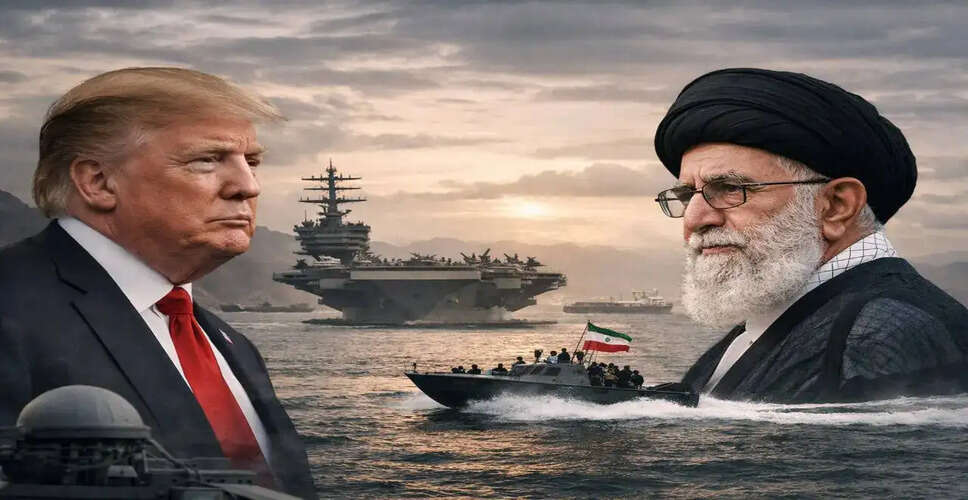
Recent military actions by Israel and the United States against Iran, coupled with Iran's responses, have raised alarms regarding India's oil supply. With India relying on imports for nearly 90% of its crude oil, the situation is particularly precarious as a significant portion of this oil transits through the strategically vital Strait of Hormuz.
The Importance of the Strait of Hormuz
Why the Strait of Hormuz Matters
The Strait of Hormuz is a crucial maritime passage located at the entrance of the Persian Gulf, through which approximately 20-25% of the global crude oil supply flows daily. This narrow waterway, measuring just 21 miles at its narrowest point, is bordered by Iran, the UAE, and Oman. Its limited width and depth make vessels traversing it susceptible to conflict-related risks.
According to Vortexa data referenced by various sources, over 20 million barrels of crude oil and petroleum products navigate through this strait each day. Key oil-producing nations, including Saudi Arabia, Iran, the UAE, Kuwait, and Iraq, heavily rely on this route to export oil to Asian markets, particularly India.
India's Increasing Vulnerability
India’s Growing Exposure
Recent analyses from energy analytics firm Kpler indicate that India's reliance on oil transported through the Strait of Hormuz has escalated in recent months. Their vessel tracking data reveals that approximately 2.5 to 2.7 million barrels per day of India's crude imports traverse this strait, accounting for about 50% of the country's total crude oil imports. The majority of this oil is sourced from Iraq, Saudi Arabia, the UAE, and Kuwait.
As noted by Sumit Ritolia, India's dependence on Middle Eastern oil has surged as refiners have shifted away from Russian oil supplies. Following sanctions imposed on Russian oil companies, Indian refiners have increasingly turned back to Middle Eastern sources.
Potential Closure of the Strait
Can Iran Shut the Strait?
There have been reports of vessels in the area receiving warnings against passing through the Strait, but there is no official confirmation from Iran regarding a complete closure. Experts suggest that while Iran may not entirely block the Strait for an extended period due to the adverse effects on its own oil exports, the mere threat of danger could deter ships from using this route.
Kpler assesses that a full blockade is improbable, predicting instead temporary slowdowns or increased maritime security checks. A sustained blockade would significantly harm regional producers' export revenues, creating strong economic disincentives.
Effects on Oil Prices
What Happens to Crude Prices?
Ritolia indicates that the immediate consequence of escalating tensions is likely to be a rise in oil prices rather than a shortage. The current geopolitical climate could lead to a 'geopolitical risk premium' affecting oil prices, alongside increased freight and war-risk insurance costs for shipping. Consequently, Indian refiners may face higher costs even if oil supply remains uninterrupted, leading to a larger import bill and potential inflationary pressures on the economy.
Exploring Alternatives
Russian Oil as Backup?
Should Middle Eastern oil supplies face disruptions, India might revert to sourcing oil from Russia. Kpler notes that there are still Russian shipments available in the Indian Ocean and Arabian Sea, including oil stored on vessels. If Middle Eastern supplies tighten, Indian refiners could quickly pivot back to Russian grades, providing a buffer against temporary disruptions.
Diversification and Strategic Reserves
Diversification and Reserves as Cushion
India imports crude oil from over 40 countries, including the US, West Africa, and Latin America, allowing it to adjust its supply mix based on global conditions. However, oil from the US or Latin America takes significantly longer to arrive—25 to 45 days—compared to just 5 to 7 days from the Gulf, making Middle Eastern oil more cost-effective and quicker to transport. Additionally, India maintains Strategic Petroleum Reserves (SPR) for emergencies, and oil marketing companies keep their own stocks. Despite the deregulated fuel pricing, Kpler does not foresee an immediate increase in retail fuel prices, as adjustments typically follow sustained crude price increases rather than short-term fluctuations.