
Impact of Iran War on Gulf Region Remittances and Global Supply Chains
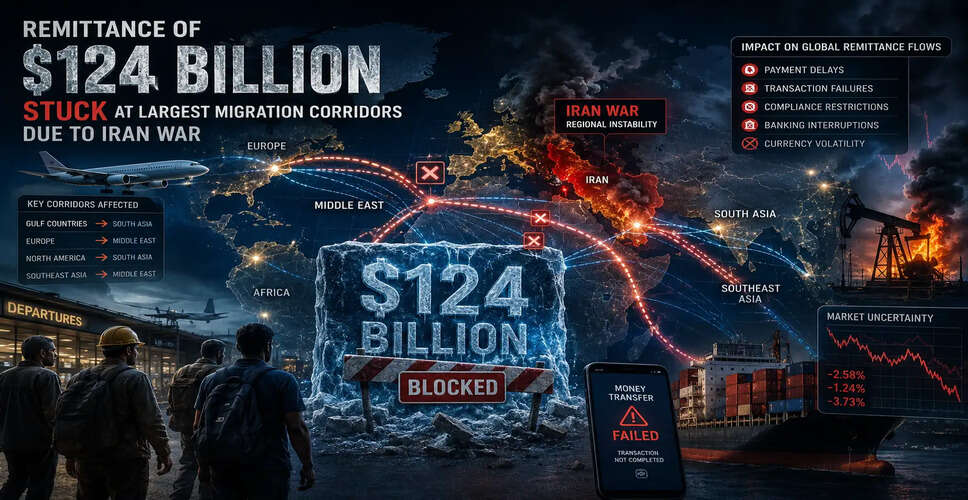

Global Supply Chain Crisis and Remittances
The ongoing conflict in Iran has severely disrupted the global supply chain, putting billions of dollars in remittances at risk for the Gulf region. The blockade at the Strait of Hormuz has hindered exports, increased import expenses, and strained supply chains. Estimates suggest that migrant workers from the six Gulf Cooperation Council (GCC) nations sent approximately $124 billion back home in 2024, primarily to support families across Asia and the broader Middle East to Africa. However, since the war began, these remittances have been declining.
Western Union has noted a surge in outbound remittances from the Middle East during the initial stages of the conflict. Notably, the United Arab Emirates (UAE) contributes around 20% of India's inward remittances, with money transfers from overseas workers increasing by over 28% in the three months leading up to March. Neighboring countries like Bangladesh and Sri Lanka have also seen similar growth.
Bloomberg reported that remittances to the Philippines grew at their slowest rate in nearly four years as of April, raising concerns for a nation where such inflows constitute about 10% of its GDP, with around 2.4 million citizens employed in the Middle East. In Kenya, data from the Central Bank revealed that private transfers from Gulf nations surged in March as approximately 500,000 workers sent money home at the war's onset, but then dropped by 18% in April. The Gulf region accounts for about 10% of Kenya's annual remittances.
Historically, the Gulf region has been a significant source of remittances worldwide. According to the International Fund for Agricultural Development (IFAD), a UN agency, migrants have transferred over $5 trillion to low- and middle-income countries in the last decade. For many developing nations, these remittances are crucial for consumption, stabilizing exchange rates, financing imports, and alleviating external financing pressures. South Asia alone has around 9 million workers in the Gulf region.