
Impact of Iran War on Asia's Foreign Exchange Reserves and the Indian Rupee
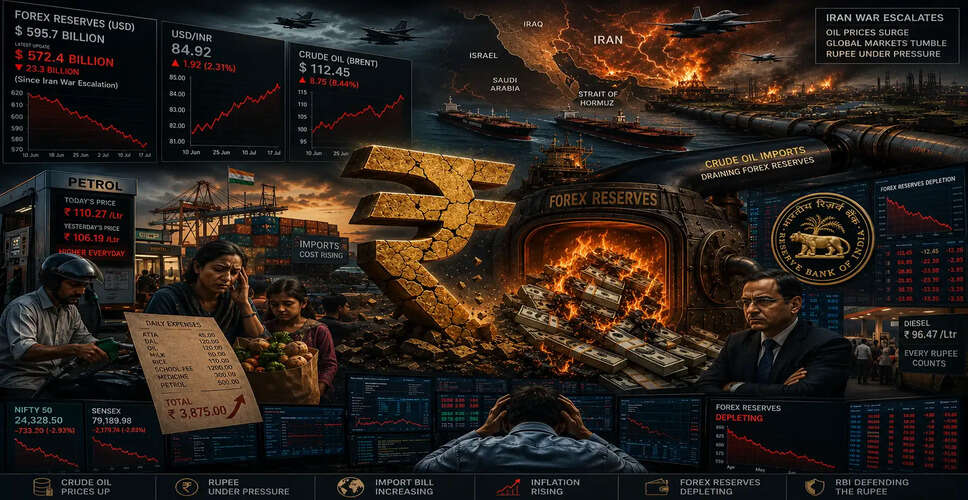

Foreign Exchange Reserves Under Pressure
Following the onset of the Iran War, many Asian nations are witnessing a decline in their foreign-exchange reserves as central banks utilize their funds to stabilize their currencies. The conflict has resulted in the closure of the Strait of Hormuz, a crucial passage for crude oil shipments to significant Asian markets, including India, leading to a surge in oil prices. Consequently, India's foreign exchange market has seen increased volatility, primarily influenced by escalating energy costs and fluctuating capital inflows. Since the war began on February 28, India's foreign exchange reserves have plummeted by nearly $38 billion, falling from a peak of $728.5 billion in February to approximately $691 billion. Recent figures from the Reserve Bank of India (RBI) indicate that forex reserves rose by USD 6.295 billion to USD 696.988 billion for the week ending May 8, following a previous decrease of USD 7.794 billion to USD 690.693 billion.
Despite this decline, India maintains substantial forex reserves of around USD 690 billion. However, when accounting for gold holdings and Special Drawing Rights (SDRs), the effective reserves drop to about USD 560 billion, and further adjustments for the RBI’s forward position bring it down to USD 460 billion. This situation is not overly alarming, as approximately USD 115 billion of the RBI’s gold reserves are liquid and can be utilized to mitigate external shocks, according to CareEdge Ratings.
The Indian Rupee's Decline
The Rupee story:
Recently, the Indian Rupee fell below the 96-mark, reaching a record low of 96.14 against the US dollar during intraday trading. The rupee has been on a downward trend over the past year, with its depreciation against the dollar indicating a more significant decline against other currencies such as the Japanese Yen, British Pound, and Euro. The ongoing depreciation of the rupee has been significantly influenced by rising crude oil prices stemming from the Middle East conflict and persistent foreign capital outflows. Since the war's outbreak, the Indian Rupee has depreciated by 5% and 11% over the past year.
As the demand for US Dollars increases for purchasing crude oil, electronics, machinery, or investing abroad, the Rupee continues to weaken. In response, the Reserve Bank of India has been actively intervening in the forex markets by selling dollars to support the falling rupee. This intervention is a primary factor behind the RBI's depletion of nearly $38 billion to stabilize the currency.