
Impact of Iran Conflict on Indian Stock Market and Economic Outlook
Significant Losses in Indian Stock Market
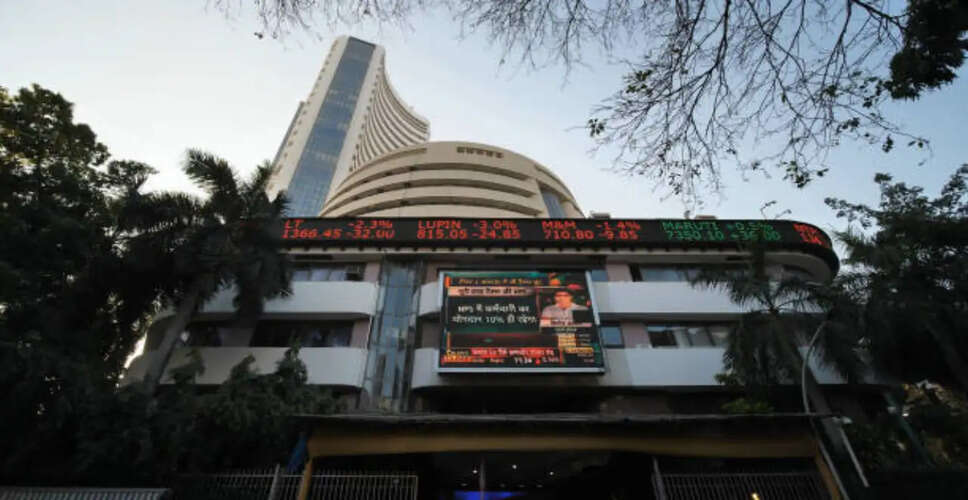
The ongoing conflict in Iran has severely impacted the Indian stock market, with investors reportedly losing approximately ₹41 lakh crore since the beginning of the year. The market capitalization of companies listed on the BSE has dropped by over 9%, equating to around ₹41 lakh crore, indicating a widespread sell-off. As of March 27, the market capitalization fell to ₹422 lakh crore, down from ₹463 lakh crore on February 27. On just one day, March 27, investors faced a loss of about ₹9 lakh crore.
Experts have warned that if the current energy crisis adversely affects India's macroeconomic fundamentals, valuations may decline further as markets adjust to a potential slowdown in earnings for FY27. VK Vijayakumar, Chief Investment Strategist at Geojit Investments, noted that this correction has brought Nifty valuations down to fair levels, with the index trading at around 19 times earnings, below its 10-year average of 22.4 times. However, he cautioned that continued pressure from the energy crisis could lead to further declines in valuations.
Despite these challenges, some experts believe that India's economy is resilient enough to withstand the shock, provided the conflict concludes soon, crude oil prices stabilize, and gas supplies return to normal.
Economic Forecast Amid Rising Inflation
India's Growth Story to Feel the Heat
In a recent report, ICICI Bank projected that retail inflation could rise to 4.5% in the Financial Year 2027, revising its earlier Consumer Price Index (CPI) forecast from 3.9%. The increase in petrol and diesel prices is expected to exert more pressure on consumer spending compared to previous years. The analysis indicated that every $10 per barrel increase in oil prices could lead to a direct impact of around 40-45 basis points and an overall impact of 50-60 basis points on CPI inflation.
Moody’s Analytics has also warned that India might experience one of the most significant economic downturns in the Asia-Pacific region if the Middle East conflict continues, with output potentially declining by nearly 4% from its baseline trajectory. Goldman Sachs has cautioned that India faces slower growth, rising inflation, and a weaker currency in the coming year, driven by escalating energy prices, declining exports to the UAE and neighboring countries, and potentially reduced remittances.