
Global Crude Oil Prices Surge Past $100: India's Response and Stability
Crude Oil Prices and Their Impact
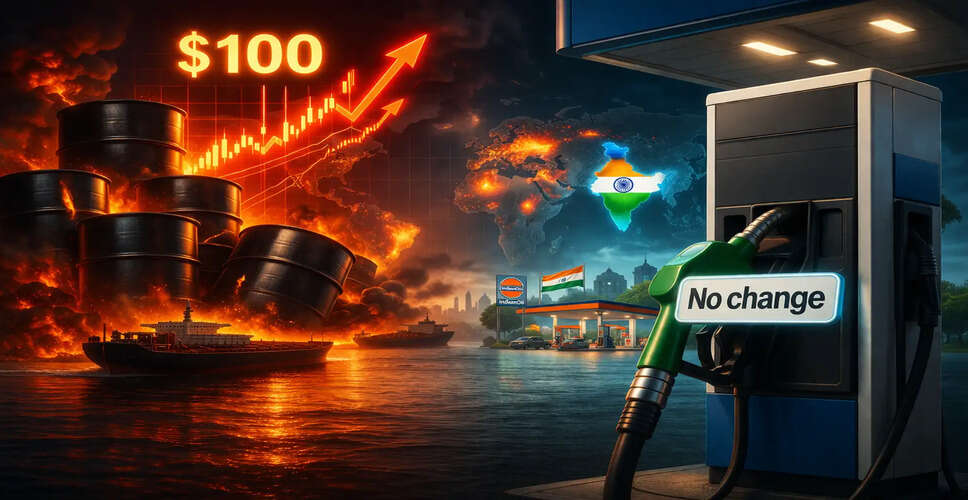
Recently, crude oil prices have once again exceeded the $100 threshold worldwide, raising alarms about potential inflation and fuel shortages. While many regions have seen fuel prices rise due to this increase, India has managed to keep its prices stable for the time being. Analysts and government officials attribute this stability to several factors, including sufficient stock levels, lower import costs, and effective strategies employed by oil marketing companies (OMCs). A significant factor in maintaining these prices is the central government's assertion that it has a buffer of 60 days, which includes both its strategic petroleum reserves and the stock held by OMCs.
In recent years, India has also ramped up its crude oil imports from Russia at discounted prices, allowing companies to reduce their costs and enhance profit margins. OMCs have strategically navigated the rising prices by delaying immediate price hikes for consumers, utilizing the margins accrued during periods of lower crude prices to balance out the increased costs during price surges.
Government's Strategy: Absorbing the Financial Impact
Government chose to absorb impact: Hardeep Singh Puri
According to Petroleum and Natural Gas Minister Hardeep Singh Puri, international crude prices have seen a dramatic increase over the past month, climbing from approximately $70 per barrel to around $122 per barrel. This surge has led to a rise in petrol and diesel prices globally.
In the case of India, the minister stated that the government opted to absorb the financial repercussions instead of transferring the entire burden of rising fuel costs onto consumers. He pointed out that fuel prices have surged by 30-50% in Southeast Asian nations, around 30% in North America, 20% in Europe, and about 50% in African countries.
Puri further noted that the government has incurred a significant loss in tax revenues to mitigate the losses faced by oil companies, estimated at around Rs 24 per litre for petrol and Rs 30 per litre for diesel, amidst high international prices. Additionally, export taxes have been introduced as global fuel prices rise, requiring any refinery exporting petrol or diesel to pay an export tax.