
Geopolitical Tensions Impacting India's IPO Market
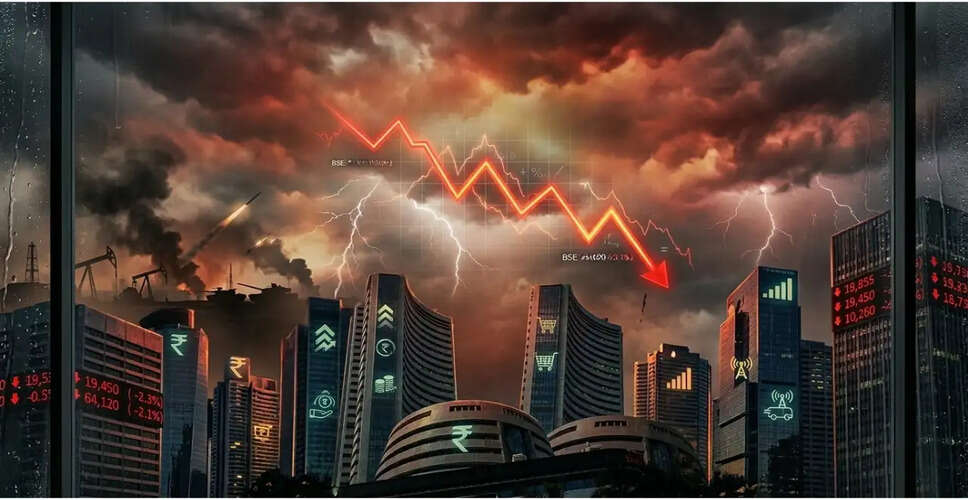
Geopolitical Concerns Affecting IPO Landscape
Increasing geopolitical tensions in West Asia are starting to impact India's primary market, casting doubt on nearly Rs 70,000 crore worth of significant initial public offerings (IPOs). Major firms such as Jio Platforms, Flipkart Internet, Zepto, PhonePe, and SBI Funds Management are anticipated to go public this year, but the rising global uncertainty may disrupt their timelines. This situation arises as the IPO market has already experienced a subdued start to 2026. Following two years of record fundraising, the momentum has noticeably slowed. Data from Bloomberg indicates that companies raised around Rs 16,000 crore through IPOs in the first quarter of 2026, a decline from Rs 19,000 crore during the same timeframe last year.
Investor sentiment has also diminished, as evidenced by poor performance in recent listings. Out of the last nine mainboard IPOs, seven recorded negative returns on their debut, indicating a growing caution among market participants amidst broader equity market corrections.
Market Volatility and Delayed IPO Plans
Experts in the market suggest that escalating geopolitical risks, particularly those related to the Iran conflict, are contributing to global volatility and causing companies to rethink their IPO timelines. PhonePe has recently delayed its listing plans, citing unstable market conditions and geopolitical issues. Reports indicate that investors are now seeking a lower valuation than the previously discussed $15 billion, underscoring how uncertain markets can influence pricing expectations. If volatility continues, similar valuation challenges may arise for other upcoming large IPOs, according to reports.
Among the most anticipated offerings is Jio Platforms, which could potentially become India's largest IPO ever. The telecom division of Reliance Industries is reportedly collaborating with several banks for a potential listing that may value the company at up to $170 billion. With a minimum public float requirement of 2.5%, the offering could generate nearly $4.3 billion (around Rs 40,000 crore).
Flipkart is another significant contender, having adjusted its holding structure to India, which is widely interpreted as a preparatory move for a domestic listing. The company was last valued at approximately $37 billion in 2024.
Strong IPO Pipeline Amid Fragile Sentiment
Other notable IPO candidates include SBI Funds Management, which may raise up to $1.2 billion, and Zepto, a quick commerce player that had previously filed confidential documents for an Rs 11,000 crore issue. However, companies in high-growth sectors are particularly susceptible to fluctuations in investor sentiment. Typically, volatile markets dampen enthusiasm for IPOs, as investors tend to favor established large-cap stocks during uncertain times. This shift in preference is already evident in current market behavior.
Khushi Mistry, a research analyst at Bonanza Portfolio, noted that the slowdown reflects a shift in investor sentiment. "Market corrections in broader and midcap indices have diminished investor risk appetite. Investors are focusing on averaging down existing holdings rather than new subscriptions. We may see muted activity until secondary markets stabilize," she stated, according to a report.
Uday Patil, executive director at PL Capital Markets, mentioned that companies are becoming increasingly cautious about launching offerings in the current climate. "Secondary market volatility and valuation concerns have weakened investor appetite. Companies are reluctant to initiate new IPOs, anticipating a poor reception. This lull is not structural; it is time-based," he explained.
Despite the current challenges, investment bankers remain optimistic about the long-term outlook. Bhavesh Shah of Equirus Capital emphasized that the slowdown is sentiment-driven rather than structural. "The decline in IPOs is not due to structural issues but rather subdued sentiment in the secondary market," Shah remarked. "Companies are opting for a more tactical approach regarding whether to proceed or hold back, and investor sentiment has made issuers more cautious about launch windows and pricing."