
Experts Advocate Caution on Gold Purchases Amid Economic Pressures

Economic Insights on Gold Consumption
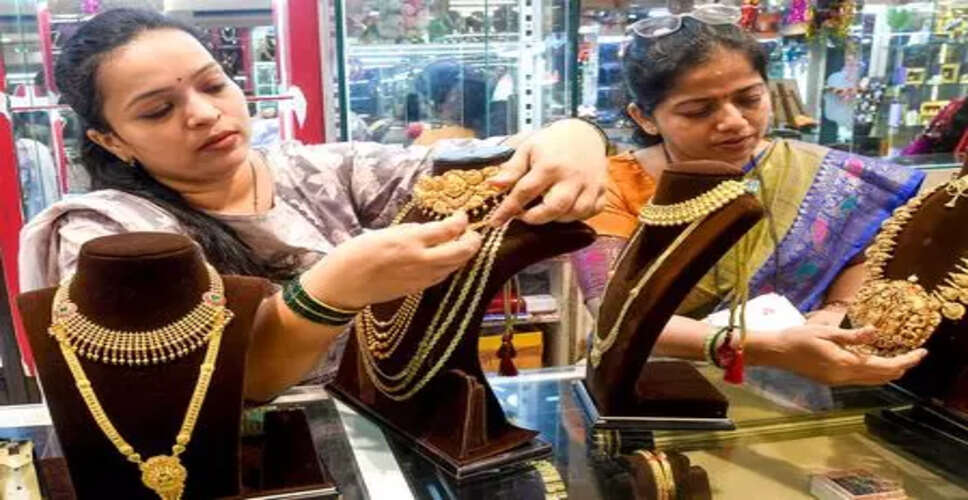
Representational Image
Surat, May 11: In response to Prime Minister Narendra Modi's request to limit non-essential gold purchases to safeguard foreign exchange reserves, industry specialists emphasized that gold should be regarded not just as a luxury item but as an integral aspect of India's cultural heritage, savings practices, financial stability, and women's empowerment.
Nainesh Pachchigar, President of the India Bullion and Jewellers Association (IBJA) in Gujarat, noted that the Prime Minister's initiative could play a crucial role in conserving foreign exchange during a period of heightened import challenges stemming from global uncertainties.
He also urged the government to reinstate the Gold Monetisation Scheme, which would facilitate the return of dormant household gold into circulation and promote the recycling of this precious metal.
“This initiative would ensure consistent employment for countless small and medium artisans in the jewellery industry while aligning with the government's objective of minimizing foreign exchange outflows,” Pachchigar remarked.
He further highlighted the deep connection between the jewellery sector and the livelihoods of millions of craftsmen, stressing that any measures to curtail gold imports must be carefully balanced to protect the economic framework of the industry.
The association plans to present a proposal to the government outlining strategies to conserve foreign exchange without negatively impacting artisans and jewellery enterprises.
Supporting the Prime Minister's message, Renu Arora, Director of JCBL Group and a Chartered Accountant, pointed out that India's heavy reliance on imports for gold and crude oil places significant strain on the rupee, diminishing its value against the dollar.
“The economy becomes susceptible to fluctuations whenever there is a sharp increase in international crude oil and gold prices,” she stated, adding that minimizing unnecessary consumption would enhance India's resilience to global economic shocks and bolster macroeconomic stability.
Manoj Kumar Jain, Director and Head of Commodity and Currency Research at Prithvi Finmart, mentioned that India constitutes approximately 25-26% of global gold demand, importing around 800 metric tonnes annually, which necessitates substantial dollar expenditures.
“All imports are settled in foreign currency, predominantly the US dollar, which exerts considerable pressure on India's foreign exchange reserves,” he explained.
“Escalating geopolitical tensions, particularly between the US and Iran, have driven global energy prices to unprecedented levels, further exacerbating India's import challenges,” he added.