
Ethanol Blending: A Key Strategy to Lower Petrol Prices in India

Ethanol Blending as a Solution
With the surge in global crude oil prices impacting India's fuel economy, C.K. Jain, President of the Grain Ethanol Manufacturers Association (GEMA), emphasized that ethanol blending is a vital strategy for reducing import reliance. He noted that this approach could potentially lower petrol prices by as much as Rs 20 per litre. In a discussion with a digital news platform, Jain highlighted that the current fluctuations in global crude oil prices, particularly due to tensions in West Asia, have reinforced the need for increased ethanol blending in India.
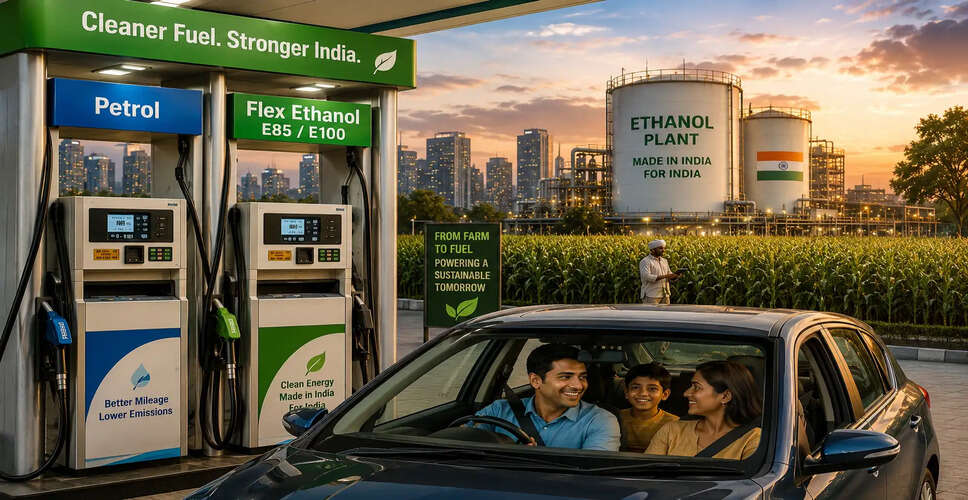
To illustrate the potential Rs 20 reduction in petrol prices, Jain referenced Brazil's fuel system, where petrol stations offer two types of fuel dispensers: one for standard petrol (currently E20 in India) and another for higher ethanol blends like E85 or E100. He explained that E100 is exempt from Value Added Tax (VAT) because it contains no fossil fuel hydrocarbons, leading to significant savings for consumers.
Current Petrol Pricing Challenges
Petrol Prices Could Reach Rs 120/Litre Without Subsidies
Jain pointed out that oil marketing companies (OMCs) are currently facing substantial losses due to escalating crude prices. He explained that petrol pricing includes various components such as import duties and processing costs. The government is already subsidizing petrol, and under the ongoing crude oil crisis, OMCs are reportedly losing around Rs 1,700 crore daily. Jain stated that without these subsidies, the actual price of petrol would be approximately Rs 120 per litre, while consumers are currently paying around Rs 100 due to government interventions.
Introduction of Dual-Dispensing Ethanol Pumps
Plans for Dual-Dispensing Ethanol Pumps
Jain also revealed that OMCs are set to launch dual-dispensing ethanol pumps at about 100 petrol stations, enabling consumers to select between higher ethanol blends and traditional petrol. He mentioned that this initiative will allow customers to choose based on their preferences and pricing. Furthermore, Jain urged the government and automobile manufacturers to expedite the introduction of flex-fuel vehicles in India, noting that Maruti Suzuki is set to launch its first flex-fuel vehicle on June 4, which could pave the way for other manufacturers to follow suit.