
Elon Musk's Terafab: A Vision for Humanity's Galactic Future
Introduction to Terafab
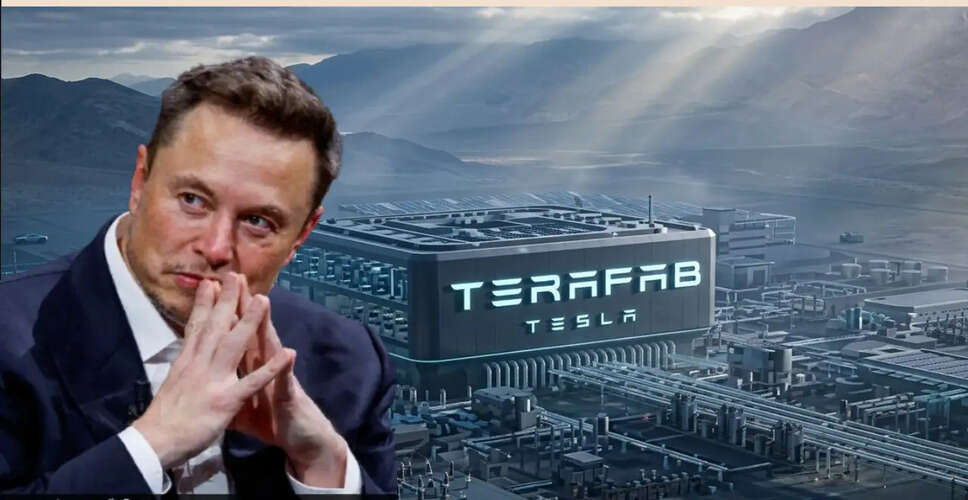
On March 21, 2026, Elon Musk introduced Terafab, an ambitious semiconductor megafactory project estimated to cost between $20 and $25 billion. This initiative is a collaboration between Tesla, SpaceX, and xAI, and the launch event was broadcast live from Austin, Texas. While much of the media focused on the factory's immediate objective of manufacturing terawatt-scale custom AI chips for Optimus robots, robotaxis, and orbital data centers, Musk presented the announcement in a much broader context.
Musk's Vision: The Path to a Type II Civilization
During his keynote address, Musk referenced the Kardashev scale, a framework established in 1964 that categorizes civilizations based on their energy consumption capabilities. He described Terafab as a crucial step toward humanity evolving into a Kardashev Type II civilization, which would be capable of harnessing the total energy output of its star, the Sun. Musk expressed optimism that we could achieve this status within the next 50 years.
The Terafab Roadmap
Musk outlined a detailed vision for Terafab, emphasizing its unprecedented chip production capabilities. The factory is expected to generate up to 1 terawatt of computing power annually, sufficient to support millions of Optimus humanoid robots and extensive AI data centers in space, with around 80% of its output designated for extraterrestrial applications.
Optimus robots, equipped with chips from Terafab, will be dispatched via Starship to the Moon, near-Earth asteroids, and beyond. Their mission will include mining essential resources such as silicon and rare metals, as well as constructing additional factories in space.
Once these initial off-world factories are operational, they will utilize local materials to produce more chips, robots, Starships, and satellites, creating a self-replicating cycle.
The ultimate goal is to establish a Dyson swarm, consisting of billions of orbiting solar-power satellites designed for energy collection. This expansive network will surround the Sun, capturing a significant portion of its energy output.
The harvested solar energy will then be converted into microwaves or lasers and transmitted back to Earth, providing a virtually limitless source of clean energy.
The Concept of a Matrioshka Brain
With abundant energy available in space, Musk has frequently discussed the idea of a Matrioshka Brain, a theoretical mega-structure composed of nested Dyson swarms that would utilize stellar energy for computation at unprecedented scales. He envisions this system as the ultimate foundation for superintelligence, capable of simulating entire universes or solving complex problems beyond human understanding.
Musk believes that achieving Type II status, with a fully operational Dyson swarm, could realistically occur within 50 years if advancements in robotics, AI, launch costs, and resource utilization continue to progress exponentially.
The Importance of This Vision
Currently, humanity is at approximately Kardashev Type 0.73, utilizing only a small fraction of Earth's energy resources. Achieving Type I, which entails complete mastery over planetary energy, could address issues like climate change and resource scarcity. Transitioning to Type II would make energy so abundant that many limitations on civilization would vanish, transforming challenges like food and water supply into engineering tasks.
Musk argues that the primary constraints today are computational power and energy. Terafab aims to eliminate the computing bottleneck by producing chips in-house, while space-based solar energy and self-replicating robotics will address energy and material shortages, paving the way for a Dyson swarm and Type II civilization.
Public Reaction and Skepticism
In India and around the world, social media has exploded with reactions to Musk's announcement, with many interpreting his vision as a pathway to achieving god-like intelligence. While Musk did not explicitly outline every step in the chain of events leading to this conclusion, his previous statements align with these ideas.
However, skeptics highlight several challenges, including Musk's typically optimistic timelines, the complexities of building orbital factories, and the unproven nature of energy beaming at large scales. Despite these concerns, Musk has a history of achieving seemingly impossible goals, such as reusable rockets and mass EV production. If Terafab succeeds, it could significantly accelerate advancements in robotics, AI, and the space industry.
Ultimately, Terafab is more than just a factory; it represents a pivotal moment in humanity's journey from a fragile, Earth-bound species to a civilization capable of harnessing stellar energy. Whether the goal of achieving Type II status in 50 years is realistic or extends to 100 years, Musk's commitment to robotics, AI chips, and space industrialization is clear. The launch of Terafab may mark the beginning of humanity's serious industrial efforts toward a Dyson swarm and all that follows.