
Dubai Property Market Faces First Price Drop Since Pandemic
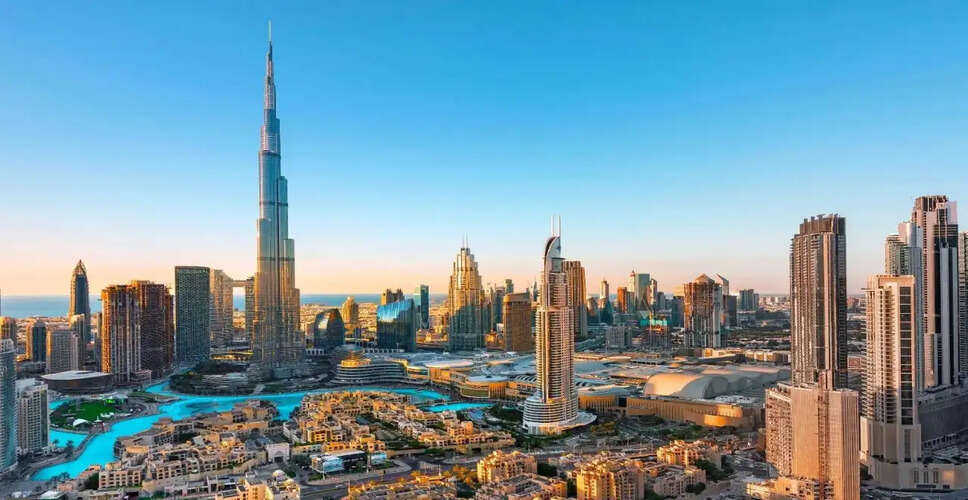

Dubai's Property Market Experiences Initial Decline
The property market in Dubai, which has been thriving, is now showing signs of weakness as home prices have decreased for the first time since the onset of the pandemic. This decline is attributed to regional conflicts that have negatively impacted both demand and investor confidence. A report from Bloomberg indicates that the home price index created by ValuStrat recorded a 5.9% drop in March compared to February, marking the first decrease since 2020. Despite this downturn, prices remain at levels comparable to those six months ago. This slowdown underscores the immediate effects of geopolitical tensions on Dubai, part of the United Arab Emirates, where the property market had previously surged over 70% since 2020.
Impact of Conflict on Demand and Transactions
The recent rally in property prices is now being challenged by instability in the region, particularly following heightened tensions involving Iran, the United States, and Israel earlier this year. Data from REIDIN reveals that the total value of residential property sales fell nearly 20% to 37.2 billion dirhams ($10.1 billion) in March, with transaction volumes decreasing to approximately 13,000 from nearly 16,000 the previous month. Louis Harding, CEO of Betterhomes, commented, “The market is not going to immediately return to what it was before, and we anticipate a softening of prices.” He noted that demand might be affected as population growth may not keep pace with previous years, coinciding with a significant number of property handovers.
Analysts suggest that seasonal factors, such as the Eid holidays and unexpected heavy rainfall, may have exacerbated the decline, but they caution that a softer trend could persist in the upcoming months.
Optimism Amidst Challenges
Despite the downturn, developers are remaining cautiously optimistic. Dubai has been positioning itself as a long-term destination through initiatives like golden visas, which aim to attract more permanent residents. Katralnada Binghatti, CEO of Binghatti Holding, stated, “There still is liquidity in the market. The market behavior still seems relatively stable.” However, risks remain, particularly in the off-plan segment, which constitutes nearly three-quarters of transactions. Sales in this area fell about 13% in March, indicating growing investor caution. Sahil Khosla, CEO of SOHO Development, remarked, “There are jitters in the market, and off-plan will be the first to suffer because it’s speculative.” He added that he does not foresee a drastic decline in the property market due to the increasing number of end-users and the discounts being offered following a significant rise in valuations over the past five years.
Even amidst uncertainty, developers are continuing to launch new projects and provide incentives to maintain demand. Imran Farooq, CEO of Samana Developers, noted, “I expected sales to be lower in a situation like this, but we’re still seeing sales.” He mentioned that while it is taking longer to close deals, transactions are still occurring with buyers from within the UAE as well as from Egypt and India. Currently, Dubai’s property market is under pressure, with its future direction closely linked to regional stability and investor sentiment.