
Current Trends in Gold and Silver Prices Amid Global Market Pressures
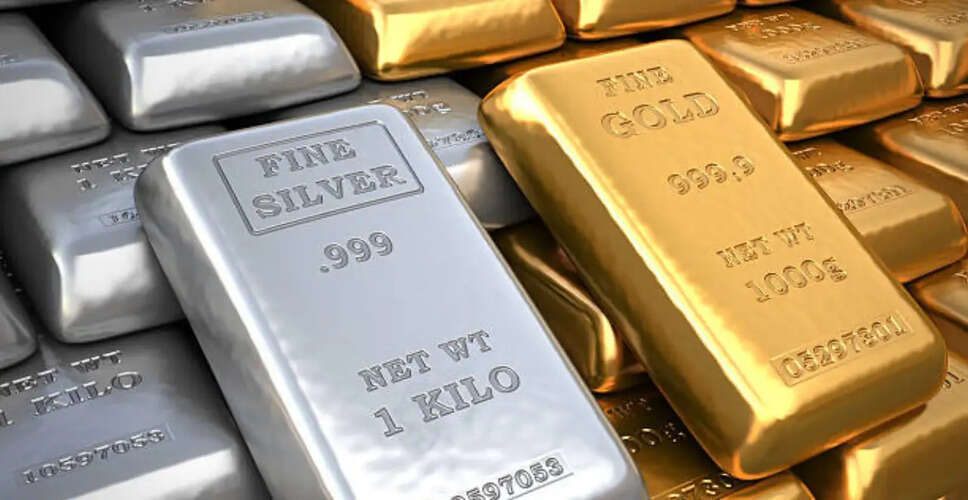

Gold and Silver Price Trends
Market Overview: On Friday, gold and silver prices in India experienced a decline, mirroring the overall weakness observed in global bullion markets. Both precious metals are expected to conclude the week on a low note, influenced by geopolitical tensions and economic uncertainties that are affecting investor confidence. According to the Indian Bullion and Jewellers Association, the price of 24-carat gold was recorded at Rs 1,51,479 at the close of trading on Friday. With the markets closed over the weekend, these rates will remain unchanged. Additionally, futures prices on the Multi Commodity Exchange (MCX) saw a slight increase of 0.07 percent, or Rs 100, closing at Rs 1,52,799 per 10 grams. In contrast, MCX silver finished the day at Rs 2,44,877, marking an increase of Rs 3,364.00 or 1.39 percent.
In the international arena, bullion prices showed some signs of recovery on Friday, although they remained under pressure overall. Spot gold rose by 0.6 percent to $4,721.15 per ounce after an earlier gain of over 1 percent during the session, yet it is still down more than 2 percent for the week. Silver mirrored this trend, climbing 1.4 percent to $76.49 per ounce, but it is still facing a weekly decline of 3.37 percent. Since the escalation of tensions between the US and Iran, gold prices have dropped by over 10 percent, while silver has seen an even sharper decline of approximately 18 percent, indicating significant pressure on these precious metals.
Factors Influencing Bullion Prices: The persistent decline in gold and silver prices can be largely attributed to rising crude oil prices and a strengthening US dollar. The ongoing conflict between the US and Iran has led to increased oil prices, raising inflation concerns and reinforcing expectations for prolonged high interest rates. The situation remains tense, particularly with the Strait of Hormuz largely shut despite reduced military activity. Market sentiment has been highly reactive to statements from Donald Trump, which have fluctuated between optimism for a resolution and warnings of potential escalation.
Recent diplomatic developments have also contributed to the uncertainty. Iran’s Foreign Minister Abbas Araqchi was anticipated to visit Islamabad to discuss potential avenues for reviving negotiations with the United States, although no direct meetings were confirmed. Separately, Israel and Lebanon have agreed to extend their ceasefire for an additional three weeks.
Investment Outlook: Experts suggest that while short-term pressures may continue, the long-term outlook remains complex. Kaynat Chainwala, AVP - Commodity Research at Kotak Securities, mentioned in a report that gold and silver are currently facing near-term pressure primarily due to high crude oil prices, exacerbated by disruptions in the Strait of Hormuz and uncertainties surrounding the US-Iran ceasefire. She noted, “Although volatility may persist in the near term due to liquidity pressures and changing expectations from the Federal Reserve, the medium-term outlook is bolstered by geopolitical uncertainties, stagflation risks, and ongoing structural changes in global reserve allocations. Any price weakness should be viewed in the context of cyclical macro pressures rather than a decline in fundamental values.”
Ponmudi R, CEO of Enrich Money, observed that gold is currently trading within a consolidation range, with significant support around Rs 1,50,000 and resistance between Rs 1,55,500 and Rs 1,57,000. He indicated that price dips may attract buyers as long as these levels are maintained. For silver, he noted a weak-to-sideways trend, with support near Rs 2,40,000 and resistance around Rs 2,50,000.