
Consumer Rights at Risk: The Hidden Dangers of Quick Commerce

The Rise of Convenience and Its Hidden Costs
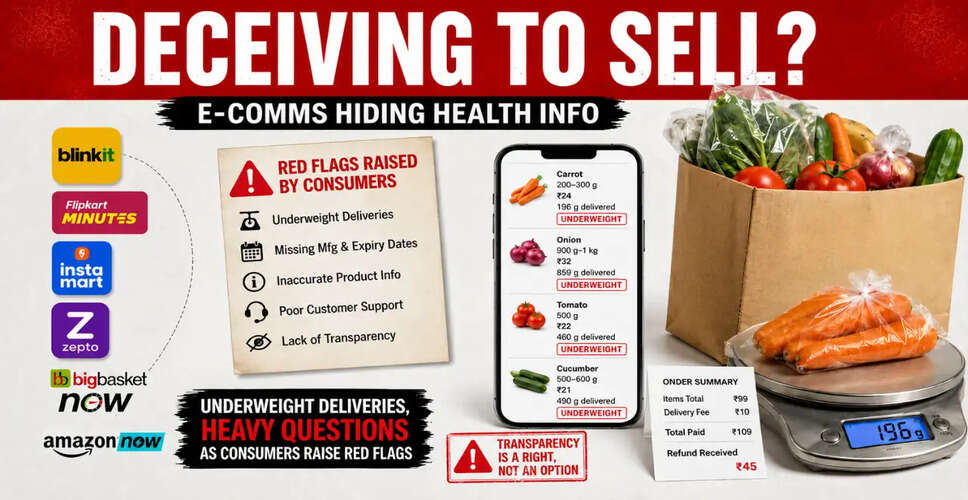
Convenience or Compromise: The allure of quick commerce has transformed shopping habits, making it tempting to order essentials online rather than venturing out. However, this convenience may come with unforeseen health risks. In light of this, a consumer rights campaign has been initiated, urging quick commerce services to uphold fairness and transparency. A significant concern highlighted is the lack of clear labeling for manufacturing and expiry dates on perishable goods. Attempts to engage with major platforms like Zepto, Blinkit, Instamart, Flipkart Minutes, and Amazon regarding this issue have gone unanswered.
Consumers deserve to know basic safety information, such as when products were made and when they expire. The campaign emphasizes the importance of transparency, focusing on the accuracy of what customers order versus what they receive.
To investigate these transparency issues, we spoke with loyal users of quick commerce platforms. One customer shared a troubling experience with Zepto, where they ordered vegetables and noticed discrepancies in weight. The carrots, expected to weigh between 200 and 300 grams, were only 196 grams upon weighing. This prompted the customer to check other items, revealing that all were underweight compared to what was advertised.
While these differences might seem minor, they raise significant concerns about whether consumers are receiving the quantities they pay for. The customer raised the issue with Zepto's support team, only to encounter further complications when trying to submit photographic evidence of the discrepancies.
After a lengthy discussion, the company offered a mere Rs 45 refund, which the customer felt was inadequate given the situation. They argued that not every consumer weighs their groceries, meaning such discrepancies could easily go unnoticed. The customer emphasized that this issue was not isolated to just one order.
Similar complaints have emerged on social media, with many users reporting underweight deliveries from various quick commerce platforms, including Swiggy Instamart and Blinkit.
Recurring Issues in Quick Commerce
Past incidents have shown that customers frequently encounter similar problems. One user on Reddit expressed frustration over receiving less than the advertised quantity from Blinkit, sharing evidence of a grape order that weighed significantly less than expected.
Another Reddit user reported underweight vegetables from Swiggy Instamart, detailing discrepancies in multiple items, including a cauliflower that weighed far less than advertised.
Regulatory Oversight and Consumer Rights
The increasing number of complaints regarding underweight deliveries raises critical questions about accountability in the quick commerce industry. While individual discrepancies may seem trivial, they can accumulate significantly over time. Regulatory bodies like the Central Consumer Protection Authority (CCPA) and the Food Safety and Standards Authority of India (FSSAI) have been advocating for clearer labeling of essential consumer information, including expiry dates and accurate weights. Despite these efforts, transparency issues persist, with the FSSAI recently issuing numerous notices to e-commerce food operators.
Many consumers continue to report a lack of complete information and discrepancies in the quantities received, prompting concerns about the enforcement of existing regulations. A few grams here and there may seem insignificant, but when multiplied across millions of transactions daily, the implications are substantial. While convenience may be just a click away, the real question is: what are we sacrificing for this ease?