
Concerns Raised Over Bihar Electoral Roll Revision Process
Criticism of Election Commission's Decision
The Association for Democratic Reforms (ADR) expressed strong disapproval on Saturday regarding the Election Commission's ruling that the Aadhaar card cannot be used as a standalone valid document for updating electoral rolls in Bihar, labeling the decision as 'blatantly absurd.'
This non-profit organization is among those challenging the electoral process. Their statement was included in a response submitted to the Supreme Court, addressing the Election Commission's affidavit on the issue.
Earlier this week, the Election Commission asserted that the Aadhaar card does not serve as proof of Indian citizenship and is prone to forgery.
This affidavit was a reply to the Supreme Court's directive from July 10, which instructed the Election Commission to accept Aadhaar cards, voter ID cards, and ration cards as valid documentation for the electoral roll revision, emphasizing the need for fairness.
On Saturday, ADR informed the Supreme Court that the eleven documents proposed by the Election Commission to verify eligibility are equally vulnerable to being obtained through fraudulent means.
They pointed out that the Aadhaar card is accepted for various official documents, including Permanent Residence Certificates and caste certificates, making the Election Commission's dismissal of it under the current revision order seem unreasonable.
Furthermore, the organization highlighted that there is no established procedure for verifying the documents submitted by voters, granting electoral registration officers excessive and unchecked authority, which could lead to disenfranchisement.
ADR noted that each registration officer is responsible for managing forms for over three lakh individuals, making it nearly impossible to conduct the process effectively.
They alleged that the current execution of the electoral roll revision constitutes a significant fraud against the voters of Bihar.
Reports have emerged that many voters found their forms submitted online without their consent or even having met with any block-level officers, with instances of forms submitted for deceased individuals.
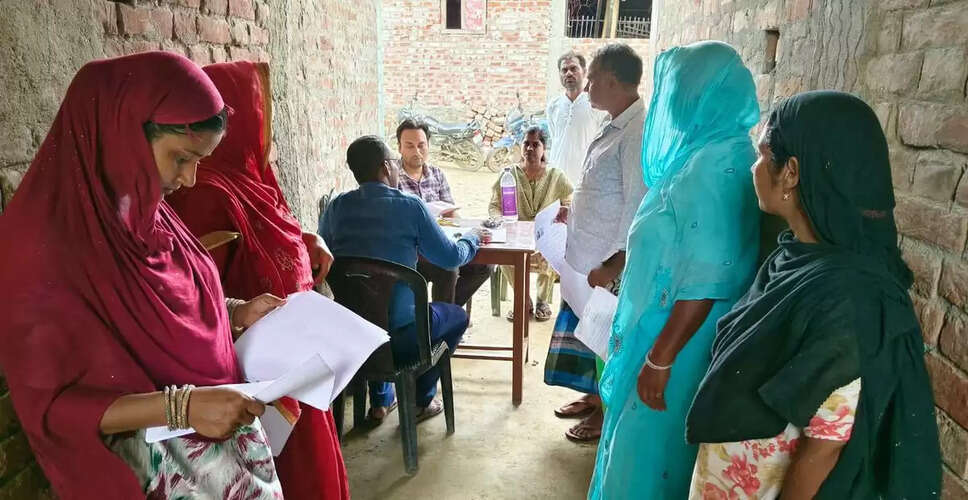
According to the Election Commission's guidelines, block-level officers are supposed to visit homes and provide voters with two enumeration forms.
ADR concluded that the flawed execution of the electoral roll revision compromises the integrity of the electoral process, potentially impacting millions of voters and undermining democracy.
Details of the Electoral Roll Revision
The Election Commission announced the revision of Bihar's electoral rolls on June 24.
As part of this initiative, individuals not listed in the 2003 voter list must provide proof of their eligibility to vote, affecting approximately 2.9 crore out of 7.8 crore voters in the state.
Voters born before July 1, 1987, must present proof of their date and place of birth, while those born between July 1, 1987, and December 2, 2004, need to provide documentation for one parent's date and place of birth. For those born after December 2, 2004, proof is required for themselves and both parents.
If the electoral registration officers find the provided details satisfactory, voters will be re-enrolled in a new voter list; otherwise, they will be removed.
A draft roll is set to be published on August 1, with the final roll expected by September 30.
On July 2, eleven parties from the INDIA bloc warned the Election Commission that the revision process could disenfranchise over 2.5 crore voters who may struggle to provide the necessary documentation.
On July 5, ADR filed a petition in the Supreme Court against the revision, arguing that the order is arbitrary and could disenfranchise millions.
The organization requested the court to annul the order, claiming it shifts the burden of proof from the state to the citizens.
Chief Election Commissioner Gyanesh Kumar defended the revision on July 6, stating that it was necessary due to widespread dissatisfaction with the current voter rolls.
The Election Commission maintained that there has been no violation of laws or fundamental rights during the electoral roll revision process, asserting that the special intensive revision enhances electoral integrity by removing ineligible individuals from the rolls.