
China's Strategic Shift Towards Energy Independence Through Supergrid Development
China's Long-Term Energy Security Strategy
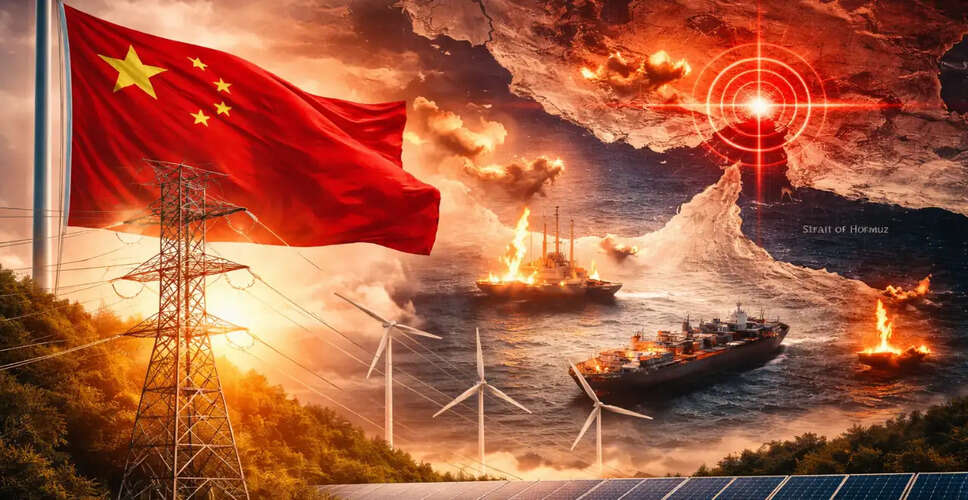
While the global focus often centers on the Strait of Hormuz and its implications for oil supply during tensions between the US and Iran, China is adopting a more strategic, long-term perspective on energy security. Rather than merely responding to immediate disruptions in the global oil market, Beijing is making substantial investments in a domestic energy infrastructure aimed at minimizing its reliance on imported fuels. Central to this initiative are state-owned utilities such as the State Grid Corporation of China and China Southern Power Grid, which are developing what is increasingly referred to as a nationwide 'supergrid.'
This advanced system utilizes ultra-high voltage (UHV) transmission lines capable of transporting electricity over extensive distances. The objective is to link resource-rich areas in western and northern China, abundant in coal, wind, and solar energy, with the industrial centers along the eastern coast, where energy demand is highest. Through this initiative, China seeks to electrify a larger portion of its economy, enhance efficiency, and mitigate vulnerability to external supply disruptions.
A Vietnam-based cryptocurrency firm monitoring this transition highlighted the magnitude of the shift, stating, 'China is constructing a genuine supergrid. The flow of power from west to east, harnessing wind and solar energy from remote areas to coastal factories, is not just theoretical; it is already in progress. Ultra-high voltage lines are transmitting power across the nation, and the scale is enormous.' The firm projects that approximately 4 trillion yuan (around $574 billion) will be invested from 2026 to 2030, suggesting that oil chokepoints like the Strait of Hormuz will become less significant, with conflicts merely accelerating this transition.
To facilitate this expansion, Chinese grid operators have significantly increased bond issuance, raising tens of billions of dollars in domestic markets. Notably, the State Grid Corporation of China has expedited borrowing in 2025 as project pipelines expand. With robust state support, these companies can focus on long-term capacity and resilience rather than short-term profits. The growing grid is anticipated to accommodate more renewable energy, meet rising industrial demand, and gradually decrease China's dependence on imported oil.
This strategy underscores how energy security, once viewed as a long-term goal under Xi Jinping, is now an urgent priority for economic stability. By fortifying its domestic power network, China aims to shield itself from global energy shocks, particularly the oil and gas shortages experienced by nations like Japan and South Korea. Recent incidents in the Strait of Hormuz further validate this approach. Lin Boqiang, director of the China Institute for Studies in Energy Policy at Xiamen University, remarked, 'These events emphasize the necessity of localizing energy sources to ensure security and stability.' He affirmed that China's transition towards green energy is a strategically sound decision.